
May Bookmarks
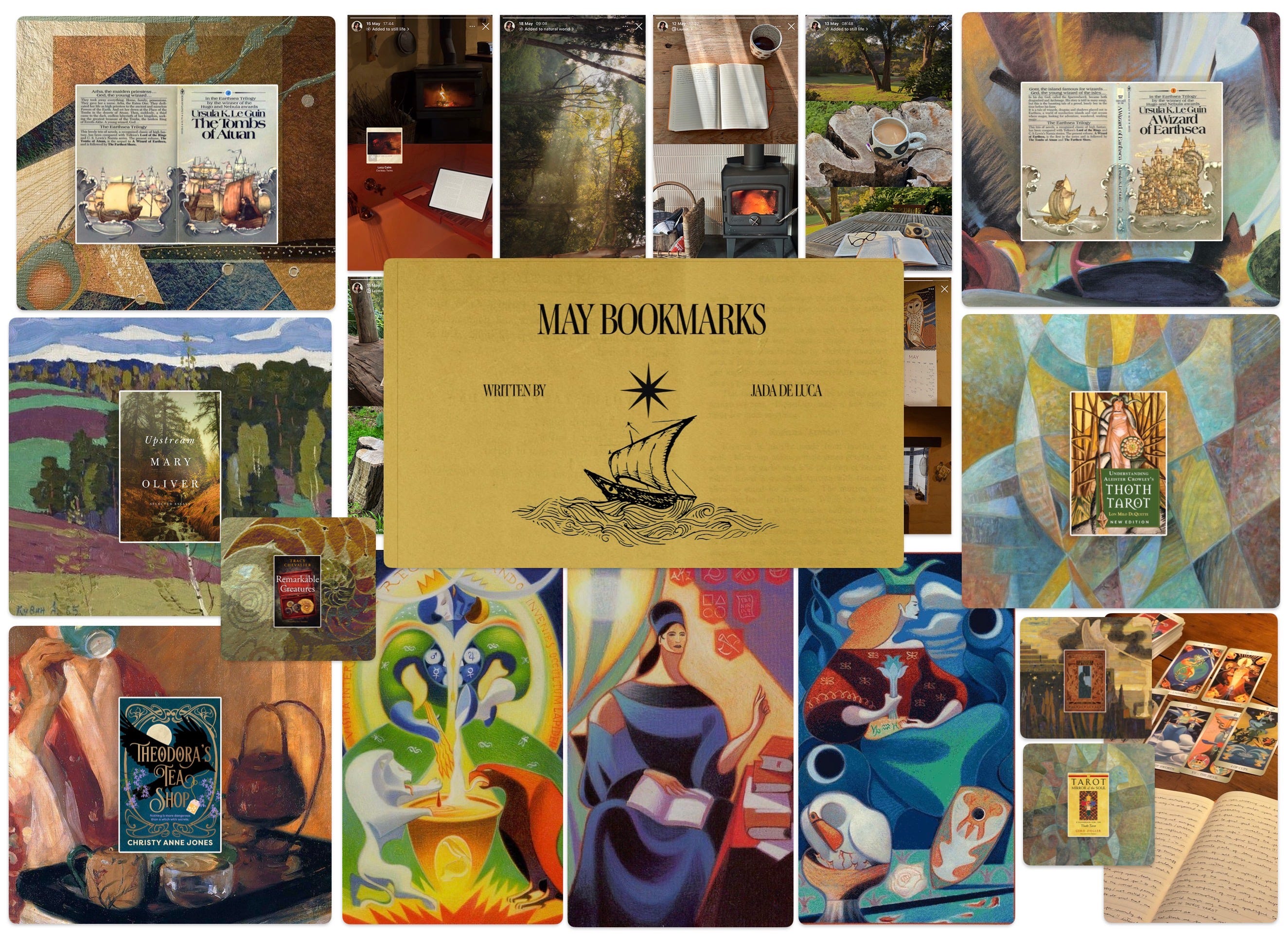
Seeking out the idyllic reading environment, deepening my tarot study, the fluidity of fantasy, my reading hot takes, and notes on the eight books I read in May

Foreword
Welcome to May’s Bookmarks!
Previously known as my monthly reading list, I’ve rebranded these articles both in name and structure. I like to think ‘bookmarks’ sounds more whimsy!
In May, I couldn’t pick up the keys for my new lease until a week after my previous one ended, so I decided to spend ten days down south, and between the fireplace, the bathtub, and a cosy attic room, I got a lot of reading done.
My reading patterns for May included:
Seeking out my idyllic reading environment in nature
The lyricism, narration and fluidity of fantasy as a genre
My reading hot take about romantasy and cosy fantasy
Reading to deepen my knowledge as a tarot reader
If you have any winter reading recommendations, I’d love to hear them!
Happy reading,
Jada
Everything I’ve read so far in 2026:


Books I Read In May
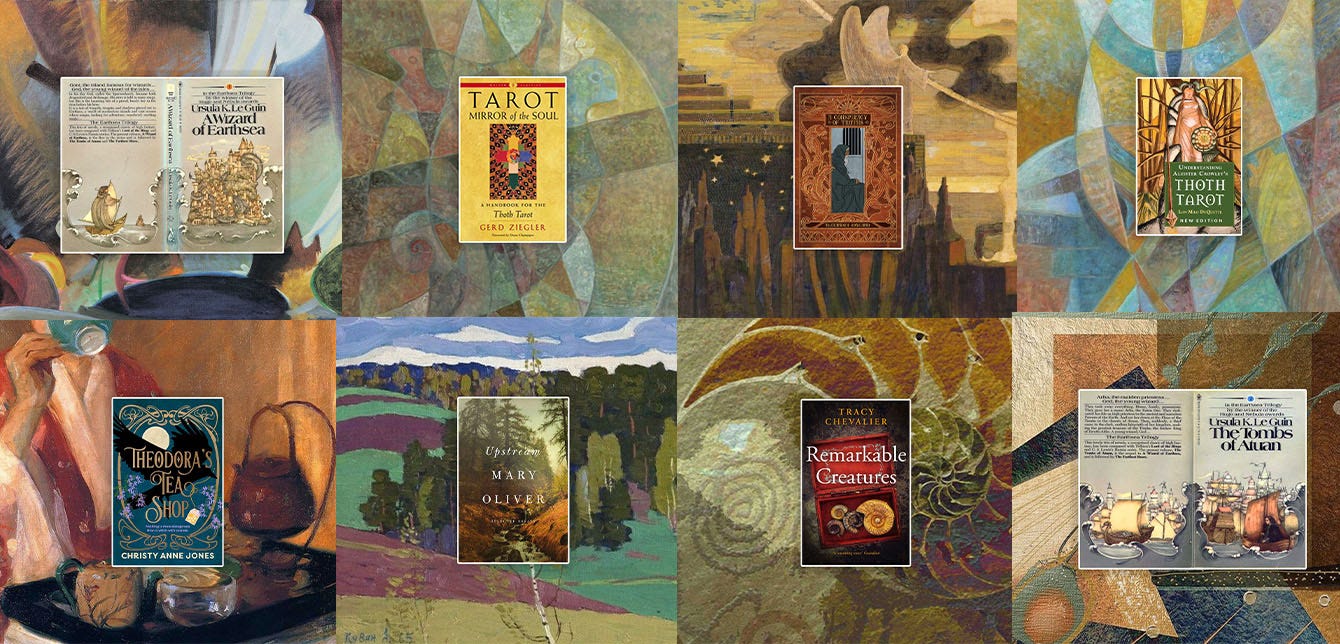
Theodora’s Tea Shop – Christy Anne Jones
A Wizard of Earthsea & The Tombs of Atuan – Ursula K. Le Guin
Remarkable Creatures – Tracy Chevalier
A Conspiracy of Truths – Alexandra Rowland
Upstream: Selected Essays – Mary Oliver
Tarot: Mirror of the Soul – Gerd Ziegler
Understanding Aleister Crowley’s Thoth Tarot – Lon Milo Duquette
Reading Patterns
Letting the soft animal of my body love what it loves: the idyllic reading environment
I did not read until well into May, and very far from home. Between one lease ending at the beginning of the month and another starting a ten-day after, I decided that the liminal space between moving houses would not go to waste; I would go somewhere where all I could do was read, read and read.
My idyllic reading destination followed three prerequisites: the cold, silence, and fresh air. If I wanted to be indulgent, a fireplace and a bath tub were added bonuses. These reading wishes lead me a four and a half hour drive away to the bottom of Western Australia; looking out at the sea meant that 16’000 kilometers onward you’d eventually collide with Antarctica. The beauty of Wadandi Boodja (The Saltwater People’s Country) and the native flora and fauna was not only the perfect place to read, but also an ambient companion to seeking out the natural world; the silence except for the laughter of kookaburras, the olive green glow of light flittering through gumtrees; the drop in temperature, unique to May, that makes you look up and realise “ah, autumn is here” with a breathy exhale that is visible to the naked eye.
In the selected essays of Upstream by Mary Oliver, I read of Princetown through the poet’s eyes; her delicacy in nursing an injured seagull; her relationship with the spiders beneath the stairwell; her love of literature. I bid good morning to the geese next door every day, with a warm cuppa in one hand and a copy of Upstream in the other, and I sat on a tree stump nearby, telling my goose friends Thea and Bo how much I hate moving house and that if I could spend all my time reading, I would.
Wild Geese by Mary Oliver

You do not have to be good.
You do not have to walk on your knees
for a hundred miles through the desert repenting.
You only have to let the soft animal of your body
love what it loves.
Tell me about despair, yours, and I will tell you mine.
Meanwhile the world goes on.
Meanwhile the sun and the clear pebbles of the rain
are moving across the landscapes,
over the prairies and the deep trees,
the mountains and the rivers.
Meanwhile the wild geese, high in the clean blue air,
are heading home again.
Whoever you are, no matter how lonely,
the world offers itself to your imagination,
calls to you like the wild geese, harsh and exciting -
over and over announcing your place
in the family of things.
The soft animal of my body loves reading. It lead me to the cold, the green, and the silent. Each book finds me at the precise moment it is meant to, and not a second before. What good would reading Upstream amidst moving boxes and the stress of the end of a lease have done?
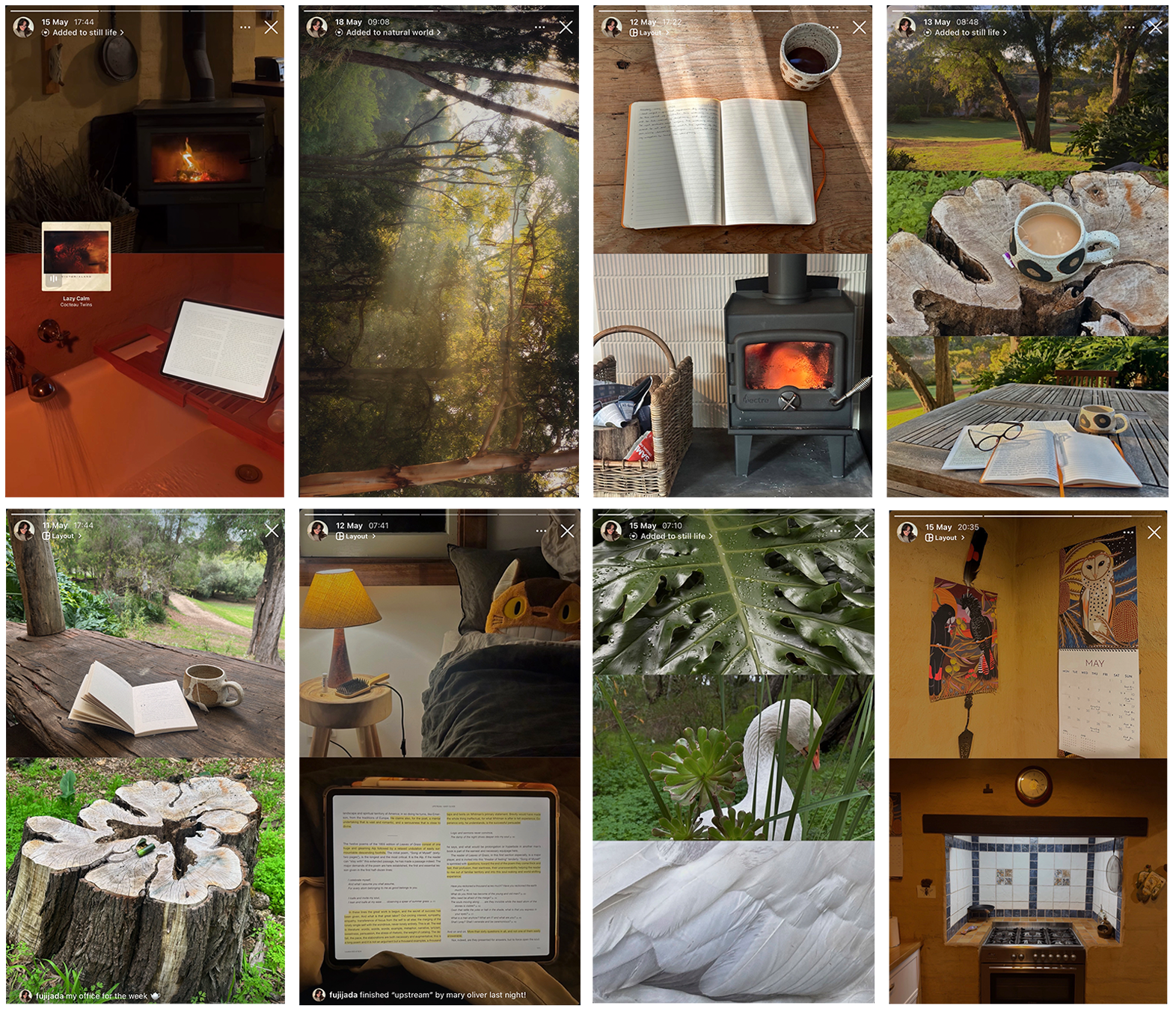
One of my favourite quotes from Upstream was the final line of the first essay, which set the tone for the essays that followed and became the focal point of my reading during my time away:
“Attention is the beginning of devotion.”
And so, on the first night of my stay, I left the windows wide, wide open, to listen to the crickets, the frogs, and the distant laughter of the kookaburras, the perfect playlist to Oliver’s prose. But really, what this moment meant to me was that I have always known what the idyllic reading environment is, and for once, I gave myself permission to seek it out.
Lyricism, narration, and the fluidity of fantasy
Two authors made me sit with my morning cuppa, staring at the gumtrees a bit longer than usual to think about how stories are told when it comes to the cadence of narration, achieved either through a writer’s style or through the voice of their characters. Cadence is created through mechanical elements (punctuation, sentence length, word choice) that create a fluidity that is particularly affluent in fantasy writing. I am particularly drawn to writing that has a mystical, fable-like rhythm, flow and pacing, like the following excerpt from Ursula K. Le Guin’s A Wizard of Earthsea:
“As their eyes met, a bird sang aloud in the branches of the tree. In that moment Ged understood the singing of the bird, and the language of the water falling in the basin of the fountain, and the shape of the clouds, and the beginning and end of the wind that stirred the leaves: it seemed to him that he himself was a word spoken by the sunlight.”
This fluidity and fantasy go hand in hand. Le Guin’s writing is pragmatic yet enigmatic, and I read through two novels from the Earthsea Cycle, A Wizard of Earthsea and The Tombs of Atuan mesmerised by how well she harnesses mechanical components, and yet never writes a novel beyond 300 pages.
A Wizard of Earthsea was published in 1968— the transformation of a boy maturing into the wise Archmage is not a new concept— but Le Guin distances herself from anything else I’ve ever read within the fantasy genre because her writing reads with a fluidity that I feel is lost in modern fantasy.
In A Conspiracy of Truths by Alexandra Rowland, a wandering storyteller is charged with witchcraft and arrested in a foreign land. From his prison cell, he narrates tales from his travels, history, and myth to the five rulers of the country:
“There is a story in anything, if you know what to look for and how to frame it. If you can find the person who needs to hear it. That is my sacred calling— collecting stories and passing them along— but it’s not just myths and tales, it’s people, and the way people are.”
Rowland is beyond an apt storyteller because her main character, Chant, is also one. I was enraptured by this first person novel, where normally this point of view is lost on me. Not only was the main character enrapturing the five rulers with his stories, but me as well. The novel was interluded with fables and narratives, stories-within-stories told by the characters to each other. Storytelling becomes a medium that infuses with moral ambiguity and interpretation. Rowland’s writing reminds readers to not simply accept that they understand a story, but to question how they came to that conclusion. For myself, I am still staring at the gumtrees even after my holiday and having moved into my new home, but at the very least, I can say that the conversational lyricism of the stories told in A Conspiracy of Truths has something to do with it.
A reading hot take: modern fantasy is a commodification
Le Guin has written book reviews of the works of Italo Calvino (one of my favourite Italian magic realists) and blog posts about her cat Pard using the Time Machine attached to her computer, but the most impactful of her non-fiction has been her essays and speeches debunking the assumptions behind fantasy as a genre:
“Some assumptions are commonly made about fantasy that bother me. These assumptions may be made by the author, or by the packagers of the book, or both, and they bother me both as a writer and as a reader of fantasy. They involve who the characters are, when and where they are, and what they do. Put crudely, it’s like this: in fantasy, 1) the characters are white, 2) they live sort of in the Middle Ages, and 3) they’re fighting in a Battle Between Good and Evil.”
Le Guin’s writing creates a space where we can safely explore morality, power and freedom and rejects wishful thinking— to her, fantasy was not mere mindless escapism, but a vital instrument of ethics. Fantasy becomes an important genre when narrative is funnelled in this way, and in truth, the current assumption about fantasy that I heavily dislike is that quality fantasy needs to be cosy or romantic.
What I’m gently trying to say is that I don’t believe contemporary fantasy is making the cut. For me, anyway. Cosy and romantic fantasy are not genres I feel are interrogating and expanding the true power of fiction; they don’t read like magic, they read like commodification, and to Le Guin, “commodified fantasy takes no risks.”
In the foreword of Tales of Earthsea, Le Guin writes a scathingly accurate account of the current state of fantasy as a genre. This novel was published in 2001, the year I was born, and twenty-five years later, I’m reading this foreword and vehemently nodding my head. The current commodified ‘industry’ of fantasy feels like we’re stuck in a printing loop, or as Le Guin aptly puts it, “imitates and trivialises.” For someone that adores fantasy in many mediums, I hardly reach for contemporary fantasy novels because they are missing key elements of what magic means to me: fluidity, interrogation, curiosity and creativity. I don’t want cosy, I don’t want romantic, I want wonderful! Poetic! Fantastical! Perhaps the most common reference to a novel that does these things well is The Lord of the Rings, which Le Guin also commends the “rhythm of Tolkien’s writing” in one of her essays. She deemed Tolkien’s prowess to be a “cyclical repetition in his work, which I think is part of why it totally enchants so many of us." I believe there is a difference between the poetic nature of cyclical repetition and regurgitation:
Commodified fantasy takes no risks: it invents nothing, but imitates and trivialises. It proceeds by depriving the old stories of their intellectual and ethical complexity, turning their action to violence, their actors to dolls, and their truth-telling to sentimental platitude. Heroes brandish their swords, lasers, wands, as mechanically as combine harvesters, reaping profits. Profoundly disturbing moral choices are sanitized, made cute, made safe. The passionately conceived ideas of the great storytellers are copied, stereotyped, reduced to toys, molded in bright-colored plastic, advertised, sold, broken, junked, replaceable, interchangeable.
– Ursula K. Le Guin, Foreword of Tales From Earthsea
Another book in May that deviated from the tropes and predictability of contemporary fantasy was a lovely ARC of a book that I have been anticipating for a very long time, Theodora’s Tea Shop by Christy Anne Jones. Le Guin was correct in identifying that there are indeed assumptions made of fantasy characters— Ged, nor the majority of the characters in Earthsea, are brown.
“I have received letters that broke my heart, from adolescents of color in this country and in England, telling me that when they realized that Ged and the other Archipelagans in the Earthsea books are not white people, they felt included in the world of literary and movie fantasy for the first time. Worth thinking about?”
Theodora’s Tea Shop is a thoughtful novel that doesn’t rely on current fantasy tropes; the main character, an aspiring witch, has a chronic illness, which deviates from the assumption that main characters in fantasy are always able bodied. For a lot of the novel, she is unable to use magic– but this becomes her strength.
Both of these novels ignite curiosity and wonder, add new insights into fantasy as a genre, and as a woman of colour with a chronic illness, create realms I can exist in.
Reading to deepen my practice as a tarot reader
I have been a tarot reader for almost seven years, and with every new deck I acquire, there is even more reading and even more learning to do.
I’ve been trying to find a tarot deck painted by Andrea Serio for a long time, enlisting the help of my dad in Italy and asking him to scour Italian secondhand marketplaces in my stead. Last year, I came back home from Italy empty handed and rescinded Serio’s distinct art style as a far away dream; he painted only two tarot decks for Lo Scarabeo— one printed in 2001 (The Dante Tarot) and the other in 2004 (Stelle Eterne/Liber T), which was out of print by the time I turned six in 2007; my odds of owning a deck were very, very slim.
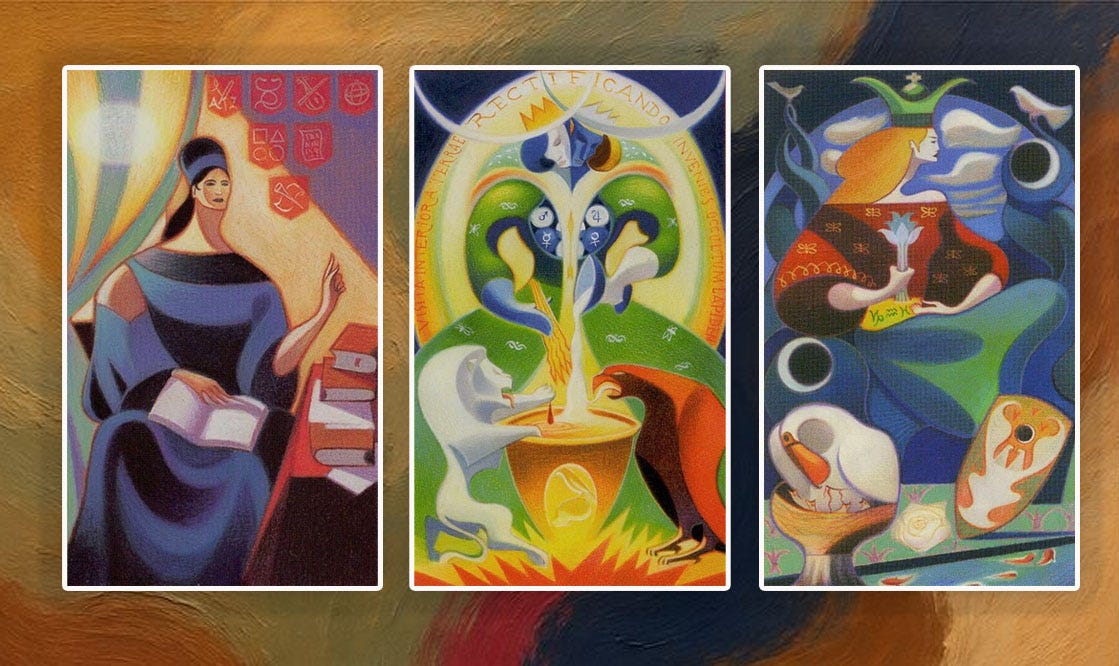
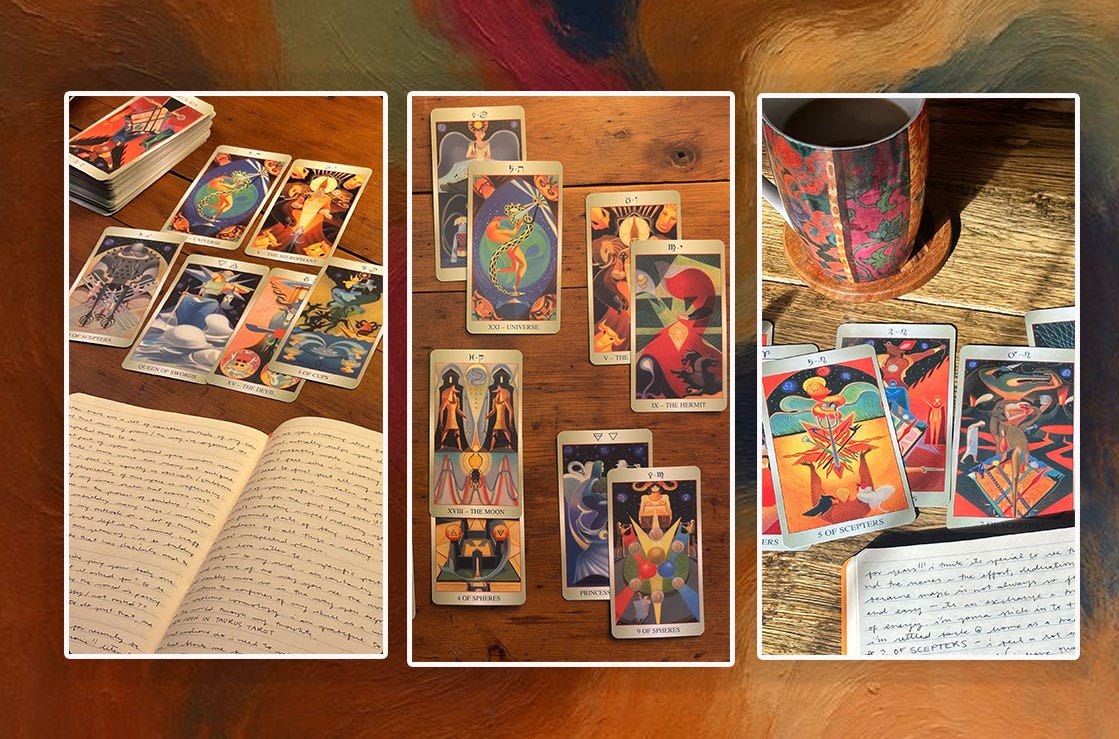
And then, at the beginning of May, I found a sealed version of the Stelle Eterne at a secondhand bookstore thirty minutes from home, right under my nose! Published in 2004, these weren’t the cards painted by Serio that I originally had my eye on, but when I saw them packed away at the back of the shelf, I recognised the art style instantly and couldn’t believe that after a cross country, multi-generational and bilingual search, I was able to acquire a deck that had never known another owner.
These cards are fashioned after the Thoth Tarot, which deviates from the usual Rider Waite deck designed by Pamela Coleman Smith that many are accustomed to. The Thoth deck was designed by Lady Frieda Harris, and caters to a different reading style that draws from astrology, mythology and geometry in conjunction with the rich symbology of the tarot. Although I have interpreted tarot for many years now, my new Stelle Eterne deck prompted further reading and the excitement of feeling like a beginner and learning something new again! I would readily recommend both Thoth guide books I read to learn more about my new deck, Tarot: Mirror of the Soul by Gerd Ziegler and Understanding Aleister Crowley’s Thoth Tarot by Lon Milo Duquette, to anyone interested in the convergence of esoterica and art.
Reviews, Thoughts & Musings
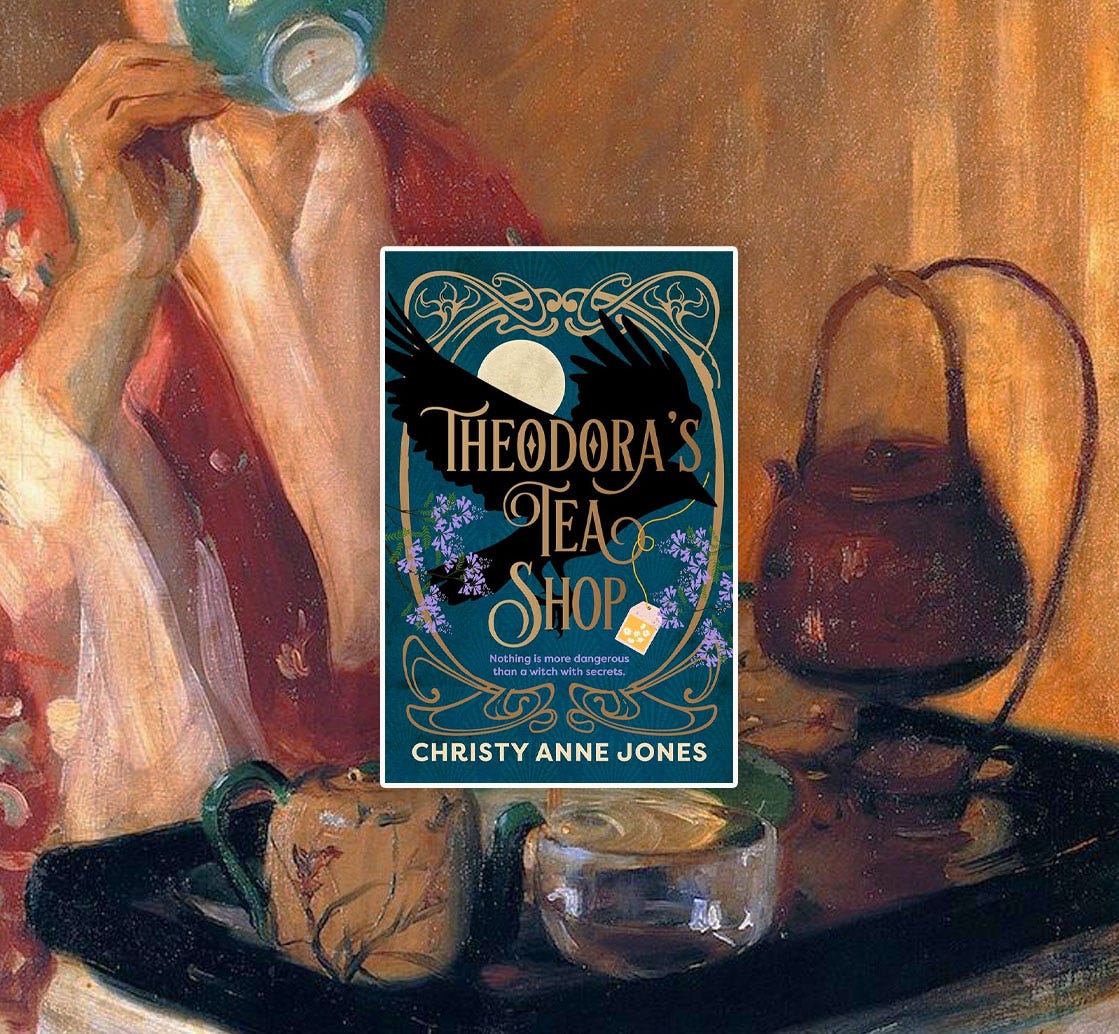
Theodora’s Tea Shop by Christy Anne Jones
I have been following Christy’s journey writing Theodora’s Tea Shop since she uploaded the first writing vlog for it four years ago, and I have been a subscriber to her channel for double the amount of time, so to say that Theodora’s Tea Shop was my most anticipated book of 2026 was an understatement. Thank you to Hachette for providing me with an ARC copy!
This novel was a unique experience that unique to contemporary readers in the digital age, as Christy documented the entire writing, editing and publishing process of this novel (which was formerly referred to as Project Teacup) from beginning to end. Being able to witness over so many years how the sapling of an idea grew into such a charming and delightful novel was such a joy!
Theodora’s Tea Shop has been marketed towards “fans of Howl’s Moving Castle,” which I read and reviewed two books out of the trilogy in February. In Howl’s Moving Castle, Sophie’s journey reminds us to give ourselves permission to love, experience, and create magic, but for Dorothy Louise Walcott in Theodora’s Tea Shop, readers are faced with higher stakes and far more serious themes, including how we process grief, the imperfections of found family, healing from abuse, and the strength of those that have chronic illnesses.
As a reader and writer that is chronically ill, the perseverance and tenacity of Dot was encouraging and refreshing. It was a massive comfort to read about a chronically ill main character in a fantasy setting, which surprised and really resonated with me personally. In particular, the following passage struck very close to home:
“Dot pushed through the throng of people, her vision smeared by a flurry of tears, until she found a concrete step at the edge of the square and sat down. She opened up her bag and, fingers tremoring, tried to pick out the shattered glass. Two of her blouses were ripped. She mopped up the tonic as best she could with her bath towel. Tiny insects swarmed the lampposts. The smell of pastry, pistachios and clotted cream wafted from a nearby street vendor. But Dot’s groaning stomach was tempered by humiliation.”
This scene reminded me of the day my chronic illness flared up in Rome, my phone’s signal failed and there was nowhere to properly rest, and so I hopped between churches, crying in the pews to collect myself before moving onwards, wondering if I should give up the day and return to my accomodation or keep going. I decided to keep going, and that tenacity meant I stumbled upon some Picasso and Caravaggio paintings; an experience I wouldn’t have gotten if I had just given up.
Another aspect of Theodora’s Tea Shop I enjoyed was the questions regarding identity– who do we choose to be, who we think we should be, or who we really want to be? Theodora’s character was a complex and intricate exploration of self preservation and survival, which made me question all of the times I’ve fragmented myself to survive:
“A thousand Theodoras lived in this room: a thousand hobbies and tasks and costumes abandoned partway through for something or someone else.”
The worldbuilding and magic system, laden with spirits, packet spells, sigils drawn in chalk, and a capital city infused with religious and magical history was colourful and vibrant:
“Four religions had been practised under the cathedral’s great dome. Incense had changed to idols and then to beads and then to silver. Four times, conquered. With each tumble of the crown, the great cathedral had absorbed the influence of its new inhabitants, along with the rest of the melting pot city.”
A brilliant and imaginative debut novel from a fellow Aussie writer, to which I applaud after years of hard work!
Rating: ✷ ✷ ✷ ✷ (4 stars)
Read this if you enjoy Ghibli movies but want to read a higher-stakes, gothic fantasy. Whether you like the salt spray of the sea or the many sights and sounds of a booming city, Theodora’s Tea Shop reminds us that found family, and our own independence, must be fought for.
Books I’d recommend with found family and magic: Howl’s Moving Castle by Dianne Wynne Jones, The House in the Cerulean Sea by T.J Klune
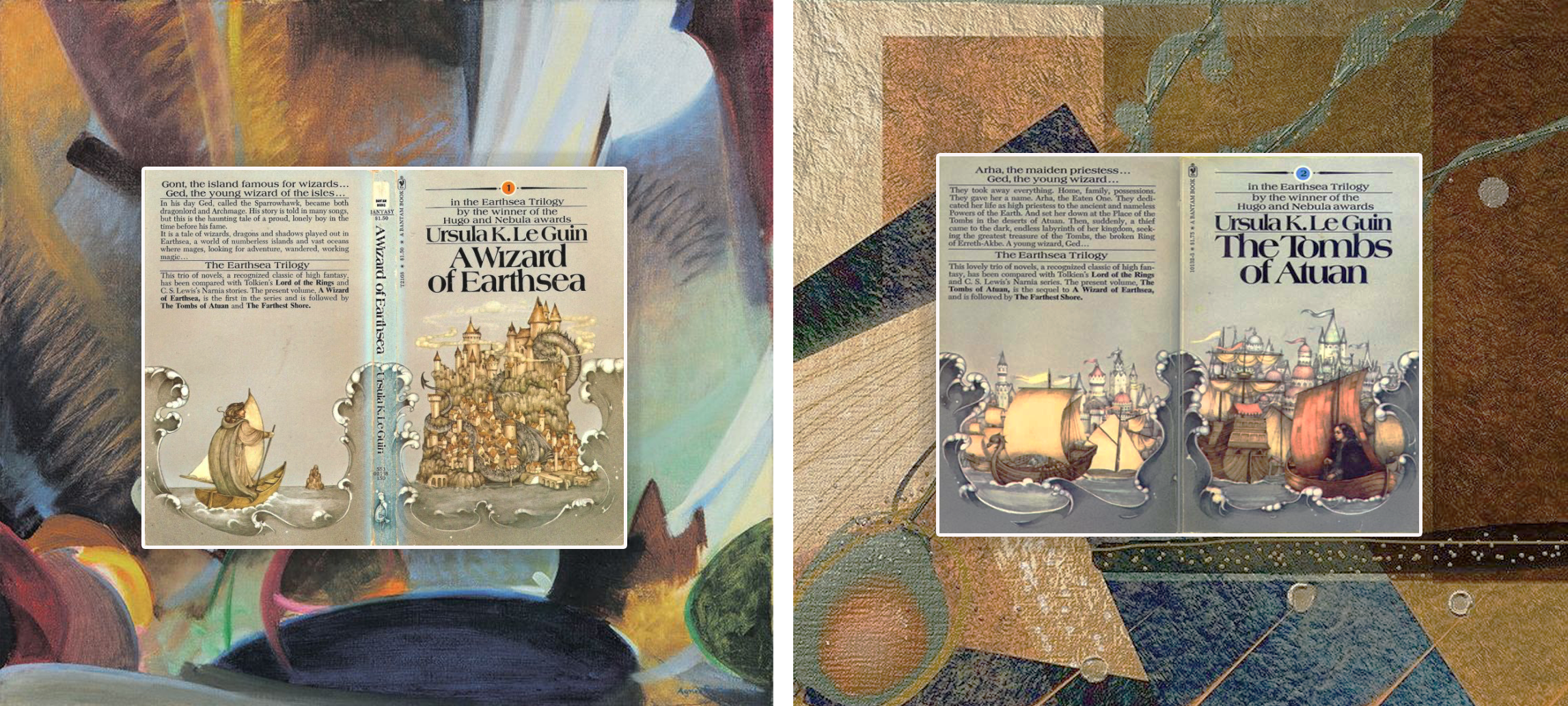
A Wizard of Earthsea by Ursula K. Le Guin
Lyrical and poignant— I have not been able to stop thinking about A Wizard of Earthsea since I finished reading it because the vast expanses of the Archipelago and the journey of the young Ged into sorcery is of such a high caliber that defines high fantasy. I would even go so far as to argue that A Wizard of Earthsea is a pillar of fantasy— one of it’s founding mothers. Ursula K. Le Guin surprised me with this novel being my inauguration into her work, because it is equally one of my favourite fantasy books of all time and also the shortest fantasy book I’ve read; in a normal paperback version, the 56’000 words of magic and adventure equate to a mere 200~ pages. I believe the quality and succinctness of the writing— or to quote myself earlier, the “pragmatic and enigmatic”— is profound and unmatched.
“For magic consists in this, the true naming of a thing.”
Le Guin’s writing is fluid and magical, but what has drawn my adoration so vigorously to the Earthsea overworld is the Naming of all things. In Earthsea, true names are the language of creation, and represent the intense power of being known. To be fully seen and accepted as one truly is means that one can ultimately be known and a metaphysical dominion over them can be established. The “true naming of a thing” is the undercurrent that connects all of the novel’s major themes such as coming of age, identity and the shadow self, and cosmic balance.
This language, the Old Speech known by dragons, is an intense and omniscient power. True names, even between individuals, are not given lightly. To master a thing’s name is to master the thing itself. Wizards in training spend a long time studying the true names of almost every living thing in order to fully understand how consequential possession of a true name is, even down to the most minute things:
“To change this rock into a jewel, you must change its true name. And to do that, my son, even to so small a scrap of the world, is to change the world. […] You must not change one thing, one pebble, one grain of sand, until you know what good and evil will follow on that act. The world is in balance, in Equilibrium. A wizard’s power of Changing and of Summoning can shake the balance of the world. It is dangerous, that power. […] It must follow knowledge, and serve need. To light a candle is to cast a shadow…”
As someone that has a fascination with words, and loved the concept of “words of power” in Skyrim, A Wizard of Earthsea has taken its place in my personal canon. You will be hearing from me with an essay once I finish the entire series. (Also, I just really like dragons.)
Rating: ✷ ✷ ✷ ✷ ✷ (5 stars!)
Read this if you are intrigued by magic systems surrounding the meaning behind words, enjoy conversations with dragons and are interested in etymology and cosmology.
Books I’d recommend that are fantasy with strong narration: The Castle of Crossed Destinies by Italo Calvino. The Hobbit by J.R.R Tolkien, Piranesi by Susanna Clarke, Witch King by Martha Wells, The Priory of the Orange Tree by Samantha Shannon
The Tombs of Atuan by Ursula K. Le Guin
Whilst the second book in the Earthsea Cycle series was not as mesmerising as the first, as I write this review I have almost finished the third book, and so I do find merit in both the writing and storyline, and understand the importance of The Tombs of Atuan. This is a story about womanhood, identity, and the transition from oppression to freedom.
This novel is far more serious, sinister, and dark than the tales of Ged in A Wizard of Earthsea, deviating from his story to focus on the worldbuilding beyond the Archipelago. Le Guin does not mention any detail idly— the aforementioned Ring of Erreth-Akbe in the first book becomes a vital symbol in this book. Tenar, a young girl that is born in the Kargish empire, is taken at the age of five to the Place of the Tombs in order to assume the position of head priestess for the cult that worships the Nameless Ones. The titular tombs are explored across the book as a richly detailed and vast underground complex, shrouded in darkness, but they also exist as a physical representation of breaking free from oppressive dogma. Ged returns as a supporting character, seeking the other half of the Ring of Erreth-Akbe, and in doing so, aids Tenar in seeking a new beginning beyond the tombs.
The contrast between Ged and Tenar’s coming of age stories is like light and darkness; Le Guin’s thematic coherence uses magic as a tool for maturity and growth to show that freedom is not only the physical act of traversing wind and sea, but also escaping from our deepest, darkest inner labyrinths.
Rating: ✷ ✷ ✷ (3.5 stars)
Read this if you are planning to continue reading the Earthsea Cycle series. I wouldn’t recommend stopping here, keep going!!!
Books I’d recommend that are similar: Same as above.
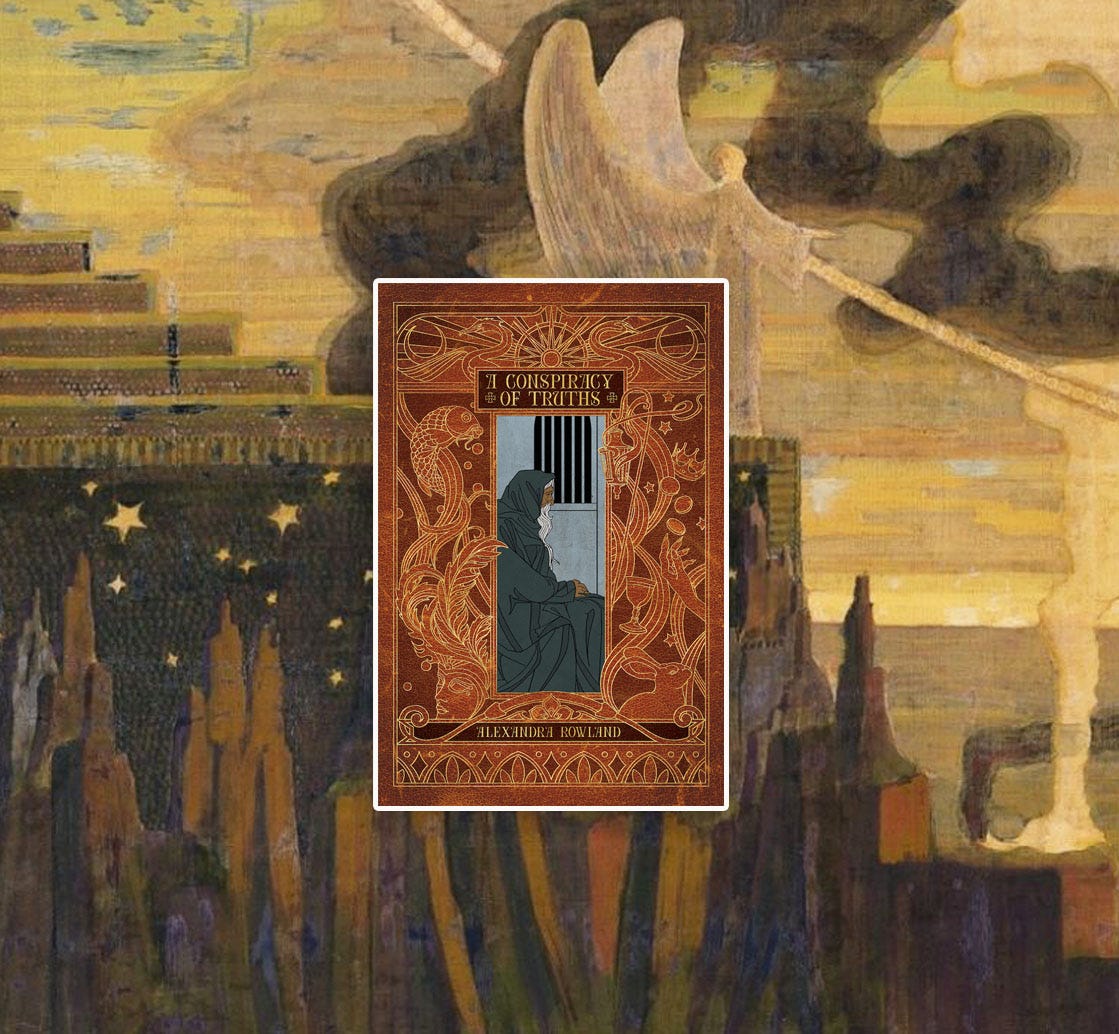
A Conspiracy of Truths
With such a paradoxical name, A Conspiracy of Truths lies in the liminal space of telling a half-truth, or the valiancy of telling a white lie in order to save face. Storytelling is a paradigm of human understanding. We do not solely tell stories to entertain or convey, but also to influence, to discover, and in the case of the main character Chant, to conspire with the five ruling forces of a foreign land to be acquitted of his charges of witchcraft and espionage, both of which are considered heresy, and both of which are punishable by death.
Rowland tells an intoxicating and compelling story like a game of chess, full of political intrigue, deception, societal rules and regulations, and the austere movements society is restricted by, all from behind a prison cell. In the first half of the novel, the only physical movement Chant gets is from cell to courtroom to a different cell and then back to the original cell. But boy, can this old, wandering storyteller run his mouth. And that he does, telling fables to those who will listen as his only tool for negotiation and unlocking the chains that bind him.
The narration of this book was incredibly humorous, and in the same way the characters were mesmerised and at times manipulated by Chant’s storytelling, so was I! He was not an infallible or noble character by any means, but he reminded me how much power storytelling has.
Rating: ✷ ✷ ✷ ✷ (4 stars)
Read this if you enjoy the political intrigue of games like Dragon Age, are fascinated by the gem hierarchy in Steven Universe, or enjoy stories that have a sarcastic and humorous narrator that stirs the pot without lifting a finger.
Books I would recommend with unreliable narrators, a focus on language and/or political intrigue and society’s downfall: A Memory Called Empire by Arkady Martine, Drive Your Plow Over The Bones of the Dead by Olga Tokarczuk, Babel by R.F Kuang
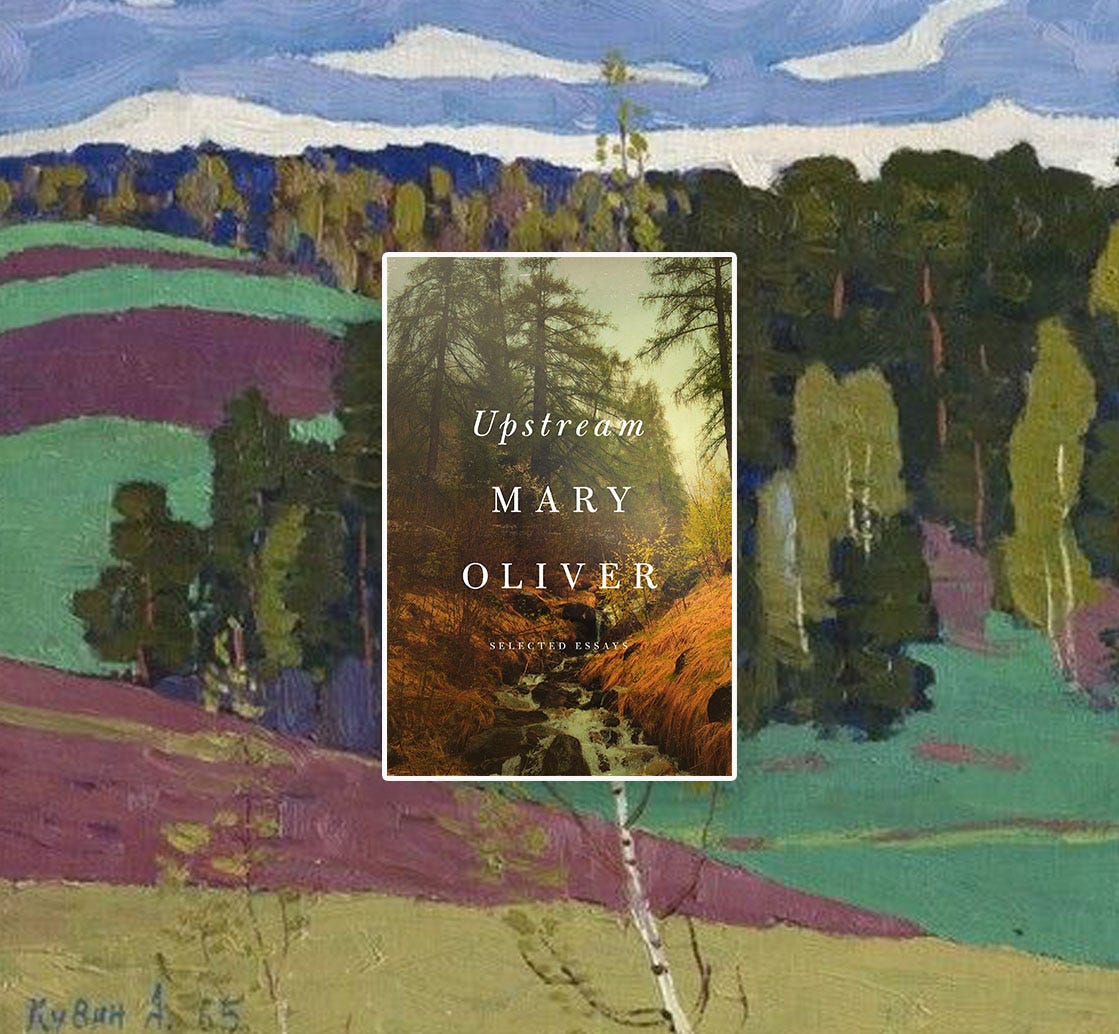
Upstream by Mary Oliver
I loved these selected essays by Mary Oliver so much (which is very unsurprising) that I in turn wrote two essays of my own. Upstream, alongside A Thousand Mornings which I reviewed in March, helped me navigate my PTSD and depression diagnoses that I struggle with on the daily; writing that has the capability to do this is sacred. Beyond reviewing, I simply had to write about these essays.
You can find a detailed summary and quotation study of each section of Upstream here:

I’m listening to the kookaburra’s laughter on a late autumn afternoon with lamington crumbs all over my shirt, thinking about prose written by poets; a sublime and beautiful convergence; the kind of writing I aspire to create and live to read.
Or read my analysis of all 36 poems in A Thousand Mornings here:

When the magnesium tablets and the sleeping pills stopped working, I annotated all thirty-six poems in A Thousand Mornings by Mary Oliver. It was during these sleepless nights at the beginning of my PTSD treatment that I truly came to understand her when she said: “I got saved by poetry, and I got saved by the beauty of the world.”
Rating: ✷ ✷ ✷ ✷ ✷ (5 stars!)
Read this if you need to renew your faith in the beauty of the world, need to touch grass, or connect with the natural world and your place in it.
Similar books I’d recommend about the natural world: The rest of Oliver’s oeuvre— nothing else compares!
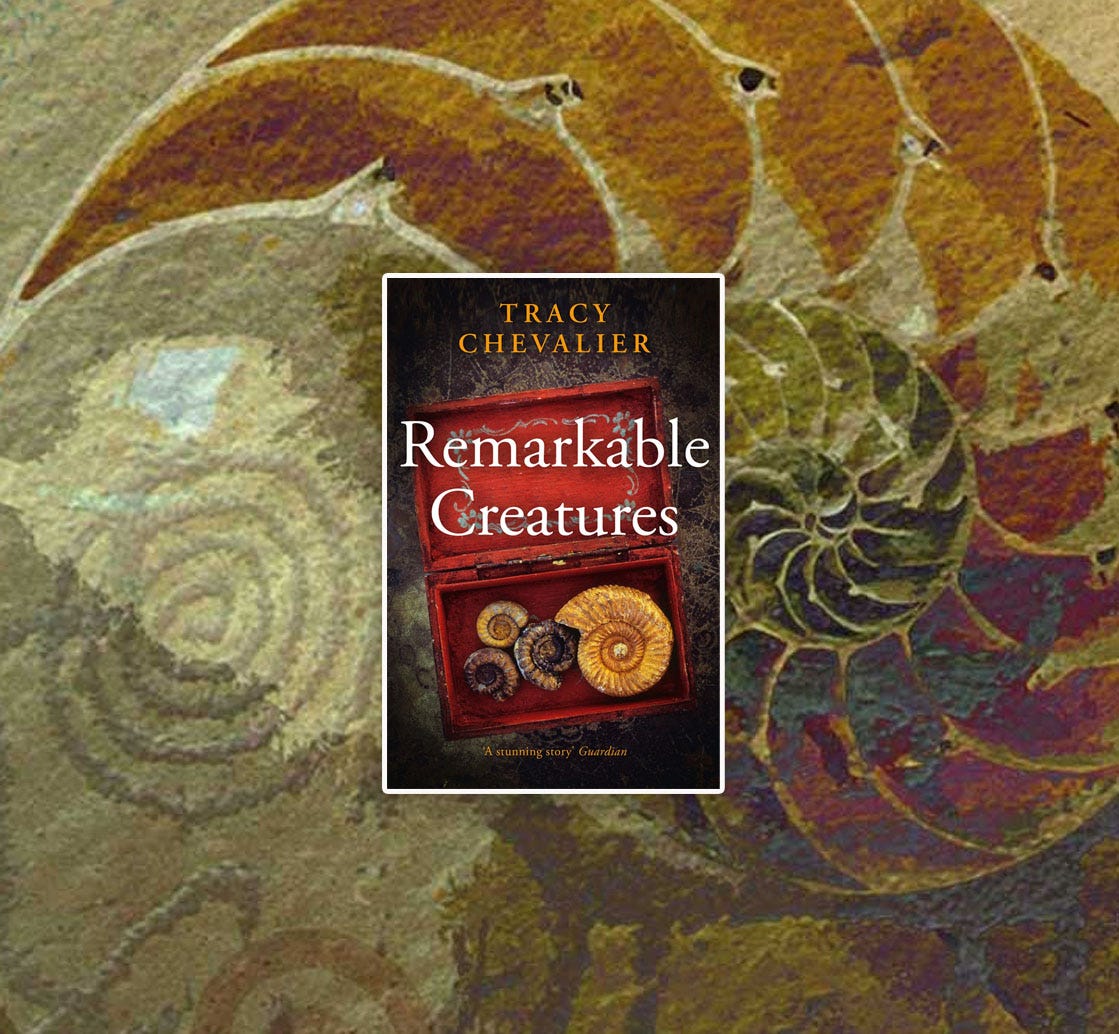
Remarkable Creatures by Tracy Chevalier
My family and I collect pebbles and shells, lay them all out on a cloth after rinsing them, and pick out our favourites, and so when I saw a massive ammonite on the cover of Remarkable Creatures and read the description promising female friendship in the regency era alongside fossil hunting, I added this book to the pile of secondhand books I got from a book exchange thirty minutes from home. (The very same place I got the aforementioned tarot cards!)
Unfortunately, I found the story to be quite unremarkable. Maybe because the novel reminded me too much of a beloved friendship I had that I look back on fondly and yet cannot return to.
The novel is based off of Marry Anning, whom is perhaps the origin of the tongue twister “she sells sea shells by the sea shore” and made significant contributions to palaeontology and Jurrasic marine fossils. I enjoyed how the discovery of fossils was used to interrogate the infallibility of the church in regards to creation and evolution and I wish it focused more on the idea of two truths existing at once.
Rating: ✷ ✷ (2 stars)
Books I’d recommend about friendship and connection: The Perfect Circle by Claudia Petrucci, The Housekeeper and the Professor by Yoko Ogawa, The Place of Shells by Mai Ishizawa, The Door by Magda Szabo
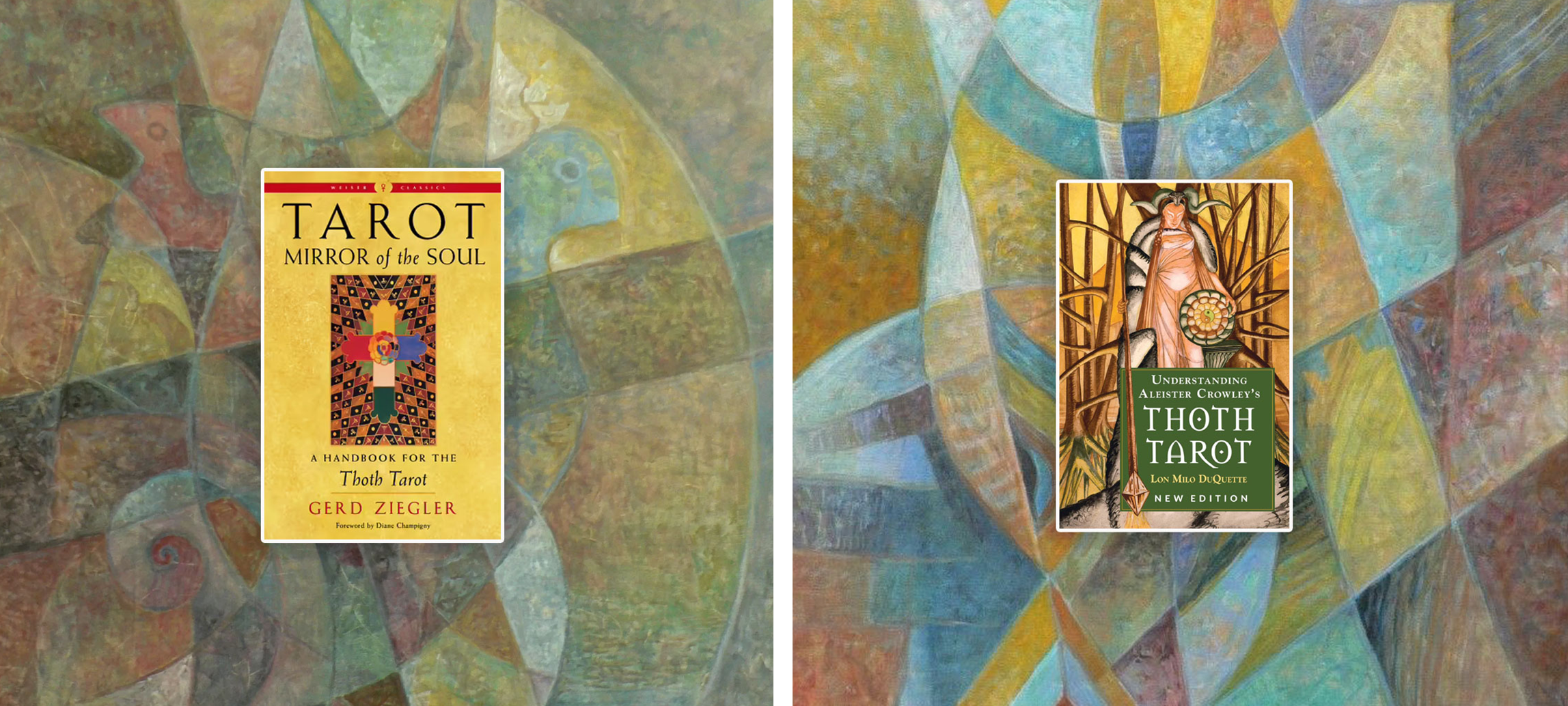
Tarot: Mirror of the Soul by Gerd Ziegler & Understanding Aleister Crowley’s Thoth Tarot by Lon Milo Duquette
Fantastic companion books to begin learning about the Thoth Tarot. I refer to Ziegler’s interpretations and explanations on the daily when I draw a card in the morning. I’m loving learning about the elemental and astrological influences the cards have!
Rating: ✓ ✓ ✓ ✓ (Recommendation on a scale of 1-5, 4 ticks!)
Books I’d recommend about learning tarot: The Tarot Handbook by Rachel Pollack
Afterword
Since the weather has finally cooled down in WA, I can’t wait to get stuck into even more reading. I even marked the occasion by buying a new reading chair!
What are you reading at the moment? I would love some winter reading recommendations!
For now, I will be writing bi-weekly instead of every week to maintain the quality and regularity of my newsletter. At times, publishing every week happens so naturally, and at other times, it is entirely the opposite.
I am excited to be publishing some more journal prompts soon!
Thank you for reading,
Jada
✷
@fujijada
jadadeluca.com
deluca.jada(at)gmail(dot)com

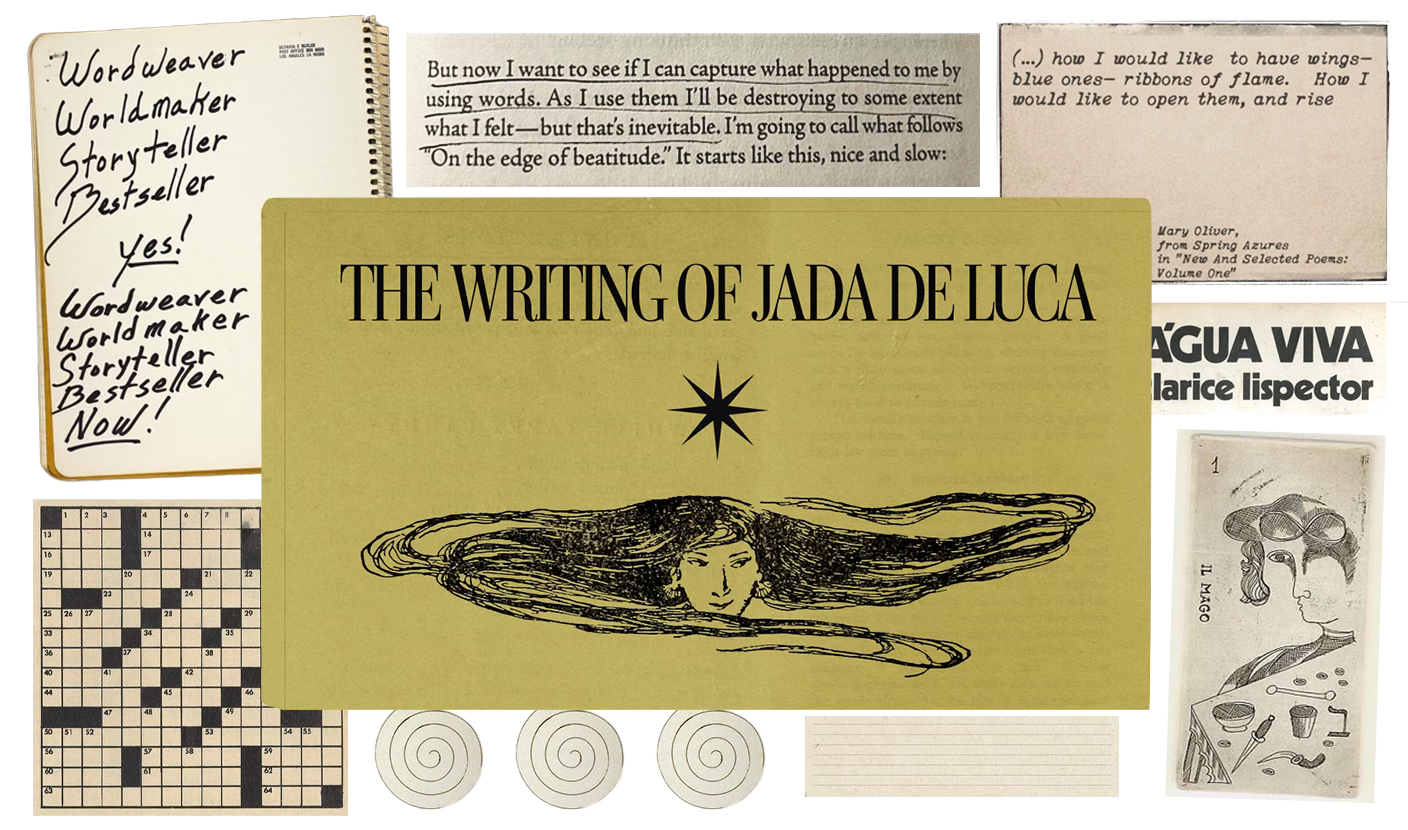
Italian-Samoan writer Jada De Luca is a visual narrator, storyteller and devout journaler. She writes about leading a reading and writing life, inspired by Mary Oliver’s poem Sometimes:
Instructions for living a life:
Pay attention.
Be astonished.
Tell about it.
Telling stories through both written and visual narration (she is also a collage artist) is her way of paying attention to the magical, surreal, and intensely personal landscapes that the arts offer. Her newsletter is a source of her entire writing career; her oeuvre; a commonplace journal of essays about literature, language, writing, travel and art.
Jada’s favourite novel is Água Viva by Clarice Lispector, her favourite tarot card is The Magician, and she likes her tea with an extra sugar.
Love the rebrand and the new name! Definitely more whimsical! Very jealous of your lovely reading retreat. Isn’t it magical to read magic in nature? Le Guin is the absolute GOAT (imo). I love reading her literary commentary — it’s always so sharp and poignant. I generally gravitate towards her more science fiction leaning work but I have the Earthsea trilogy on my tbr for fall when we are still spending time outside but the kids have gone back to school! I think you would really like Lud-in-the-mist and The Last Unicorn if you haven’t read them!
I love the addition of books you recommend! And I think the Earthsea series sounds right up my alley - I must give it a try!