
February Reading List
Everything I read in February, reading as a balm for a bad day, the benefits of rereading, books about books, and in person and online reading communities

Foreword
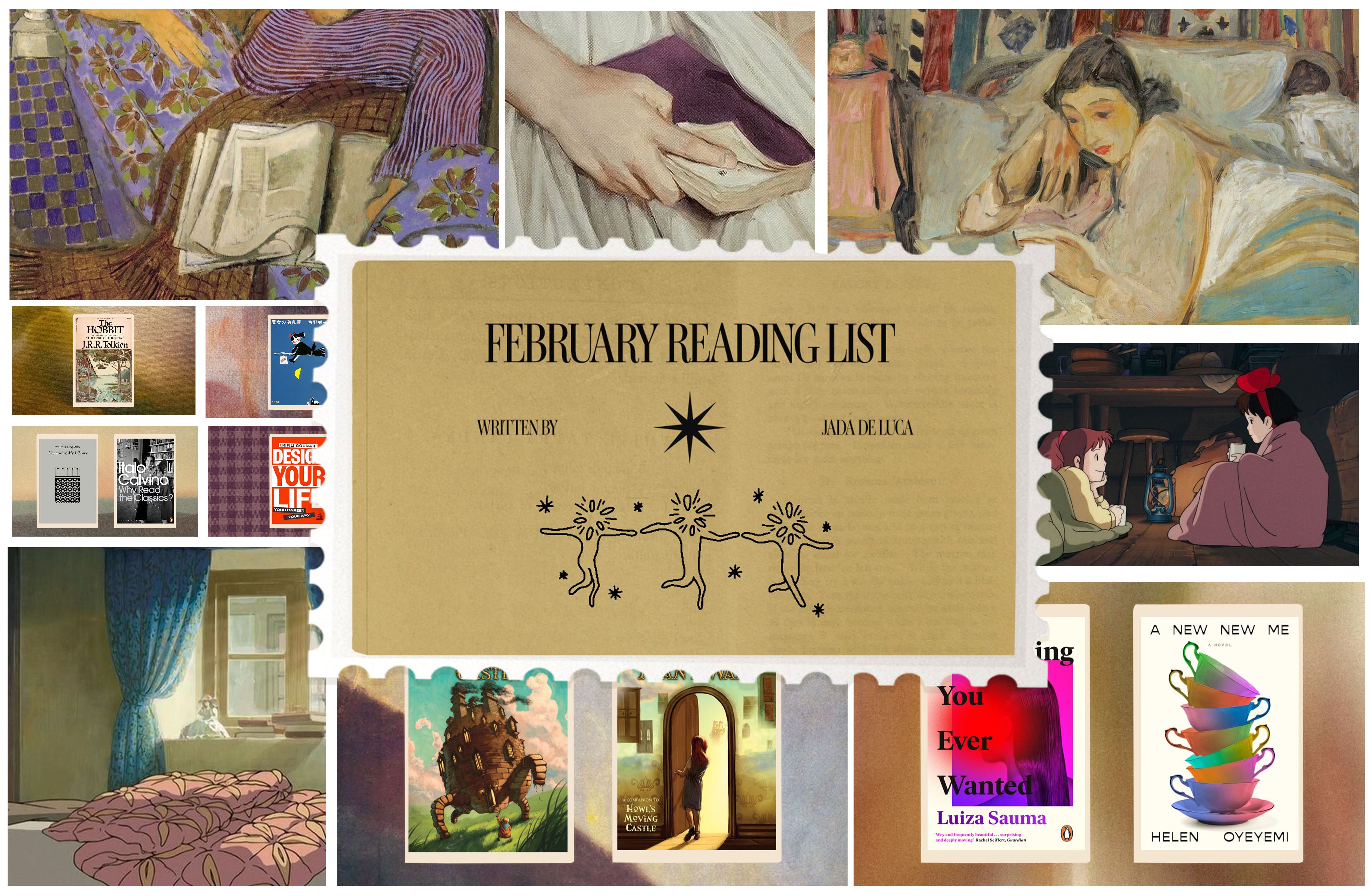
Welcome to this month’s reading reflection! This month includes:
🕯️Reading cosy fiction as a balm for a bad day
⚖️ The benefits of rereading books
📰 Answering the question: why do we read?
🪑 Finding reading communities online & in person
🏷️ Reviews for the 10 books I read this month
As usual, this wrap up is divided into two parts. The first is my reading forecast, where I explore the themes, tangents, patterns and habits that formed my reading. This segment continues from last month’s as I generate new understandings of ideas I’m forming. This is the reading version of following a ‘desire path’.
The second segment includes the reviews of the books I read this month. If you’re looking for quick recommendations, a star rating, or potentially your next read, then feel free to scroll to this section. I also post my reviews on Goodreads, and write quotation studies to expand on my reviews.
Happy reading,
Jada
Last month’s reading list:

Previous newsletter:

My February 2026 Reading Forecast
Feel-good fiction as a balm for the blues
‘Why do we read?’ is a question that one day I’ll have an answer to. The problem is how expansive it is; the adoration I have for books seems indescribable at the best of times. This month, three books reminded me of the one of many answers: reading as a balm for a bad day.
Feel-good fiction is characterised by the following: cosy, whimsical and joyous. Unsurprisingly, all my recent reads under this umbrella term are Studio Ghibli adjacent– I was delighted to discover that two of my comfort movies, Howl’s Moving Castle and Kiki’s Delivery Service, are based on book series!
Kiki’s Delivery Service was published in 1985. I’m twenty-four, but can always return to Kiki’s story when I feel a bit overwhelmed or like I don’t know what I’m doing in life. Only the first book in the Kiki’s Delivery Service series has been translated into English, but Penguin Random House are releasing the second book, Kiki and the New Magic, on August 25. It seems like there are plans to continue to publish the light novels with translator Emily Balistrieri.

The Howl’s Moving Castle series by Diana Wynne Jones is a loose trilogy, with the third book, House of Many Ways, described as a “companion piece” to the first book. Because of this, I decided to skip the second book because the premise didn’t interest me. The great thing about companion pieces is you don’t feel like you’re missing out on anything– Howl’s Moving Castle provides a solidly rich and magical story by itself.
House of Many Ways may have not been the best book I read, but even when a book is just ‘fine’, it can still make me laugh. Sometimes, those fleeting reading moments are just as important as the entire reading experience.
Rereading books
Before now, I was unenthusiastic about rereading books. In February, a couple of books made me seriously reconsider this.
The first was Howl’s Moving Castle, which I initially read when I was sixteen. A massive reason why I’ve started writing these monthly reading reflections, book reviews, and quotation studies was because of the feeling that there were a lot of books from my past that were eroding in dormancy; despite recommending Howl’s Moving Castle to countless friends, my reasons for loving this book so much were a phantom feeling that I remember having, but couldn’t articulate.
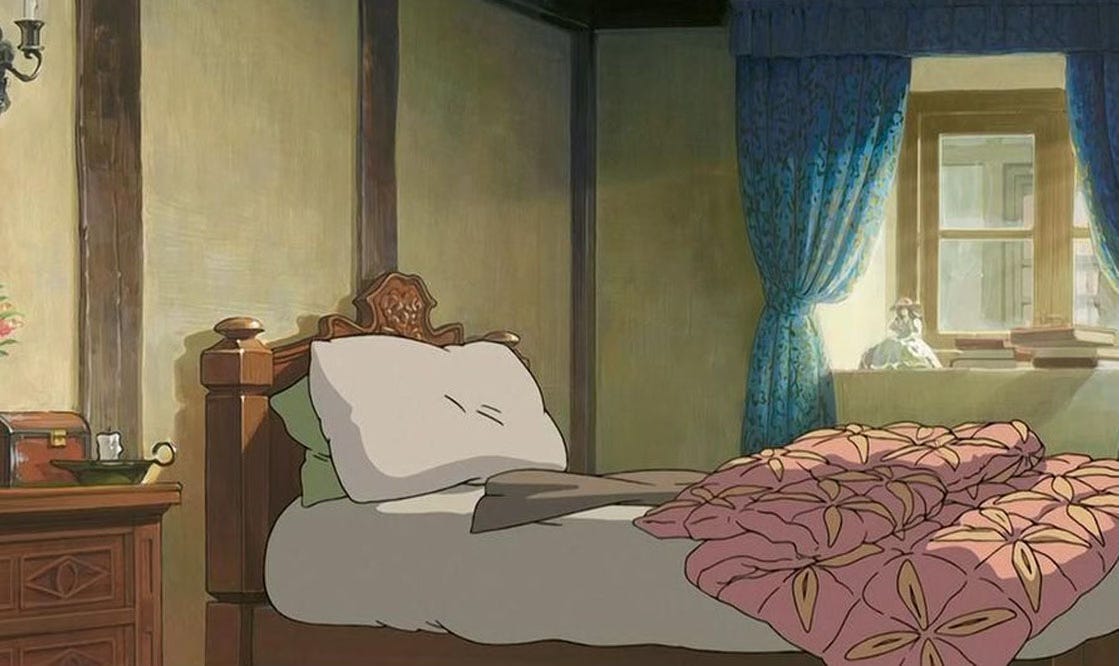
The second book that spurned me to revisit my relationship with the books of my past (and rereading as a mode of reading) was Italo Calvino’s Why Read Classics?
In particular, this quote in the introduction:
“Books […] exercise a particular influence, both when they imprint themselves on our imagination as unforgettable, and when they hide in the layers of memory disguised as the individual’s or the collective unconscious.”
Calvino addresses the act of rereading as one in which new impressions and a deeper understanding are discovered through the resurfacing of the unconscious birth of taste in our youth. This sentiment I came to fully understand in the eight year gap between reading Howl’s for the first and second time:
“Youthful reading can be (perhaps at the same time) literally formative in that it gives a form or shape to our future experiences, providing them with models, ways of dealing with them, terms of comparison, schemes for categorising them, scales of value, paradigms of beauty: all things which continue to operate in us even when we remember little or nothing about the book we read when young. When we reread the book in our maturity, we then rediscover these constants which by now form part of our inner mechanisms though we have forgotten where they came from. There is a particular potency in the work which can be forgotten in itself but which leaves its seed behind in us.
I also reread Virginia Woolf’s extended essay A Room of One’s Own, finding a copy that sixteen year old me had highlighted. I find it really funny my reading at both sixteen and twenty-four are indexed by these two books.
To pick apart Calvino’s quote: my reread of Howl’s was very much my “literary formation” where I discovered a “paradigm of beauty” (my love of fantasy and magic.) My reread of A Room of One’s Own allowed me to “rediscover [my] inner mechanisms.” When I was sixteen, I was still in high school, living with my family, and my career as a writer was still unknown. Reading Woolf at twenty-four, after having lived by myself and being a published writer with a newsletter, created an inherently different experience– the “scale of value” as a young, female writer who began to flourish when she had a room of her own.
Meta-reading, continued
Calvino’s Why Read Classics? also spurned me to continue following the curiosity I felt after reading Every Day I Read last month. In a way, they make a complementary reading pair, wherein two authors reflect on their love of reading. But as is the nature of complementary colours, they are very different.
I would describe Hwang Bo-Reum’s writing as a buttermilk yellow. She writes with an infectious sentimentality and brightness that encourage people to read in broad, exciting and joyous ways. Calvino’s critiques and analyses of his favourite classics, in contrast, are a mulberry purple; intimate, deep, ornate, intellectual, passionate, selective, personal.
Both approaches to writing about reading are important. This month, I began to think even more about reading about reading, and how this translates in a myriad of ways for different authors.
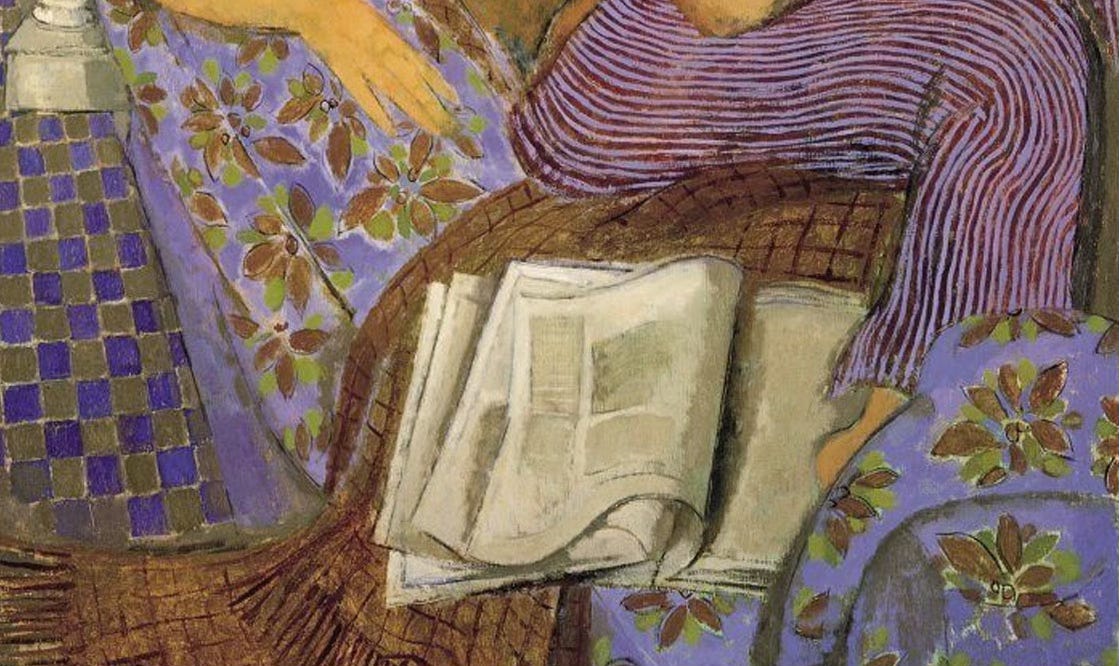
To answer my earlier question, “why do we read?” many authors have their own personal version of this answer; books about other books; books about reading books; books about writing books; books about bookstores; or as is the case with another one of my February reads, books about collecting books.
Following the trail of meta-reading led me to Unpacking My Library, where Walter writes about collecting and owning books through the lens of memory:
“…Memories of the cities in which I found so many things: Riga, Naples, Munich, Danzig, Moscow, Florence, Basel, Paris; memories of Rosenthal’s sumptuous rooms in Munich, of the Danzig Stockturm, where the late Hans Rhaue was domiciled, of Siissengut’s musty book cellar in North Berlin; memories of the rooms where these books had been housed, of my student’s den in Munich, of my room in Bern, of the solitude of lseltwald on the Lake of Brienz, and finally of my boyhood room, the former location of only four or five of the several thousand volumes that are piled up around me.”
This geographic minefield of memories where Walter had collected books reaches a climax where at the end of this winding adventure through memory he exclaims:
Oh, the bliss of the collected, bliss of the man of leisure!
Whether written by Bo-Reum, Calvino, or Walters, the conclusion about meta-reading that I have come to is that the answer can be found in reading more books! O, bliss to the reader of books!
Another attempt at a book club
Don’t ask me how many times I have tried to start up a book club. I am yet to succeed. Recently, I emailed my local bookstore about joining and instead got put on an ambiguous wait list. I still don’t know what place I am in the queue, and it’s been two months.
But in February, I did accidentally start a book club without realising it: I got my partner an e-reader for our anniversary. Now, our Sunday morning is blocked off for our book club date for the book we are reading, which in February was The Hobbit by J.R.R Tolkien! We read together most evenings as part of our routine.
Part of our anniversary celebration was a fourteen-hour back-to-back screening of the extended version of the entire Lord of The Rings in cinemas. I was frothing at the mouth, since I am as old as the trilogy itself and was almost four months old when it was released in cinemas. We absolutely loved it, so it was fitting that our book club start with The Hobbit. Given how the entire LOTR series is 1200 pages, I think we are going to be occupied for a while. I’ll give you another update next month.
The reading community on Substack
When I was discussing my excitement to my precious (that is what I’m calling my partner henceforth) about why I was so happy about our little book club, I eventually figured out that the undercurrent to my reading this month (and in general) was a desire for community.

I love a good cuppa and conversation, especially about books, and have translated this ethos into more social aspects. My relationship with reading is also a relationship with writing, and therefore writers, so this month, I commented on every article I read, and got in touch with some readers to have even more great discussions! It was important to me that I engage in the articles I was writing as well by not only saving them in my digital commonplace book, but also directly letting the author know my comments and what parts of their writing resonated with me, either via email, DM or commenting. I also started my own subscriber chat!
Books I Read This Month
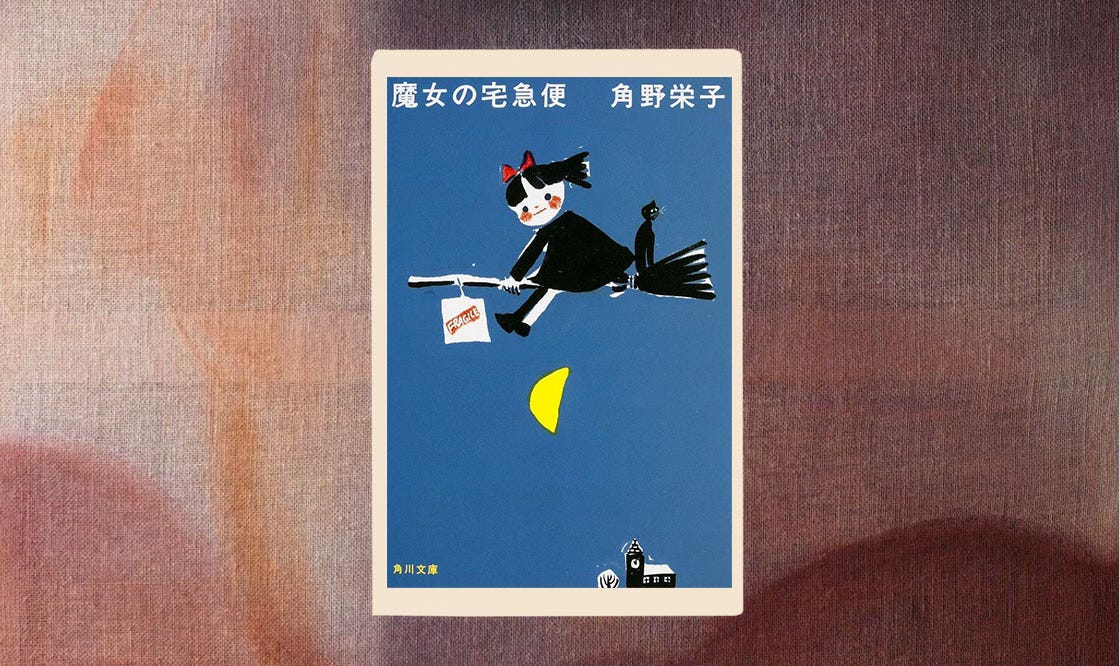
Kiki’s Delivery Service by Eiko Kadono tr. Emily Balistrieri
“Kiki’s Delivery Service was inspired by one of my daughters drawings,” writes Eiko Kadono in the introduction to this esteemed classic. “If I wrote about a witch like the one my daughter drew, I could see the world through the eyes of a bird. I knew I would fly as an author, because writing fiction made me feel as though I had wings. I chose to make the protagonist witch a twelve-year-old, just like my daughter at the time.”
Kiki’s Delivery Service, the much beloved Ghibli movie released in 1989, is based on this book published in 1985. I completely believe that many of the beloved qualities about this coming-of-age story, including its wholesomeness, slice-of-life sceneries, and endearing characters, originate from the sheer exuberance, excitement and child-like passion from which author Kadono writes:
“As I wrote and revised, wrote and revised, I discovered that I loved writing. As long I created stories, I could live an exciting life with new discoveries every day. And I decided that, if nothing else, I would continue writing as long as I live. I’ll never forget the peace of mind I felt at that moment—I sensed the magic inside myself. I’ve come to believe that everyone has some type of magic inside them. If a person can find their magic and lovingly cultivate it, they’ll truly feel alive every day.”
Even as a children’s book, there is magic in these pages especially for adults.
Warm-hearted, whimsical, and precious.
Rating: ✷ ✷ ✷ ✷ (4 stars)
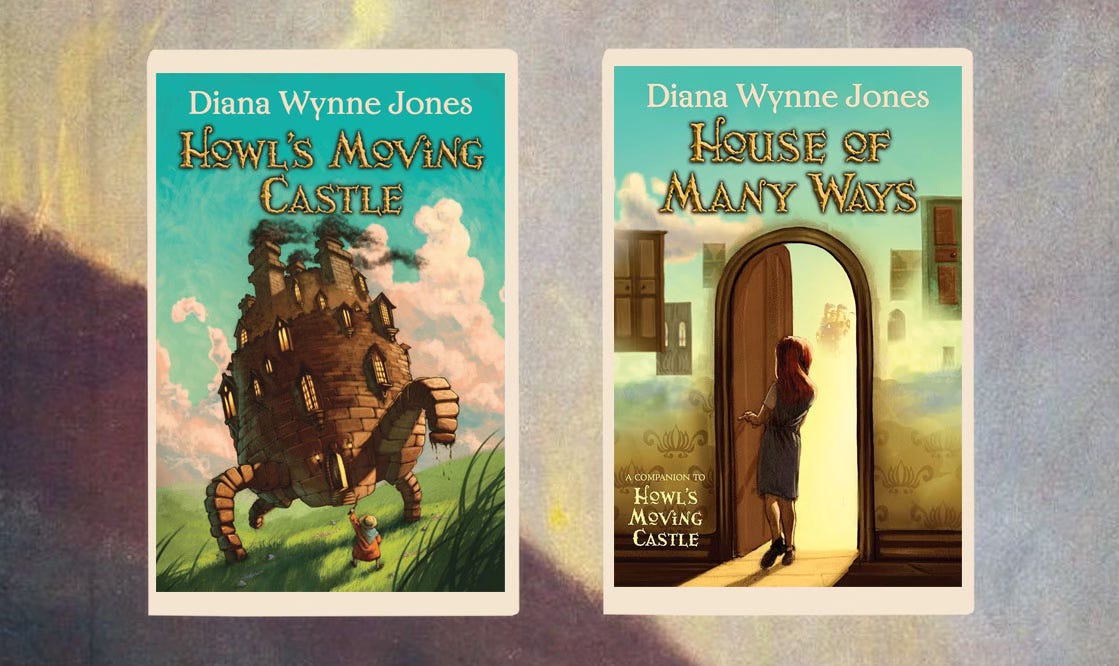
Howl’s Moving Castle by Diana Wynne Jones
In the dedication of Howl’s Moving Castle, Jones explains that the book was “suggested by a boy in a school [she] was visiting to write a book called The Moving Castle.”
Jones delivers on this promise with one of my favourite books of all time, and arguably the best romantasy ever.
For those unfamiliar with the movie, Howl’s Moving Castle follows Sophie Hatter, the eldest of three daughters who is turned into an elderly lady by a witch. Following the death of her father, her step-mother arranges all of the daughters’ affairs: whilst her other two sisters are sent off to work and study, Sophie remains as the inheritor of the hat shop passed down by her father. For being the eldest means misfortune should she ever seek anything beyond home. In the hills is wizard Howl’s castle, always shifting and looming over the town. Sophie realises that she cannot stay in the shop sewing roses to bonnets and veiling to velours, and leaves her ill fortune behind to break the curse.
This book reminds me that we have so much more control over our fate than we might think; you are what you say you are. Sophie’s character is witty, hilarious, and honest. Her journey reminds us to give ourselves permission to love, experience, and create magic. I will be writing a full character study of Sophie for my newsletter in the near future, but for now, I highly encourage fans of the Ghibli film to read this for fresh eyes on some of the most endearing characters.
Rating: ✷ ✷ ✷ ✷ ✷ (5 stars)
House of Many Ways by Dianne Wynne Jones
Unfortunately, it is incredibly hard to follow a book like Howl’s Moving Castle, and it seems that the series lost its magic by the third book. House of Many Ways is described as a companion piece to Howl’s Moving Castle, and being set in a neighbouring kingdom to Ingary, it expands on the world that Jones has created, but falls flat in creating the excitement, adventure and curiosity of its predecessor. The only reason why I finished this book is because I was craving more cameos of Howl and Sophie.
Charmain Baker is an avid bookworm that dreams of working in the Royal Library. After sending a letter of enquiry to the king, she is tasked to be the caretaker of her Great-Uncle-William’s house whilst he is being cured of an unknown illness. Only, her Great-Uncle is a wizard, and a wizard’s house has complications: bags upon bags of dirty laundry, piled up dishes, a stray dog, no hot water, and doors that lead to an endless amount of rooms. For Charmain, who has lived a sheltered life and has no independence, this proves to be a challenge. House of Many Ways is a book about finding our way in the world as a young person, and the stepping stones of growing up.
Except, doing a lot of dishes and laundry took up the bulk of this book, and it was a bleak reminder that I had my own dishes and laundry to do. Jones also had a habit of tying up her stories incredibly fast in the last few chapters. Whilst it worked in Howl’s, it needed a clean up in this book.
Rating: ✷ ✷ ½ (2.5 stars)
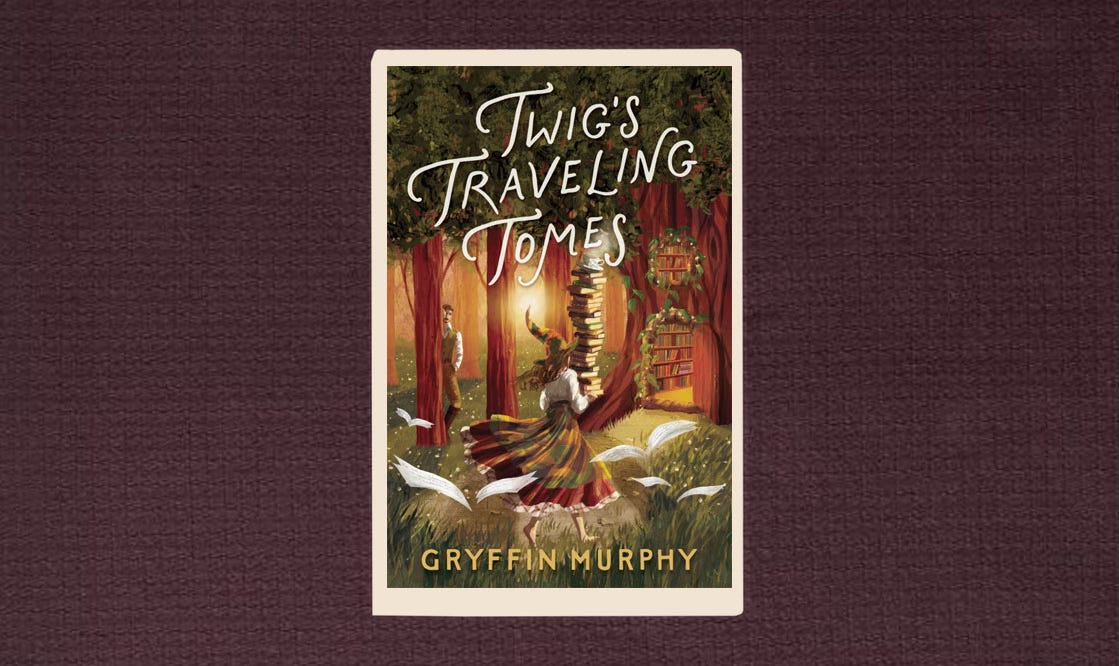
Twig’s Travelling Tomes (ARC) by Griffin Murphy
For fans of Howl’s Moving Castle by Diana Wynne Jones, a kindred soul can be found in this light, cozy read. From a genre standpoint, Twig’s Travelling Tomes ultimately achieves what it sets out to do; this book is an addition to the romantasy genre that ticks a lot of boxes for readers— tea, a travelling bookshop, eclectic cast of characters, magic and a slow (yet predictable) burn with a ‘man with a wolfish grin.’
Enjoyers of romantasy, quest storylines, found family, and roguish male main characters will enjoy this book, however I was hoping for a title that added unique elements and depth to the romantasy genre.
Read my full review here.
[Thank you to the publisher, Cozy Quill, and Netgalley for providing me with an advanced reader copy]
Rating: ✷ ✷ (2 stars)
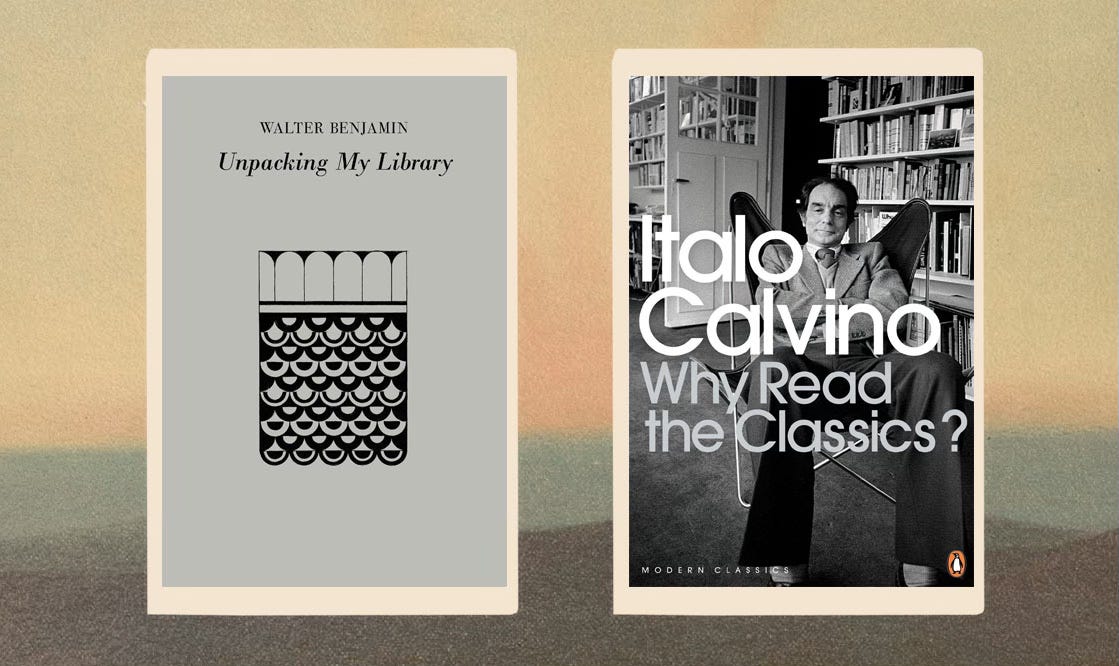
Why Read The Classics? by Italo Calvino
The essays in Why Read The Classics? “chart the development of an increasingly sophisticated literary critic” whose reading was “often metamorphosed creatively, intertextually, into what [he] wrote.”
These essays span seven on English texts, ten on Italian texts, nine on French works, four to classical authors of the ancient world, and two each of Russian and Hispanic writers, creating a prolific and behemoth personal canon. The intensity of Calvino’s considerations show great dedication to literature.
To begin with, Calvino answers the titular question Why Read The Classics? by defining classics and the mode in which they should be read– in accordance with one’s personal canon:
“11. ‘Your’ classic is a book to which you cannot remain indifferent, and which helps you define yourself in relation or even in opposition to it.
“All that can be done is for each one of us to invent our own ideal library of our classics; and I would say that one half of it should consist of books we have read and that have meant something for us, and the other half of books which we intend to read and which we suppose might mean something to us. We should also leave a section of empty spaces for surprises and chance discoveries.”
The titular essay is succeeded by Calvino’s appreciation of the five literary qualities that he considered essential:
“…lightness (Cyrano, Diderot, Borges), rapidity (Ovid, Voltaire), precision (Pliny, Ariosto, Galileo, Cardano, Ortes, Montale), visibility (Stendhal, Balzac, Flaubert), multiplicity or potential literature (Borges, Queneau).”
Having read Calvino’s fiction before, his essays are incredible. What a prolific collection of great classics (which he does note that should not be read under obligation.) Based on this, I took stock of my favourite essays: nothing beats a writer writing about their favourite books.
These essays felt like a 290 page reading list, and highlight the joys of reading a text closely. At the end of this book, I was left with two questions:
Which of these classics to read first?
What would my personal canon be?
For now, I’ve got one answer: this book is part of my forever library.
Rating: ✷ ✷ ✷ ✷ ✷ (5 stars)
Unpacking My Library by Walter Benjamin
Hardly a book at 23 pages, but I read the digital version on my e-reader and felt like I’d hit a goldmine. If it isn’t apparent from reading Calvino and my earlier notes, I am obsessed with reading on reading.
What convinced me to pick this up was the very first line:
“I am unpacking my library. Yes I am.”
In the past two years, my own library has been culled because of moving apartments. Even now, whilst I wait to hear if my lease is being renewed, I dream of my own library. Reading this essay made me feel even more passionate about collecting books, especially as I endeavour to create my own personal canon on my shelves.
“For a true collector, the whole background of an item adds up to a magic encyclopaedia whose quintessence is the fate of his object.”
This essay published in 1931 tells of a time where collecting books was much more antiquated than it is now. Contemporary reading looks very different, but Benjamin’s attribution of books being attached to sentiment, memory, feeling, and place, are still incredibly relevant.
If the first quote didn’t convince you to read this, maybe this sentiment will:
“Other thoughts fill me than the ones I am talking about-not thoughts but images, memories. Memories of the cities in which I found so many things: Riga, Naples, Munich, Danzig, Moscow, Florence, Basel, Paris; memories of Rosenthal’s sumptuous rooms in Munich, of the Danzig Stockturm, where the late Hans Rhaue was domiciled, of Siissengut’s musty book cellar in North Berlin; memories of the rooms where these books had been housed, of my student’s den in Munich, of my room in Bern, of the solitude of lseltwald on the Lake of Brienz, and finally of my boyhood room, the former location of only four or five of the several thousand volumes that are piled up around me. O, bliss of the collector, bliss of the man of leisure!”
As said earlier– o, bliss of the reader of books!
Rating: ✷ ✷ ✷ ¾ (3.75)
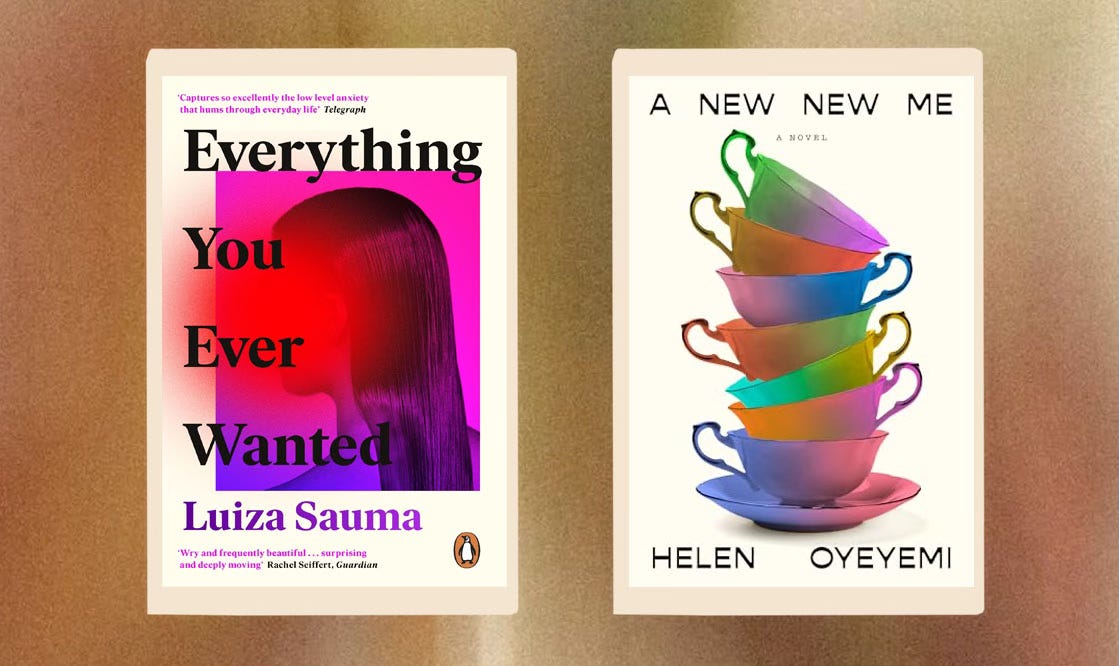
Everything You Ever Wanted by Luiza Sauma
For fans of Jacqueline Harpman’s I Who Have Never Known Men (which I reviewed last year), this sci-fi equivalent is equally as eerie and leaves you feeling existentially hopeless, but also grateful for what you do have. Everything You Ever Wanted follows Iris as she renounces her life on Earth to live on the planet Nyx.
This novel does dystopia well because it shows a before and after, a gradual transition until you’re left at the end thinking: what did I just read? At first, reading about Iris’s life and crappy job seems relatable, and then reading about her deteriorating life on Nyx makes you realise you don’t know what you have until it’s gone.
A rejection of a normal life, how do we come to terms with that being all there is, and what we make of it? Transplanting our woes and worries from Earth to a new planet, new sun but same shit. TLDR: never trust the billionaire that wants to send you to another planet and broadcast it as a TV show, no matter how much you hate your job.
Rating: ✷ ✷ ✷ ½ (3.5 stars)
A New New Me by Helen Oyeyemi
Kinga-A owns Mondays. As the ‘leader’ of the seven Kingas, each of which are responsible for one day of the week, A New New Me chronicles each of the Kingas as they unravel a mystery: the man tied up in their closet by Kinga-G. But Kinga-G won’t be able to explain herself until Sunday, and what follows instead is a cast of idiosyncratic character(s), each with their own opinions, idiosyncrasies and viewpoints about what happened.
Helen Oyeyemi writes the linear progression of Monday through to Sunday, Kinga-A through to Kinga-G. Despite this seemingly simple structure, where each Kinga is attributed a chapter, the disjointed ‘inner’ monologue(s) of Kinga create an incredibly unique voice that could instead be regarded as a symphony.
From a wider perspective, this book utilises a character with DID as a narrative about self doubt, trust, and perspective. The Kingas range from matchmakers to window cleaners to perfume muses. Only, what does Kinga-G do on Sundays– or, what has she been doing on Sundays to cause such great suspicion from Kinga-A?
“Almost a year ago—on March 6, 2023, in fact—I woke up with a rosary wound around the fingers of my right hand and a King James Bible clutched to my chest with my left hand. There was a bookmark stuck in the Bible, and when I opened it up, there was Matthew 12: 43–45, vehemently underlined. Yes, the “seven unclean spirits” passage.”
This book reminded me of someone playing mafia/werewolf, except they’re the only player. What a fun, wacky, unique read.
Rating: ✷ ✷ ✷ ✷ (4 stars)
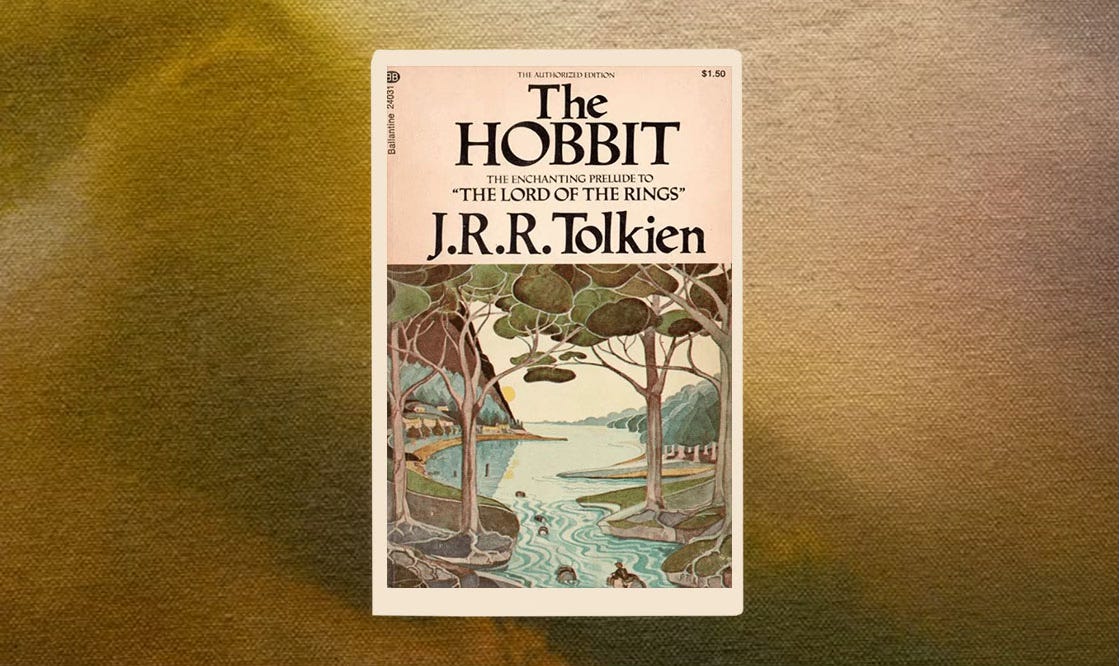
The Hobbit by J.R.R Tolkien
The prequel to the Lord of the Rings is a lighthearted, fast-paced and at times comical story that tells the tale of how the ring resurfaced in Middle Earth, and Bilbo Baggins’ adventures with Gandalf the Grey and the Dwarves of Erebor, venturing to reclaim The Lonely Mountain from the dragon Smaug. It is a story of kinship, inheritance, greed, and going beyond the hill of our comfort zones and into uncharted territory.
I firmly believe Bilbo Baggins is one of the best literary characters of all time. He is a hobbit who enjoys creature comforts like the sound of the kettle whistling. His character development, against the fantastical backdrop of Middle Earth, is a reminder that I too can do unexpected things!
Like Sophie from Howl’s Moving Castle, I will most likely be writing a character study soon of Bilbo. He is truly one of my favourite characters ever.
Rating: ✷ ✷ ✷ ✷ ½ (4.5 stars)
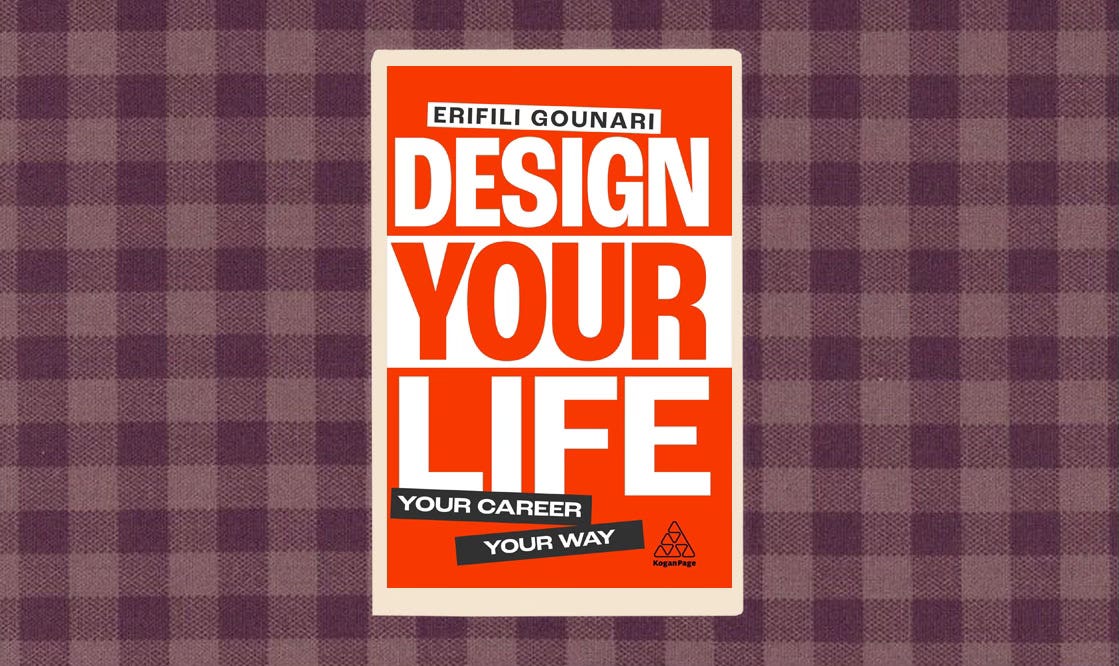
Design Your Life by Erifili Gounari
I'm not normally the type to gravitate towards reads like this, which shows why it has a lot of value to readers because I finished it with a pep in my step. I admire author and entrepreneur Erifili's work a lot– originally having come across her Substack– and in particular, loved the chapter about personal branding. Erifili breaks everything down, backed by research and interviews, in a really digestible way.
This was a great read to endorse my knowledge as a Gen Z, whilst still giving me some pointers about things from a different lens and fresh perspective. I felt really motivated after reading it, especially because reading this was born out of wanting to put myself out there more and really push the limits of what I'm capable of!
Erifili Gounari is also here on Substack with her newsletter Crystal Clear, which I also highly recommend.
Rating: ✷ ✷ ✷ ✷ (4 stars)
Afterword
What a month!!!
As I was finishing up writing this newsletter, the Booker International Prize Longlist was released. I have been sitting at my laptop, watching the countdown like fireworks on NYE.
I imagine much of March through until May will be spent going through the list, as I would love to read all of them!
I fear these monthly reading reflections are getting longer and longer. I would love to hear about what you are reading and writing, so some parting questions for you:
What did you read this month?
Have you been in a book club before, and what was your experience like?
What are your favourite feel good reads for a bad day?
As always, thank you for reading
Jada
✷
@fujijada
jadadeluca.com
deluca.jada(at)gmail(dot)com
Italian-Samoan writer Jada De Luca is a visual narrator, storyteller and devout journaler. She writes about leading a reading and writing life, inspired by Mary Oliver’s poem Sometimes:
4.
Instructions for living a life:
Pay attention.
Be astonished.
Tell about it.
Telling stories through both written and visual narration (she is also a collage artist) is her way of paying attention to the magical, surreal, and intensely personal landscapes that the arts offer. Her newsletter is a source of her entire writing career; her oeuvre; a commonplace journal of essays about literature, language, writing, travel and art.
Jada’s favourite novel is Água Viva by Clarice Lispector, her favourite tarot card is The Magician, and she likes her tea with an extra sugar.
I really enjoyed reading 'Howl's Moving Castle', especially as I could imagine everything even more vividly because of the film.
For the past three years or so I've been a part of an online book club, The Unseen Review and it has become one of the most nourishing, delightful parts of my reading life ♡. Getting to talk about books with other like-minded readers from all over the globe has changed my view on reading in community so much! I think it's wonderful that you and your partner are reading together!
very enjoyable read :)