
An Ode To 'And'
And lists, and commas, and a quotation study of "Tell Them of Battles, Kings and Elephants" by Mathias Énard

Foreword
After not knowing how to describe my love of long winded lists in literature, I finally discovered polysyndeton shortly after reading Mathias Énard’s Tell Them of Battles, Kings and Elephants.
The following essay is what followed.
Happy reading,
Jada
Previous newsletter:

The word ‘and’ is the most prolific and profound word in literature. It is not the most used word in the English language however; ‘the’ takes up about 6% of everything we will ever read, write or say. But ‘the’ is a mere definite particle, an introduction, a signifier, whereas ‘and’ acts as a binding agent of uncontainable potential, gluing stories, ideas, syntax together. Although, stringing an endless amount of words together with ‘and’ sandwiched in the middle doesn’t seem the most eloquent.
That is, until it is done right.
Polysyndeton is a literary device that describes the use of coordinating conjunctions (like the word ‘and’) in close succession, especially where some could otherwise be excluded. The word polysyndeton comes from poly (πολύ), meaning "many," and syndeton (συνδετόν, meaning "bound together with”, essentially meaning “many things bound together.”
It is a stylistic scheme that takes my breath away (both literally and metaphorically.) Where normally, commas would signpost the rhythm of a sentence, the use of polysyndeton places each listed item on its own pedestal. How we choose to read this impacts cadence and rhythm; slowing down how we ingest writing through the small hiccup of the word ‘and’ creates an almost biblical reverence to the tonal quality of our reading, whereas increasing speed manufactures feelings of hurry, overwhelm and urgency.
Lists in literature have an unmatched profundity, both through the use of commas and (especially) the use of the word ‘and.’ That biblical undertone is not mere coincidence– some translations of the bible use polysyndeton heavily. Where some translators would simply input commas, some purposefully repeat the word ‘and’ in scripture to a dramatic effect:
“And the rain descended (on the roof),
and the floods came (at the foundations),
and the winds blew (at the sides),
and beat upon that house:
and it fell not.” (Mark 7:35)
In Othello, Shakespeare creates a similar effect with the word ‘or’:
"If there be cords, or knives, or poison, or fire, or suffocating streams, I'll not endure it".
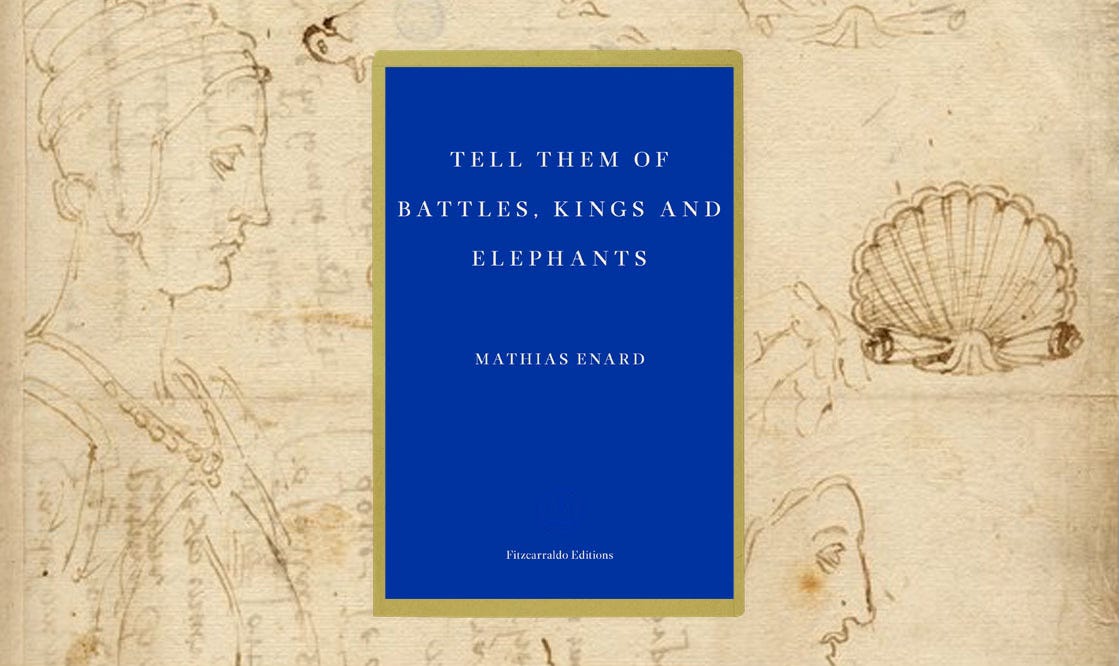
But it is not the bible nor Shakespeare that has elicited this inspiration or thought for me. In one of my favourite reads of 2025, Tell Them of Battles, Kings and Elephants, author Mathias Énard achieves my most annotated and highlighted book ever in a mere 140 page novella. This is because of his incredibly prosaic lists; a marrying of objects, materials and miscellany.
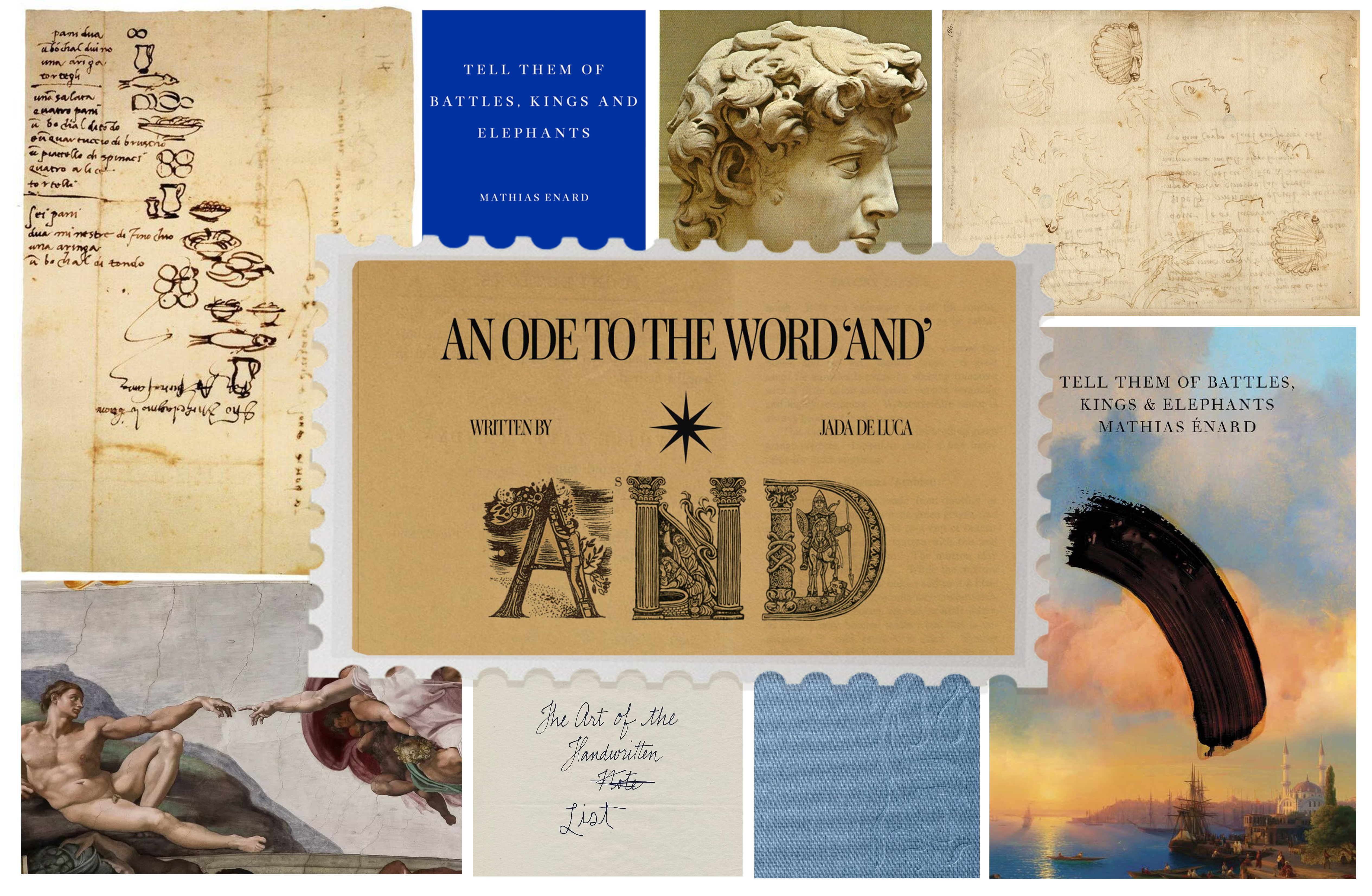
In 1505, Ottoman Sultan Bayed II invited Michelangelo to design a bridge following Leonardo da Vinci's more ambitious design being rejected. Michelangelo declined the invitation.
"You will surpass him in glory if you accept, for you will succeed where he has failed, and you will give the world a monument without equal, like your David." Énard writes a compelling and immersive answer to the question: what if he didn't?
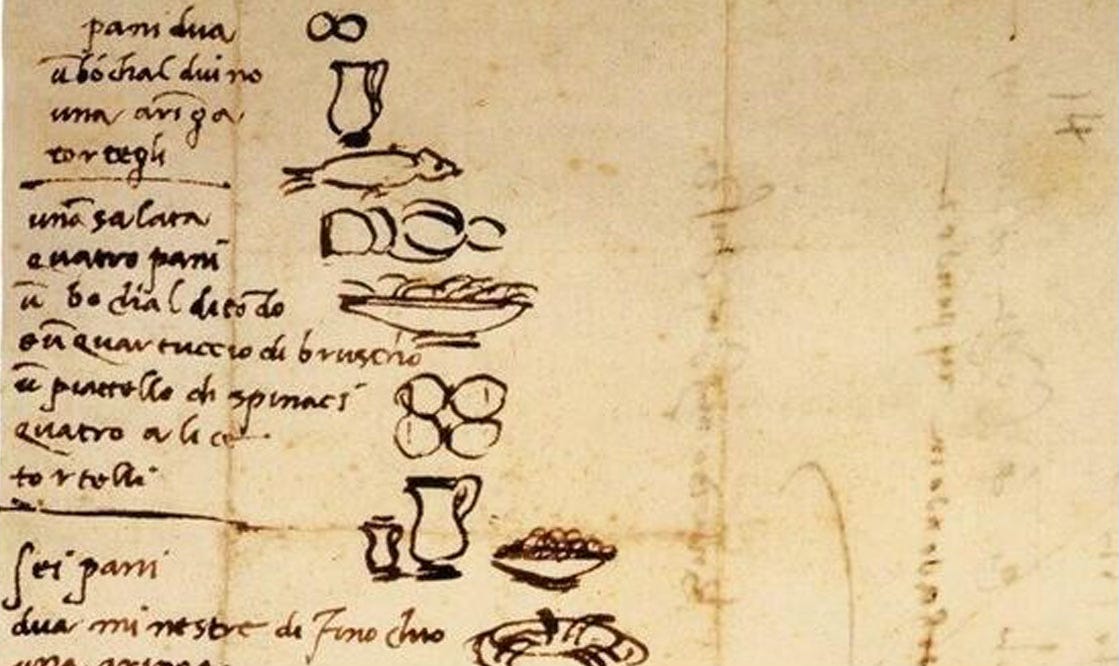
This book was constructed by real historical fragments. The beginning pages show a picture of a 500-year-old shopping list that is owned by the Casa Buonarotti museum, written/drawn in Michelangelo’s hand in 1518 for an illiterate servant.
Michelangelo in Istanbul is prosaic, atmospheric and an irrelevant falsity. In contemplating such an event, Énard writes about convergence of East and West in sporadic, short chapters with a lot of description and a lot of lists. At 140 pages, this could probably be read in one sitting, but I found myself hanging on to Énard's listicles, a marrying of objects, materials and miscellany that signposted Michelangelo's experiences:
“Three bundles of sable and mink fur, one hundred and twelve panni of wool, nine rolls of bergamo satin, the same quantity of gilt Florentine velvet, five barrels of saltpeters, two crates of mirrors, and one little jewellery box: that is the list of things that disembarked with Michelangelo Buonarotti on the port of Constantinople on Thursday, May 13 1506.”
Within an appreciation of lists, Énard writing feels like [recording] “treasures”. Tell Them of Battles, Kings and Elephants is my most quoted book– ever. The writing feels like an "endless accumulations of various objects, accounts, expenses, supplies; clothes, menus, words, simply words."
Even though I love the word ‘and’, I also wanted to acknowledge my discovery and the impact that asyndetic listing has. This device refers to a list broken up by commas. I could go on comparing polysyndeton and asyndetic, but in the end they both achieve the same thing: an immense and divine reading experience. Lists are equal parts prose, poetry, and description, a continual turning and churning, an unfolding of metaphor and unfurling of imagery– and then, and then, and then!
Whether using conjunctions or punctuation, lists create an atmospheric reading experience. Another example is a catalog poem, which also uses the practice of listing (with a bit more flesh) through a collection of linked items. In essence, the above quotes could be considered a catalog poem. This form allows more description, digression and thematic development of both the individual item and the collective:
“Often, catalog reveals likeness between seemingly unrelated details, referents, contexts, sounds etc., or challenges commonly accepted systems of definition.”1
There is an added satisfaction for a writer when the above is achieved, the sheer admiration achieved that we exclaim: “I wish I wrote that!”
These are perhaps our deepest metaphors that grapple with our understanding of words and stretch our reading palettes– there’s a reason why synonyms for “miscellany” all sound salivating (albeit a bit juvenile): potpourri, hodgepodge, salmagundi, smorgasbord, mixed bag.
As childish as these sound, they do speak to how tasteful and exquisite an experience a well written melange can be.
“Words, simply words” are “treasures” to Michelangelo in his stained notebook. The treasure of literature lies in lists, conjunctions, commas, catalogs that glue miscellany together.
“Michelangelo does not draw bridges. He draws horses, men and astragals.”
“May 19: candles, lamp, two small coins; pottage (herbs, spices bread, oil) the same; fried fish, two pigeons, one ducat and a half, plates and cutlery, one small coin, wool blanket, one ducat. Clear, cool water.”
Commas and semicolons become signifiers that the readership are about to be caught up in an atmosphere that appeal to the senses:
“May 20: peppercorns, cinnamon sticks, nutmeg, camphor, dried peppers, saffron pistils, rupture wort, agrimony, powdered cinnamon, cumin, euphorbia and mandrake from the Orient, all at just two asters for four full ounces.”
Or express the homesickness, longing and doubt of a fleeing artist:
“May 22: cipolin, ophite, sarrancolin, serpentine, canela, delfino, porphyry, brocatello, obsidian, marble from Cinna. So many names, colours, materials, whereas the most beautiful, the only one worth anything, is white, white, white without veins, grooves or colourations. He misses marble.”
This is the most accurate list that could ever express the hypothetical of Michelangelo accepting the Sultan’s invitation.
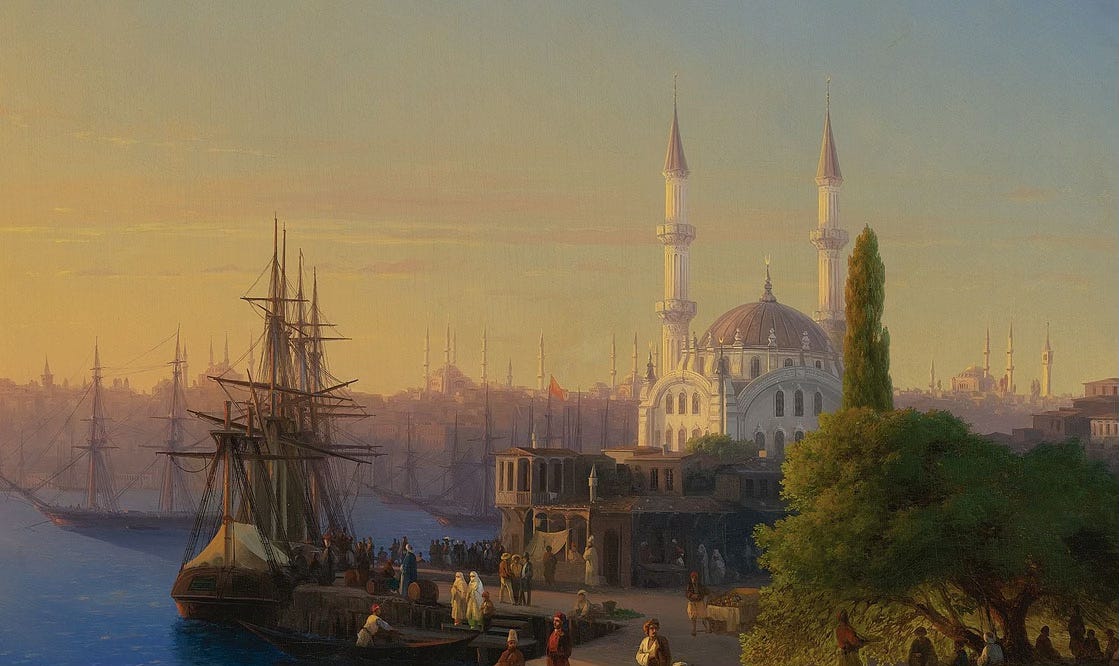
The most profound list in this book comes from the quote that the title is inspired by. In the opening quotation from Kipling’s introduction to Life’s Handicap, the mixture of polysyndetic and asyndetic listing tells us equally about the grandiose and the simple, the ultimate list, my most favourite ‘and’:
“Tell them of battles and kings, horses, devils, elephants and angels, but omit not to tell them of love and suchlike.”
‘And’ that urges breadth and depth, and the essence of love amongst the grandiose and evil; the ultimate list.
Afterword
I implore you to peruse Casa Buonarotti’s archives which hold the “richest documentation of Michelangelo.”
It felt amazing to put into words a sentiment I have long held, for polysyndeton is a writing tool I use a lot and love even more.
Thank you for reading,
Jada
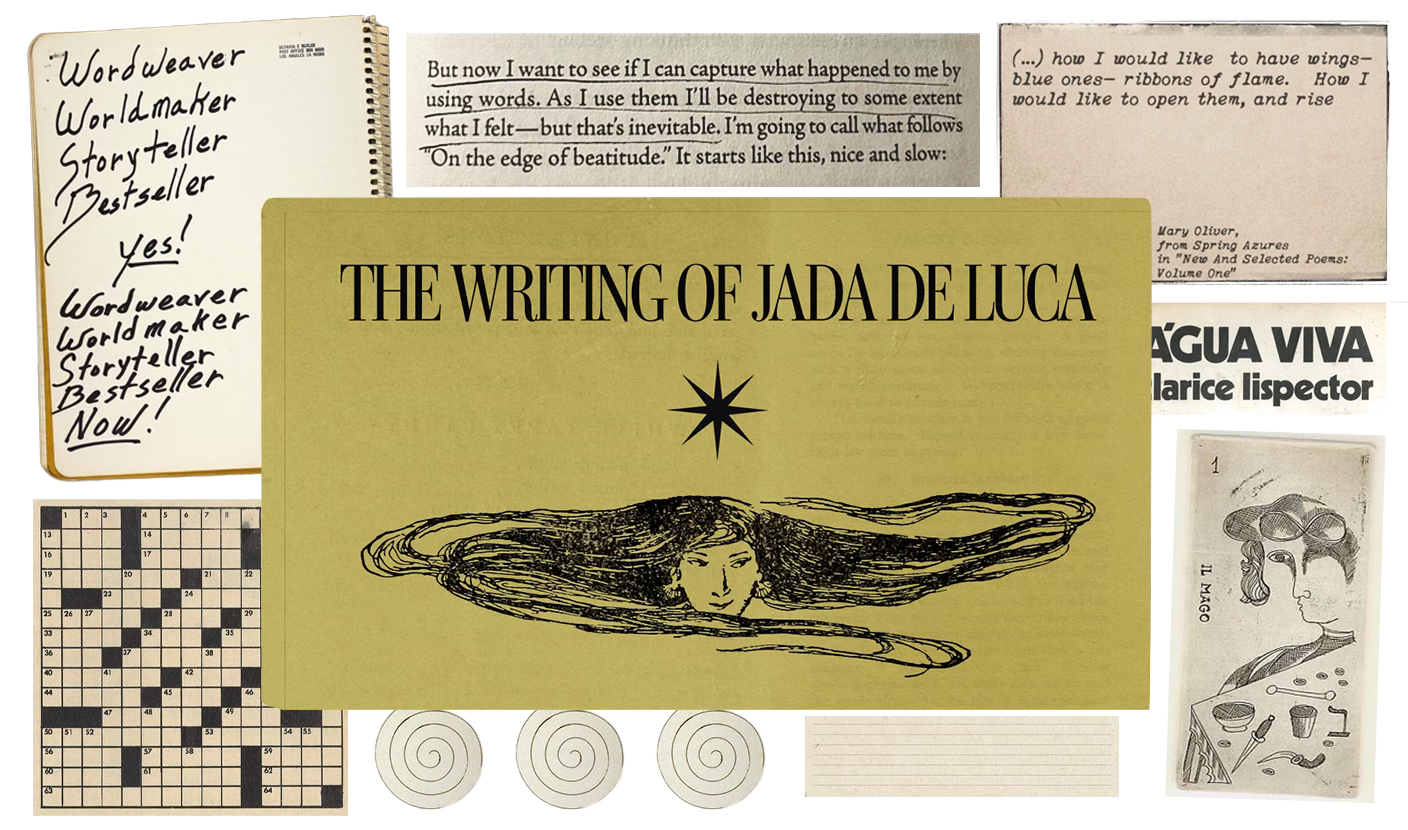
Italian-Samoan writer Jada De Luca is a visual narrator, storyteller and devout journaler. She writes about leading a reading and writing life, inspired by Mary Oliver’s poem Sometimes:
4.
Instructions for living a life:
Pay attention.
Be astonished.
Tell about it.
Telling stories through both written and visual narration (she is also a collage artist) is her way of paying attention to the magical, surreal, and intensely personal landscapes that the arts offer. Her newsletter is a source of her entire writing career; her oeuvre; a commonplace journal of essays about literature, language, writing, travel and art.
Jada’s favourite novel is Água Viva by Clarice Lispector, her favourite tarot card is The Magician, and she likes her tea with an extra sugar.
Taking Stock with Catalog, Maggie Queeney for The Poetry Foundation
It is so beautifully written and felt! How something seemingly so small can conjure up big ideas by its mere presence? I am enchanted with this essay and I wonder if it stays with me to notice and appreciate lists more in my next read.