
January Reading List
Reading on reading, why I love short books, giving my favourite author a two-star rating, and notes on the 4 books I read in January of 2026.

Foreword
After a voracious year of reading in 2025, I fully expected to enter the year of the horse with a similar gusto. Instead, this reading month felt like how a newborn foal trips up on its own legs, for that great enthusiasm I was feeling had transformed into naive over-zealousness.
My “currently reading” shelf had upwards of fifteen books, and was beginning to feel like a Tsundoku (積ん読): the Japanese word for the phenomenon of buying books that pile up around the house unread. Author Nassim Nicholas Taleb popularised the term “anti-library” which instead emphasised that the pile was future knowledge instead of failed endeavours, but in this instance I felt like a horse carrying too much cargo and being unable to distinguish between what to keep and what to leave behind.
This was an unfortunate starting point to another year of reading, because many, if not all, were abandoned after the first chapters. In my struggle to find something that resonated, I thought the solution was more.
However, my final read of the four books I read this month (despite only being given a three star rating) would help me find my grip of the reins and steer into the right direction, ending January on a sparse but high note. The year of the horse, affiliated with movement, action and momentum, doesn’t start until the middle of next month anyway, so in a sense, I feel as if I am tending to the mare before the adventure.
My January 2026 Reading Forecast
January has an effect of rarefaction and loftiness about it. After the new year buzz, I often find myself fluffing about and looking in multiple directions to find my footing.
If this month’s books, some good, bad, and in-between, provided me with anything, it was direction and clarity to bring me back to centre and shed the intensity of last year’s reading. 2025 was my biggest reading year yet, but instead of attempting to top that, this year, I’m not focusing on the quantity of books, but on how I engage with reading as a practice and a lifestyle, not just a habit to tick off. Last year I achieved breadth, this year I am aiming for depth
“Every Day I Read” by Hwang Bo-Reum was simple, endearing, and despite a mere three-star rating, cured the indigestion I was feeling towards books.
I am learning that reading is not only for enjoyment, entertainment, or reaction; there exists value in all books, even the ones I don’t absolutely love. A fine reading day is still a success, the challenge lies in uncovering value. Where I think I fell short at the beginning of this year was that I was chasing that high of discovering a book that really resonated with me– I was addicted to finding books to add to my personal canon– instead of being lead by soft curiosity. After all, you can lead a horse to water, but you can’t make it drink.
Meta-reading
In the last three years, but especially in the last year, I have attempted to engage even deeper with reading. This desire was born out of the realisation that I wasn’t retaining what I was reading, and was very noncommittal and unserious about expressing just how much reading meant to me.
“Every Day I Read” is not only a collection of essays about reading, it is meta reading: reading on reading. Despite its simplicity, Bo-Reum’s adoration of reading is apparent and infectious.
Reading this book was a fresh discovery that, if faced with a reading slump, I could catapult off of another person’s love of reading to reignite my own enthusiasm. Meta-reading is a genre I have discovered this January and will be bleeding into February (I have Italo Calvino’s “Why Read Classics?” lined up) because of sense of kinship and camaraderie present.
Some quotes from “Every Day I Read” that resonated with me included:
“Until my last breath, I want to live my life reading. Always”
“I can already see myself in my twilight years surrounded by books.”
“Great prose makes me squeal with delight.”
A love of shorter books
This month, I prioritised shorter reads to re-acclimate into reading. I also realised that I love the intimacy of shorter books, and have an intense admiration for writers who can say what they mean to in the span of under 200 pages. I believe this to be the epitome of skill for a writer. The longest book I read was House of Day, House of Night, over half of which was actually read in December 2025. The shortest book I read was Daydreams and Drunkenness of a Young Lady by Clarice Lispector at 61 pages.
Short books provide satisfaction, gratification, and it means that I can really get into and analyse a writer because they only have room to say what is most important. Another layer of analysis is given to short books– what is chosen to be said becomes equally important as what isn’t.
Books I Read This Month
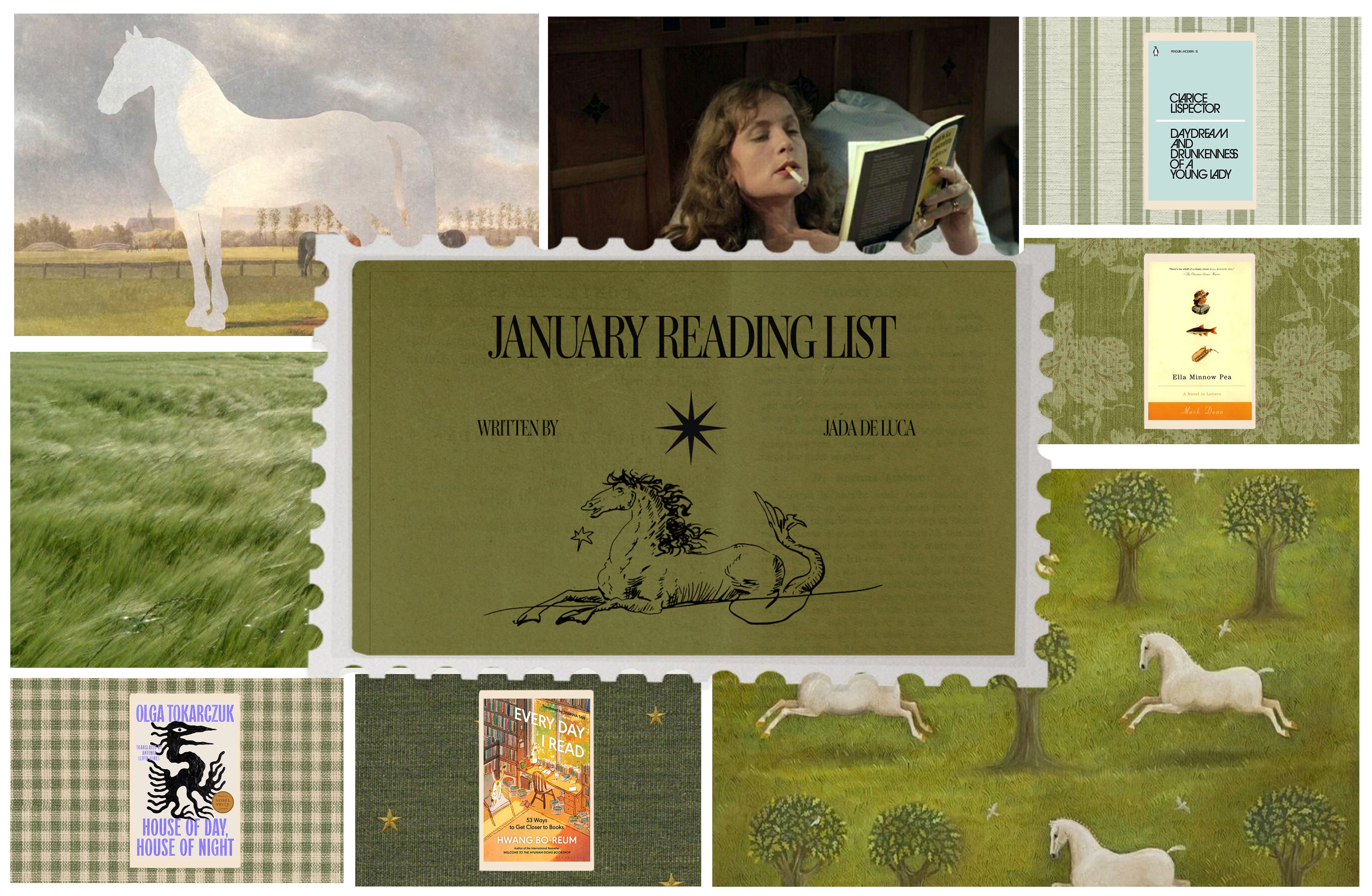
House of Day, House of Night by Olga Tokarczuk
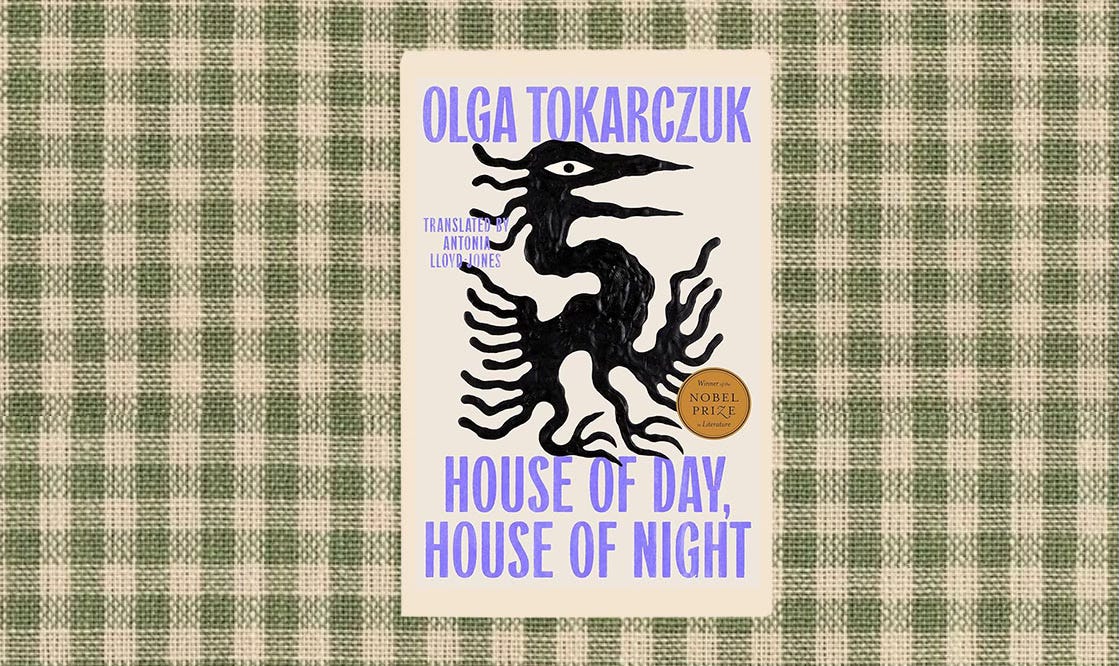
House of Day, House of Night is described as a ‘constellation novel’ about a woman settling into a Polish village as she narrates the stories of both the living and the dead.
“It’s a fragment town, a Silesian, Prussian, Czech, Austro-Hungarian and Polish town, a town on the outskirts.”
Tokarczuk writes in the final chapter, and this book is written in a way that expresses a similar sentiment, with short chapters that are an eclectic historical and cosmological mixture of both the living and the dead in southwest Poland. Until 1945, this region was part of the German Reich until the Allies agreed to move the borders of Poland westwards. Many Polish were resettled in formerly German territory to the west, wherein they were given homes and property of evacuated Germans.
The book has little structure in terms of plot and is more of an account or a narration following the border movement. The unnamed narrator very much takes a seat on the bench of observation:
“I was purely vision, without any reflections, judgements or emotions.”
Many of the chapters that tell the tales about the characters describe a feeling attributed to the historical significance of the setting and create an emotional reaction that I could never truly understand. Tokarczuk writes about very plausible situations that, despite being austere, are exclusive to this particular pocket of history. One such example is when a gentleman dies with one leg on the Czech side of border and the other on the Polish side. This book explores in short vignettes how history is not always the events, but the indescribable personal accounts; Germans return to look upon their old homes as if they are tourist attractions, a patron saint transforms into Jesus– what a read!
“Acting in unison, they shoved Peter’s leg from the Czech to the Polish side … then, gravely and silently, they took him by the arms and legs and carried him over to the Czech side.”
Recently, I listened to Service95’s interview with Tokarczuk, hosted by Dua Lipa, where there is a discussion about the characters in Drive Your Plow Over The Bones of the Dead as being a “group of outcasts.” When asked about the “strange and wonderful confederacy of misfits,” Tokarczuk shares that she lives in similar place, and when she looks around, there are those who have “decided to live their own lives.” In my long buried review of Drive Your Plow Over The Bones of the Dead, I wrote about how well Tokarczuk blended a sense of surreal existentialism and strangeness with themes of faith, environment and community.
I must reference DYPOTBOD when talking about House of Day, House of Night because the enmeshment of a unique “confederacy of misfits” with these themes is Tokarkczuk’s most striking trait as a writer. My experience reading House of Day, House of Night, is emboldened by having read her writing beforehand because I cannot get enough of her characters, especially the narrator’s neighbour, Marta, the old wig-maker, whose many oddities I highlighted out of pure fascination– how does Tokarczuk write such interesting characters? Perhaps I should just admit that Tokarczuk’s tendency to write oddball old ladies is something I’ve grown to love about her writing.
There is a magic-realist and lyrically off-kilter tone to Olga Tokarczuk’s writing that I am addicted to every time I read her work. I can’t get enough of it. She is well and truly becoming one of my favourite authors.
Rating: ✷ ✷ ✷ ✷ (4 stars)
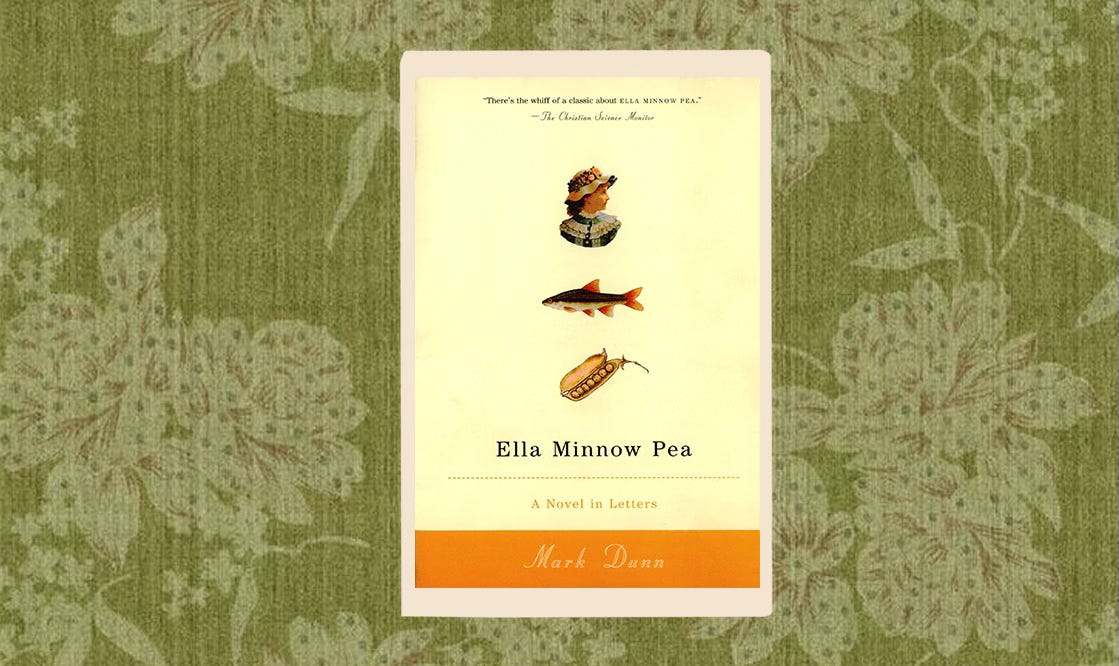
Ella Minnow Pea by Mark Dunn
“The quick brown fox jumps over the lazy dog” is the very sentence that taught me handwriting. My mom would write it out for me in cursive, and then I would copy it for lines upon lines upon lines. At the time, I thought this task arduous and soul-depleting, not understanding how important reading and writing truly was.
I hadn’t given this phrase any thought at all since the last time I had to write out those lines, and now because of this book it’s all I can think about, because along with it come a lot of thoughts about censorship, the importance of language and literacy, and the bleakness of a world without words.
“On Monday, July 17, a most intriguing thing took place: one of the tiles from the top of the cenotaph at town center came loose and fell to the ground, shattering into a good many pieces.”
“Ella Minnow Pea” is an epistolary novel where each chapter is a letter exchanged between the inhabitants of the island of Nollop. Nevin Nollop, the founder of the island, is said to have created the pangram “the quick brown fox jumped over the lazy dog.” When the letters of this sentence begin to fall off his statue, the council begins to ban their use. At first, the loss of the letter Z seems inconsequential, until more and more letters begin to fall, and through the medium of letters, the language and very foundations of the island begin to morph into a dystopian reality.
I’m a linguaphile, avid reader, and writer, and so this premise is very appealing to me.
A note on form: the author writes himself into a corner in this book in a way I have never seen authors do, and what he achieves is phenomenal. As more and more letters fall off, Dunn is tasked with the challenge also writing without said letters.
Writing amongst censorship is possible, with incredible difficulty, until it isn’t; until the days of the week need to be reworded, until you can’t tell a family member you love them, until corporal punishment and the dystopian crumbling of an island unfolds over using the letter Z; until families flee, businesses shut down, and the island becomes inhabitable. In this format, Dunn really pushes the boundaries of writing as a medium for communication and freedom, whilst making an acute point about censorship. In a lot of literature, censorship is written about in the banning of books– think The Book Thief and Farenheit 451– but never about the letters themselves.
“Hundreds of words await ostracism from our functional vocabularies: waltz and fizz and squeeze and booze and frozen pizza pie, frizzy and fuzzy and dizzy and duzzy, the visualization of emphyzeema-zapped Tarzans, wheezing and sneezing, holding glazed and anodized bazookas, seized by all the bizarrities of this zany zone we call home.”
I can also compare this book to Yoko Ogawa’s “The Memory Police” and would recommend them as a reading pair.
A very, very important book. As many have described it: clever and witty.
Rating: ✷ ✷ ✷ ✷ ✷ (5 stars)
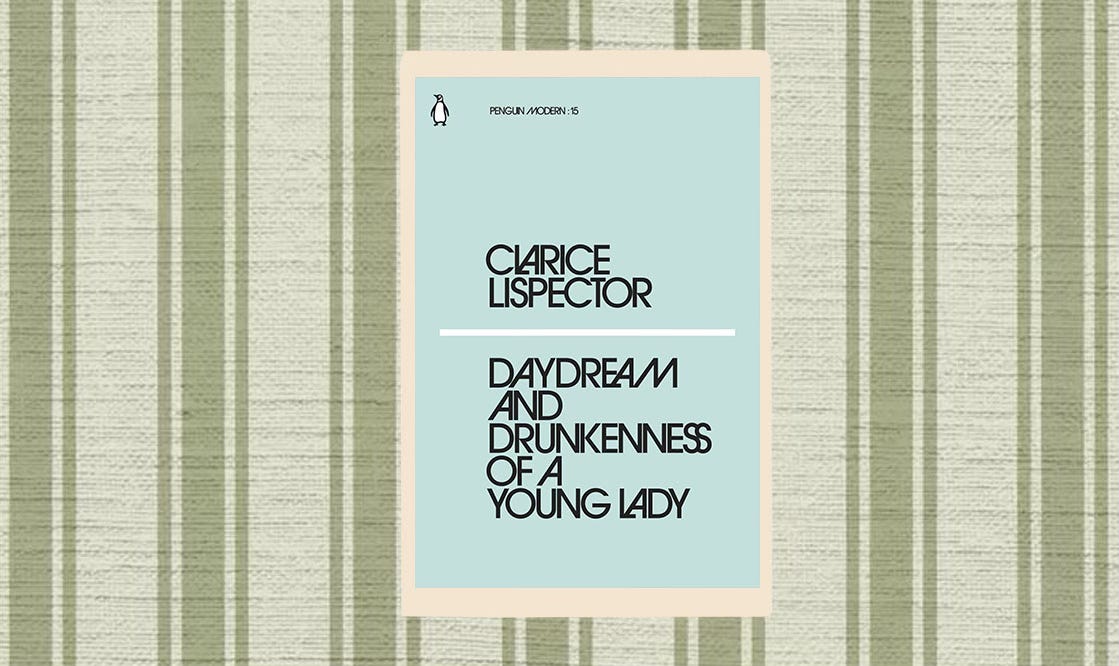
Daydream and Drunkenness of a Young Lady by Clarice Lispector
Clarice, I love you, but I’m not a wife or a mother, so in all honesty this flew right over my head. This is my seventh Lispector novel I’ve picked up and fourth that I’ve finished and whilst not all of them can be hits, despite the beautiful writing I unfortunately didn’t take to this. These three stories are very far from the young lady I am, and I don’t be aspire to be a wife or a mother a lot of the time especially because of the sentiments expressed in this short novella. I don’t find them relatable, just bleak.
Is Lispector still my favourite author ever? Absolutely. A lot of her writing speaks to my inner experience, and it’s okay that this doesn’t.
What this book did ignite for me was contemplation surrounding how at times how limiting staying within the parameters of a five star rating can be. It feels oddly empowering to have a reading practice that is nuanced enough to award my favourite author a 2 star rating, as it is a different way to engage with her work and finesse my reading taste.
Rating: ✷ ✷ (2 stars)
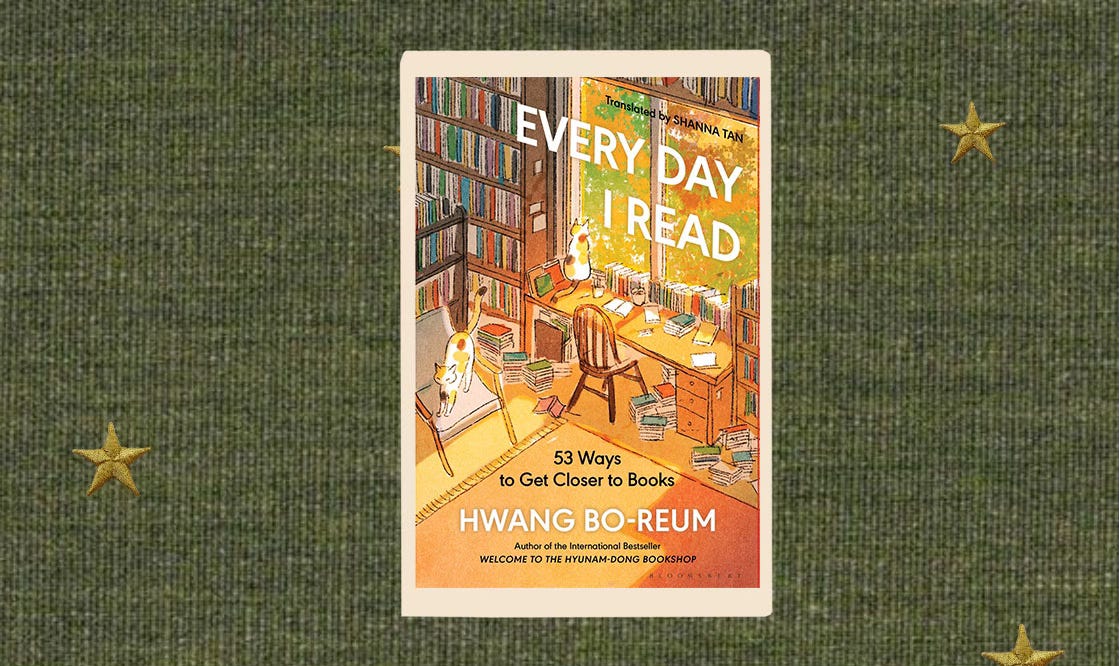
Every Day I Read by Hwang Bo-Reum
“I do that!” I exclaimed when I read the title of the book. A shared sentiment was enough for me to pick this book up. Although, I cannot give it more than a three out of five. It’s not bad, but also not a prolific or unique viewpoint about reading; I somewhat enjoyed this book, as surface level as it was, because of the shared sentiments I shared with author Bo-Reum as a passionate reader.
This is a book about books, but it does lack depth or a “punchline.” These essays are written with so much love for reading, but a lack of structure and prominent exploration of ideas leaves it lacking a little bit. As a whole, I did grow a bit bored of the continual “I love reading” rhetoric, as relatable as it was, but there were a few anecdotes and quotes that I really resonated with.
Maybe my uninspired reading brain simply needed the simplicity of rapport, although this is the kind of writing I’d expect from an amateur blog (as endearing as it was.) It was pleasant to read an author musing about life, feelings, and slightly expanding upon her points with personal recommendations. (I was incredibly happy to see another writer referencing Herman Hesse and Italo Calvino, some of my favourite authors!)
Reading this book felt like a casual and jovial discussion about the sentimentality of readers. I will probably give Hyunam-Dong Bookshop a go to see if Bo-Reum’s writing fiction writing style resonates. If I’m desiring a deeper analysis, critique and engagement with meta reading, I would probably turn elsewhere from this collection of essays, but as a lighthearted read, this put me in the position I needed to be in to start my reading year.
Rating: ✷ ✷ ✷ (3 stars)
Afterword
February’s reading forecast looks like lounging on green pastures. I feel my thoughts and practice ripening, and movement on the horizon like the soft wind through grass.
Inspired by meta reading, I have already picked up Why Read Classics? by Italo Calvino, and am planning on reading Emily Wilson’s translation of The Odyssey. For our anniversary, I gifted my partner a kindle, and we have started a book club. Our first book is a light, fun re-read of The Hobbit!
What I will be mulling over this February is the concept of personal canon, inspired by Calvino’s essays. I’ve started compiling a list and thoughts surrounding my own personal canon– the “classics” that define me. I am also interested in the personal canon of other writers that go beyond the written form– having just started The Sea, The Sea by Iris Murdoch, I am not even through the introduction because I have been researching and taking notes about her relationship with the painting The Flaying of Marsyas by Titian.
I’m excited to write again at the end of next month to look back on another reading month.
As always, thank you for reading,
Jada
Italian-Samoan writer Jada De Luca is a visual narrator, storyteller and devout journaler. She writes about leading a reading and writing life, inspired by Mary Oliver’s poem Sometimes:
4.
Instructions for living a life:
Pay attention.
Be astonished.
Tell about it.
Telling stories through both written and visual narration (she is also a collage artist) is her way of paying attention to the magical, surreal, and intensely personal landscapes that the arts offer. Her newsletter is a source of her entire writing career; her oeuvre; a commonplace journal of essays about literature, language, writing, travel and art.
Jada’s favourite novel is Água Viva by Clarice Lispector, her favourite tarot card is The Magician, and she likes her tea with an extra sugar.
It’s fantastic to see you tackle your favourite author so honestly. It can sometimes be easy to switch of the critical side of our brains while dealing with our favourites - this is clearly not an issue you face!