
When Poets Write Prose
The convergence of prose and poetry in "Upstream" by Mary Oliver

Foreword
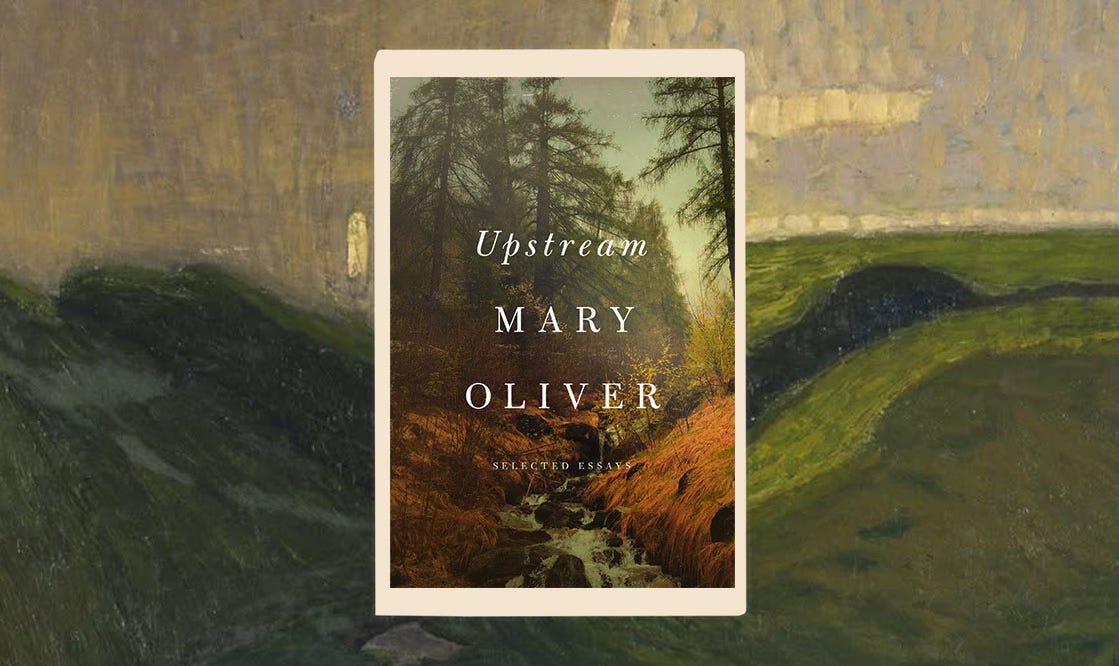
It’s crazy what an autumn retreat does to the soul. I have spent a week close to the very bottom of Western Australia in the bush with my grandmother, and on the first night I finished Upstream by Mary Oliver. I wanted to mark the occasion by writing a quotation study/review about it, whilst surrounded by eucalyptus and gumtrees.
Last week, I also wrote about Mary Oliver– I can’t seem to stop! Having two hilarious geese as neighbours for the past week had that effect.
Happy reading,
Jada
More writing on Mary Oliver:

Previous quotation study:

I’m listening to the kookaburra’s laughter on a late autumn afternoon with lamington crumbs all over my shirt, thinking about prose written by poets; a sublime and beautiful convergence; the kind of writing I aspire to create and live to read.
Mary Oliver’s selected essays in Upstream read more akin to a prose poem than an article, which sounds contradictory, but could not be closer to the truth. Instead of simply telling you, let me walk you through all five sections of this book.
“The prose poem plants one foot in prose, the other in poetry, both heels resting precariously on banana peels,”1 and yet Oliver’s writing not only balances both, but synergises them. Despite being more widely known as a poet, Oliver’s writing is not precarious; it is a most precious undertaking. She writes from a perch of observance and interplay– the five sections in Upstream are mosaic, a hybrid between prose and poetry.
Oliver references her admiration of Emerson, who wrote The Poet, an essay that was based on one of his lectures in 1842, published in Essays: Second Series in 1844. Emerson defines the poet as the only individual that is capable of articulating the transcendent nature of things, the poet being one who can identify “symbols” and “emblems” of the world.
Emerson writes of the poet in this essay as one who “stands one step nearer to things, and sees the flowing of metamorphosis… his speech flows with the flowing of nature.”
The world being thus put under the mind for verb and noun, the poet is he who can articulate it. For, though life is great, and fascinates, and absorbs, and though all men are intelligent of the symbols through which it is named, yet they cannot originally use them. We are symbols, and inhabit symbols; workman, work, and tools, words and things, birth and death, all are emblems; but we sympathize with the symbols, and, being infatuated with the economical uses of things, we do not know that they are thoughts. The poet, by an ulterior intellectual perception, gives them a power which makes their old use forgotten, and puts eyes, and a tongue into every dumb and inanimate object. He perceives the independence of the thought on the symbol, the stability of the thought, the accidency and fugacity of the symbol. As the eyes of Lyncaeus were said to see through the earth, so the poet turns the world to glass, and shows us all things in their right series and procession. For, through that better perception, he stands one step nearer to things, and sees the flowing or metamorphosis; perceives that thought is multiform; that within the form of every creature is a force impelling it to ascend into a higher form; and, following with his eyes the life, uses the forms which express that life, and so his speech flows with the flowing of nature […]
The poet alone knows astronomy, chemistry, vegetation, and animation, for he does not stop at these facts, but employs them as signs. He knows why the plain, or meadow of space, was strown with these flowers we call suns, and moons, and stars; why the great deep is adorned with animals, with men, and gods; for, in every word he speaks he rides on them as the horses of thought.2
Really, all writing can be read in the manner that one reads a poem. Like stanzas, unravelling the sections in Upstream piece by piece create an insightful view of Oliver’s views on the microcosms and macrocosms of writing, poetry, inspiration and the natural world.
Emerson’s essay The Poet reveals to us the true prophetic and sublime powers of the poet and their metamorphoses; Oliver takes it a step further in Upstream, admitting us to a “new scene” – the prose that could only come from the mouth of a poet, and one step nearer to the inner workings of my favourite poet of all time.

The first section is an ode to reading and writing.
“Attention is the beginning of devotion,” writes Oliver in the first essay, to imply that reading and writing are only possible when we look beyond ourselves.
Form and structure, storytelling and beauty– these pillars of language do not exclusively exist when we talk of literature, but also nature:
“I quickly found for myself two such blessings– the natural world and the world of writing: literature.”
My lamington crumbs and I understand these joys intrinsically, especially when Oliver refers to them as the “gates through which I vanish from a difficult place.”
To Oliver, the “beauty and the mystery of the world” exist upon to planes, both material and immaterial: “out in the fields [and] deep inside books.” Currently, I am looking out to hills and hills of West Australian bushland in Wadandi Boodja, the Saltwater People’s country, mulling over my thoughts on this book, and nodding my head in agreement.
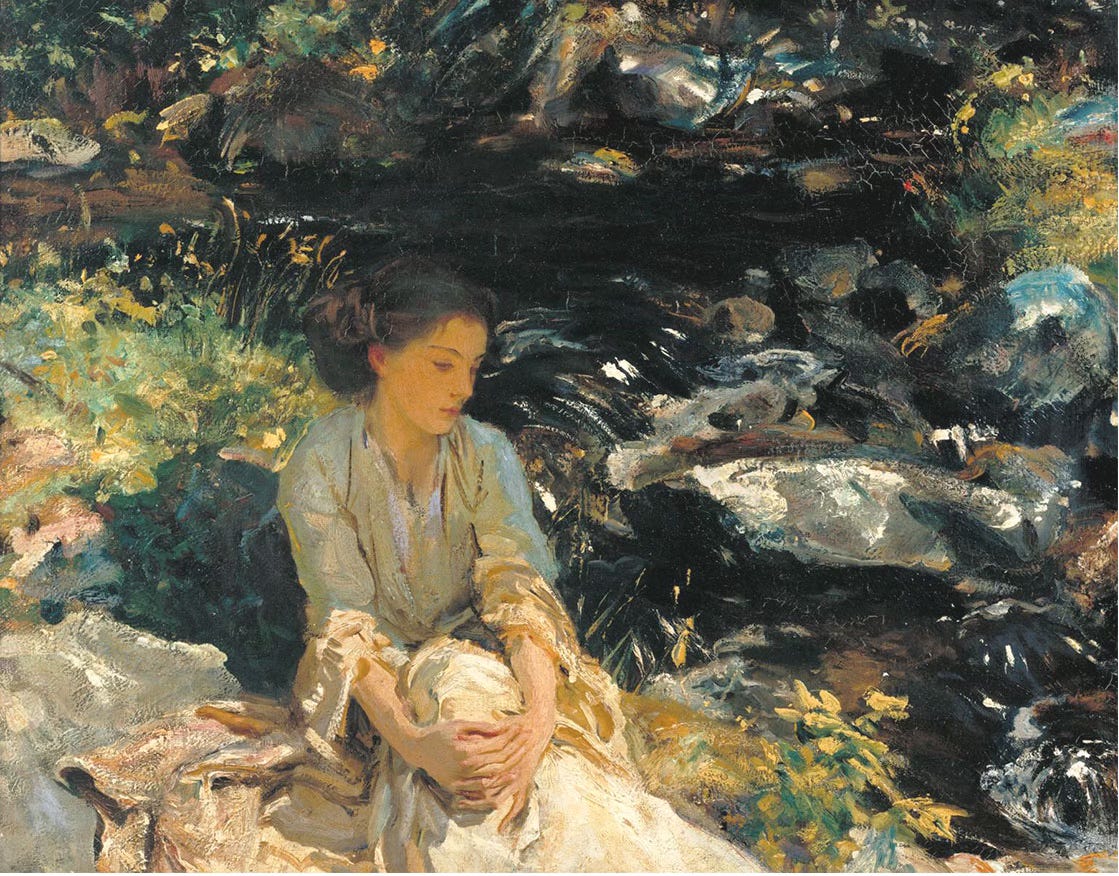
This section continues as Oliver writes about how writing, literature and nature offered deep companionship amidst a difficult childhood. From these origins, she writes about the developmental learnings of creative work (writing and reading) as being “intellectual work sometimes, spiritual work certainly, artistic work always.”
Reading both her novels and prose are a holistic journey, covering all corners of experience: intellectual, spiritual, artistic. Sometimes, certainly, always, definitively. “You must never stop being whimsical,” she says. I laugh with the kookaburras as if I’m totally in on the joke.
Observing nature is the primary focus of section two, but the structure of Upstream must also be acknowledged momentarily; both sections two and four detail Oliver’s acute sensory, spiritual and creative observation of the natural world through different lenses. We will begin with the macroscopic observations of section two, where Oliver takes an almost omniscient, bird’s eye role. Oliver was known to walk and write simultaneously, this idiosyncrasy was her method of developing a relationship with the cosmology of the natural world and her place within it. In section two, she speaks of the landscapes that surround her; the deep sea, the gladness of catching a fish (or not!); of blue herons “carved by Giacometti”. We learn of her first sighting of wood ducks in 1977, the spring morning of 1985 at Blackwater Pond, or the single hooded merganser that appeared one morning in March 1991.
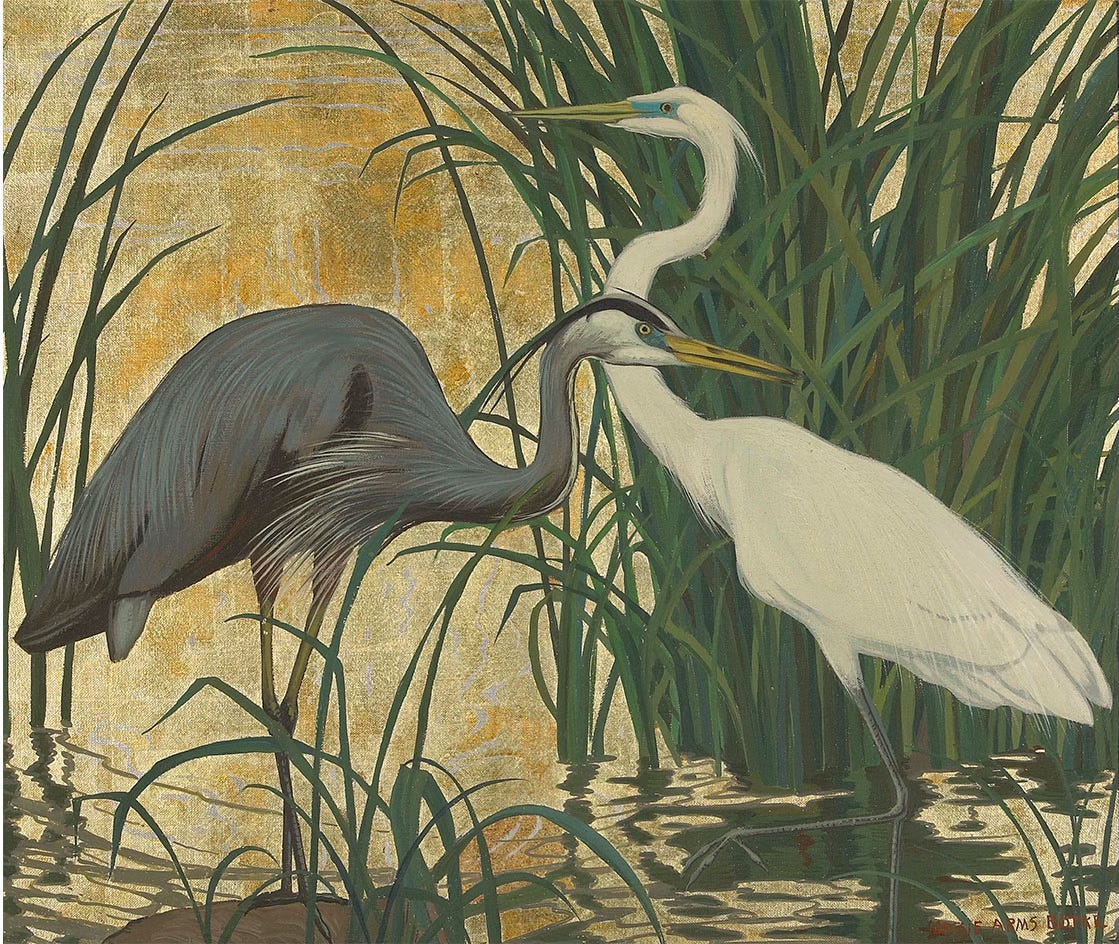
In stepping back and observing nature fully, Oliver means to “enjoy, to question– never to assume or trample […] to observe with passion, to think with patience, to live always caringly.
“Wherever I’ve lived my room and soon entire house if filled with books; poems, stories, histories, prayers of all kinds standing up gracefully to heaped on shelves, on the floor, on the bed. Strangers old and new offering their words bountifully and thoughtfully, lifting my heart. But wait! I’ve made a mistake! How could these makers of so many books that have given so much to my life– how could they possibly be strangers?”
When Oliver asks in section two how “one can understand such timing, what curious sense does it make, in all happenings of the universe?” she answers in section three through the inquisitive, explorative nature of reading closely.
Drawing upon kindred literary souls like Emerson, Poe, Whitman, and Wordsworth, Oliver explores a new frontier within the realms of literary analysis, not only showing passion, exuberance and expertise, but an intimate look at her literary influences and inspirations. I, too, am repeating this pattern, in writing of Oliver so much that I have begun to regard her as a literary companion. After all, she once described the eyes of kookaburras as “the brown eyes of soft-hearted dogs,” and from my spot beneath the gumtree, I think she’s right.
The third section of Upstream is sandwiched betwixt macroscopic and microscopic of the natural world, marking a distinct shift in the collection of essays. In section four, Oliver reveals more of herself to the readership through a compendium of smaller stories about the natural world which feel personal and intimate, as if she and nature are the same entities. These writings have more narrative structure and moving arcs, with a primary focus on one animal at a time: a spider building her web, a seagull at the end of its life, a bear in the town.
Oliver writes with empathy, choosing to clean everywhere in the house she shares with the spiders except for their home beneath the stairwell. When she brings back a young, injured black gull home from the beach, she “grew fond […] grew into that perilous place.” On her way to the owl’s nest, she “sees many marvellous things” but the barred owl is seen once, and once only.
In this section, the animals feel human. To Oliver, they become more than companions, they become new eyes from which she sees the world, whether from a large oak tree, beneath a stairwell, or upstream.
The final section, quaint as it is, is solely dedicated to Provincetown with a singular essay.
“I don’t know if I am heading to heaven or that other, dark place, but I know i have lived in heaven for 50 years. Thank you, Provincetown.”
It is a sweet ending, full of sentiment only a poet is capable of.
Sometime whilst writing this, the birdsong has simmered, the sun is below the horizon, and my lamington crumbs have blown somewhere far away in the wind. When it comes to poets that write prose, I lose myself completely to the undefinable soul of the universe.
I think I ought to have another lamington, or as Oliver would say:
I think there ought to be a little music in here.
That’s what happens when poets write prose; something musical; something as sonorous and joyous as laughter.
Afterword
Maybe May will be the annual Mary Oliver month for my newsletter. I’m currently writing my next article about journaling and can’t help but quote her, so if you enjoy this poet as much as I do, keep an eye on your inboxes next week!
It’s nice to have a space where I can writing of multiple lengths without the constrictions of a word limit, it feels very freeing. Considering last week’s Mary Oliver essay was a twenty minute read (oops), I thought a short, sweet and digestible quotation study would be good.
I loved my week away down south in Wadandi Boodja (Saltwater People’s Country) and acknowledge the original custodians of the land that I wrote these two pieces on.
Thanks for reading,
Jada
✷
@fujijada
jadadeluca.com
deluca.jada(at)gmail(dot)com

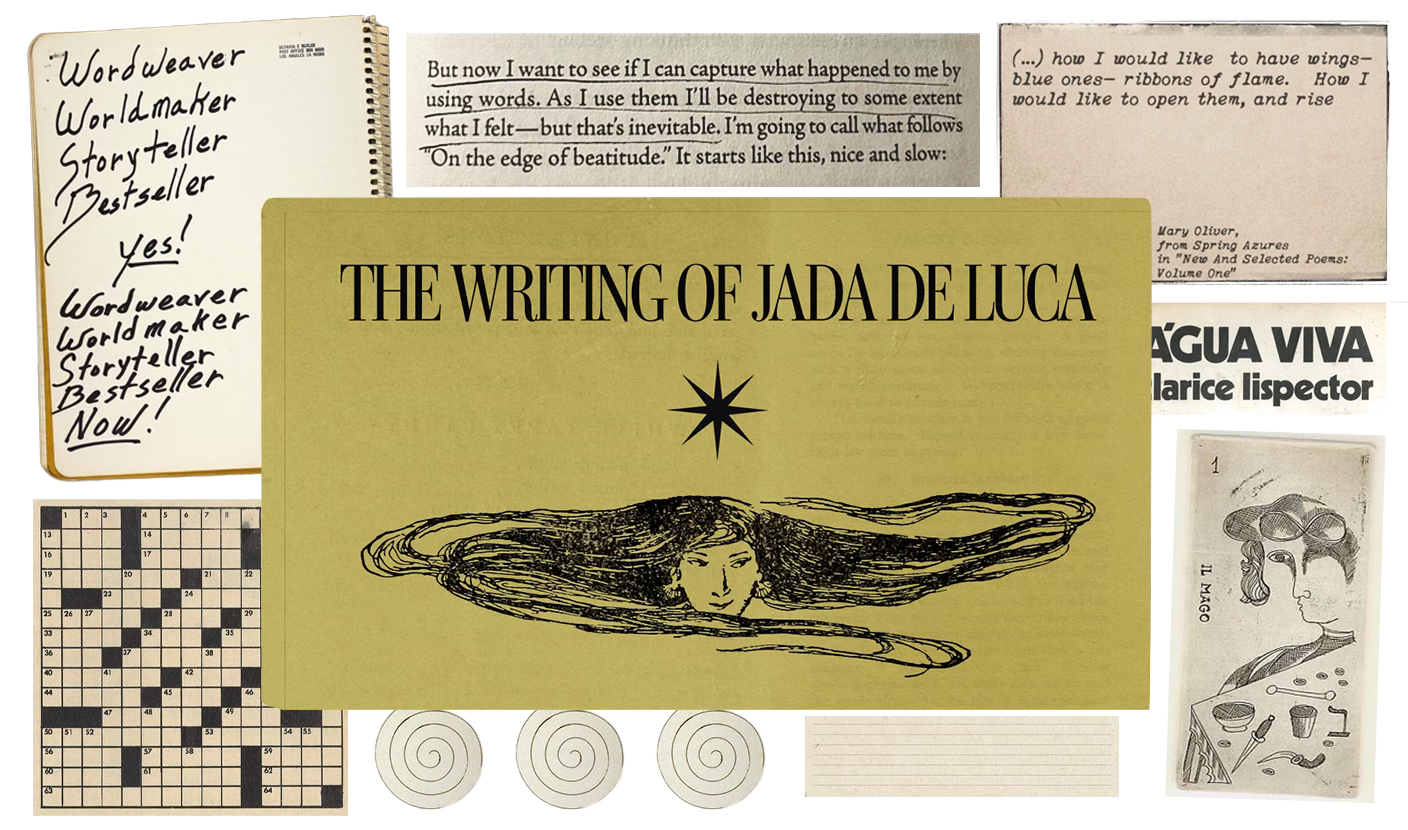
Italian-Samoan writer Jada De Luca is a visual narrator, storyteller and devout journaler. She writes about leading a reading and writing life, inspired by Mary Oliver’s poem Sometimes:
Instructions for living a life:
Pay attention.
Be astonished.
Tell about it.
Telling stories through both written and visual narration (she is also a collage artist) is her way of paying attention to the magical, surreal, and intensely personal landscapes that the arts offer. Her newsletter is a source of her entire writing career; her oeuvre; a commonplace journal of essays about literature, language, writing, travel and art.
Jada’s favourite novel is Água Viva by Clarice Lispector, her favourite tarot card is The Magician, and she likes her tea with an extra sugar.
The Prose Poem: An International Journal, Peter Johnson
Emerson, Ralph Waldo. “From The Poet.” Poetry Foundation, https://www.poetryfoundation.org/articles/69389/from-the-poet.
Such a beautiful analysis! Thank you Jada🌾