
March Reading List
Annotating every poem in a poetry book, femme surrealism beyond the paintbrush, translated fiction, a wide exploration of genre and reading only women for International Women's Month

Foreword
At the beginning of the year, I renewed my commitment to my newsletter with the goal to spend more time writing about what I’m reading:
“I don’t want to read a specific number of books, I want to remember what I read, ingest it, question it, answer it, sit with it, be excited about it, mull over it.
In a reading month, my goal is to spend as much time writing about reading as I do reading.”
I close March with ten books and upwards of 10’000 words sent out to people from across the globe, which feels fitting, as this month’s reading focused heavily on translation.
Here’s the rundown for March’s reading:
Narratives revealed by translation: Getting through the International Booker Prize 2026 long list and reading works translated from six languages.
Women & Writing: All of the books I read this past month were exclusively written, and predominantly translated, by women.
Surrealism beyond the paintbrush: An exploration of the bounds of surrealism in writing as opposed to visual mediums, with a focus on Leonora Carrington and Remedios Varo in particular
A wide exploration of genre: Mulling over poetry annotations, giggling at children’s picture books, knee deep in translated fiction (as usual) and swimming in new waters with a saga.
As this is my third Reading List for 2026, I am beginning to understand even more the important of continuing dialogue with books beyond the last page. One of the essays I wrote in March heavily featured quotes and unravelled notes from Why Read The Classics? by Italo Calvino, which was featured in last month’s Reading List. I am following a dynamic process of reading, reviewing, and writing that feels inherently natural to me– a desire path of sorts.
The conversations and ideas from reading and reviewing, summarised in these reading wrap ups, are preliminary conversations to even wider thinking. Who knows how my reading this month will influence my writing for April?
I can’t wait to find out. Happy reading,
Jada
2026 reading lists:


More writing about reading:


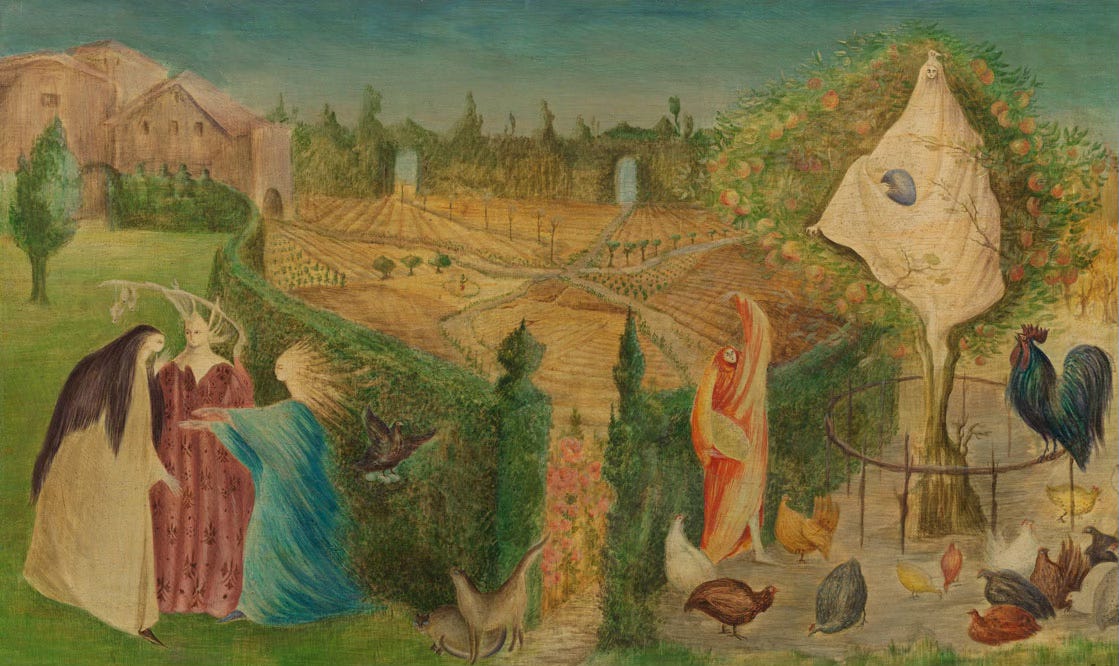
My March 2026 Reading Forecast
Surrealism beyond the paintbrush: Painters who write
In preparation for my essay Femme Surrealism and the Mystery of Creation, I did an extensive amount of reading about surrealist artists Leonora Carrington and Remedios Varo. In these two women, I found kindred souls as not only are they both painters, but also writers. (For those that don’t know, I am also a collage artist!)

This month, my reading explored the boundaries of surrealism in writing as opposed to visual mediums. With a particular focus on Leonora Carrington’s works Down Below and The Stone Door, I ultimately came to the conclusion that like her paintings, there were none.
Apart from analysing her paintings, listening to interviews, and reading essays about her, the only writing of Leonora Carrington’s that I had read was The Hearing Trumpet a couple of years ago. Back then, the dots didn’t seem to connect as vividly as they did in my analysis of her painting The Giantess. When seeking out her words once more, equipped with a new found understanding of her artwork, I described my reading experience of Down Below, and subsequently The Stone Door, as “now knowing what it feels like when my third eye opens. Nirvana.”
The reason behind this experience feeling like I had taken a blindfold off and could see, analyse and read surrealism with greater clarity and vigour was due to context. Down Below is Carrington’s memoir; albeit a bit left-of-field from what readers and viewers of her paintings are used to. She reminds us that at times, the most surreal and shocking experiences actually come from truth, from our inner insanities, from the inexplainable and traumatic things that happen to us.
Remembering her time documenting her psychotic breakdown, institutionalisation in a Spanish sanatorium, and eventual escape in 1940, Down Below recounts a world of survival:
“After the experience of Down Below, I changed,” Leonora remembered. “Dramatically. It was very much like having been dead. It was very clear, I was possessed. I’d suffered so much when Max was taken away to the camp, I entered a catatonic state, and I was no longer suffering in an ordinary human dimension. I was in another place, it was something quite different. Quite different.”
Medium is important here; where she was used to painting about her fantastical dreams, Down Below is equally a mental descent as it is a physical, a suffering so severe that it could only be fully realised in writing. Carrington still has her usual sway between fiction and non-fiction, and despite being known for painting dreamy apparitions in fantastical landscapes, the images written in Down Below recall a terrifying reality of war trauma and how women that were rendered ‘insane’ were treated only eighty years ago. How would someone go about explaining a suffering that superseded “ordinary human dimension”? In writing.
Context continued to inform my reading the further I read. Having experienced a katabasis of sorts– a descent into hell alongside Carrington– when reading her memoir, I was better equipped to keep my head afloat in what has been describe as her “most difficult” book. The Stone Door is a surrealist feat, and became a reading experience that challenged and inspired beyond painting. Surrealism within the dimensions of writing created a moving diorama of magic, and an ever evolving narrative that opposes and transcends the stagnancy of paintings.
Whilst I wanted to give Remedios Varo’s Letters, Dreams & Other Writings as much attention alongside this deep dive of Carrington, I have to wait for it in the mail. In the meantime, a lovely subscriber I was in conversation with about these two incredible women recommended Alchemy of a Blackbird by Claire McMillan. This historical fiction created a more grounded and realistic portrayal of these two women, narrating their friendship and experiences when they reunited after fleeing Europe, settling down in Mexico City. After hours reading their works and writing my essay on femme surrealism, reading Carrington and Varo as characters in a historical fiction was another way to interpret the magic these two women created together, bound together by the author’s inclusion of tarot in between chapters, nodding to the integral influence that the major and minor arcana had on their friendship and ultimately art.
Narratives revealed by translation: Getting through the International Booker Prize & the other translated fiction I read
I am eternally grateful for translation allowing me to discover some of my favourite writers such as Olga Tokarczuk and Mathias Énard. Both have featured multiple times in the International Booker Prize list previously, which I am following closely this year.
From this year’s longlist, I read three books: Women Without Men, Taiwan Travelogue, and The Wax Child. Translated fiction provides a greater accessibility for narratives beyond my worldview, age, and living circumstances.
“Encapsulating a range of international experiences, with many drawing on real moments from history, the six books transport readers from Japan-ruled Taiwan in the 1930s to Nazi-controlled Europe during the Second World War, from magic and domesticity in suburban France in the 1990s to the turmoil and after-effects of the Iranian Revolution in 1979, from a brutal prison colony in a remote corner of Brazil to a strict patriarchal community in the Albanian Alps.
A diverse cast of richly realised characters including a suburban witch, a morally compromised filmmaker, a bloodthirsty prison warden, a sworn virgin with a new identity, a young novelist and her interpreter who share a passion for food, and a multigenerational family of Iranian emigrants.
The books are by a majority of women: five of the six authors and four of the six translators are female. The authors include an award-winning actor, a former youth worker and a writer of manga and video game scripts.”– The Booker Prize’s statement re: the longlist
Only Taiwan Travelogue made it into the shortlist, which I unfortunately decided to DNF 20% through. Despite not finishing it, its composition, structure, and themes remain especially relevant with a unique take on the genre: Taiwan Travelogue is “disguised as a translation of a rediscovered text by a Japanese writer.” For translator Lin King, the translation of this book was a meta process. In an interview with Hairol Ma, King herself as the translator is able to provide a voice to explain this:
“The original novel has the fictional premise of being a historical text translated from Japanese into Mandarin, with Shuang-Zi as the translator, and therefore already has a lot of footnotes. With the original Taiwanese publication, Shuang-Zi even got into a little bit of controversy with some readers who’d thought the book was a genuine translated historical text rather than being entirely fictional. Because there was already a “translator” in the story, the structure allowed me to interject myself as a translator in the text in a way that’s not normally done in English-language translations, where there tends to be an emphasis on “seamlessness” that makes readers forget that they’re reading a translation at all. Adding on to Shuang-Zi’s footnotes, I was able to make the translation almost academic in a sense, and therefore a lot more precise. And because the story is about an aspiring translator, it feels like there’s more room to get really specific about technicalities like romanization with accents or including different pronunciations of the same words. There’s more room for translation.”
Whilst the story didn’t hold me, I thoroughly enjoyed diving even deeper into translation and the exchange between authors and translators. Translated fiction provides variety and accessibility in storytelling. I have written about my love of translation before:
“Translated fiction is a celebration of storytelling because readers are not only transported through the portal of a story, but also one that supersedes language and cultural differences. Reading has a linear trajectory for the reader, but translated fiction adds another layer through the conversion of language– diction, syntax, and culture. I cannot think of a more fitting celebration of literature for both writer and reader than with the added presence of a translator, where all of the above are expanded, challenged, and stretched.”
Sorry for all the massive quotes I’m interjecting here, but you get my point.
Other translated works included a spritely children’s book, Sato The Rabbit and an ARC copy of The Perfect Circle. These books brought my tally to reading six stories I previously wouldn’t of been able to, translated from Italian, Mandarin, Danish, Japanese, French and Farsi.

Analysing all 36 poems in Mary Oliver’s A Thousand Mornings: The power of close reading and annotating poetry
In an attempt to sleep better, I got into the habit of annotating poetry every evening as a way to wind down. Mary Oliver is my favourite poet whom I share a love of geese and swans with, and by the end of this month, I annotated every single poem in her poetry book A Thousand Mornings.
Mapping out my understanding of poems is akin to working out a mathematical equation. This is a process that happens as I am reading, and continues with each reread until either the page is full, or I’ve ‘worked out’ the poem.
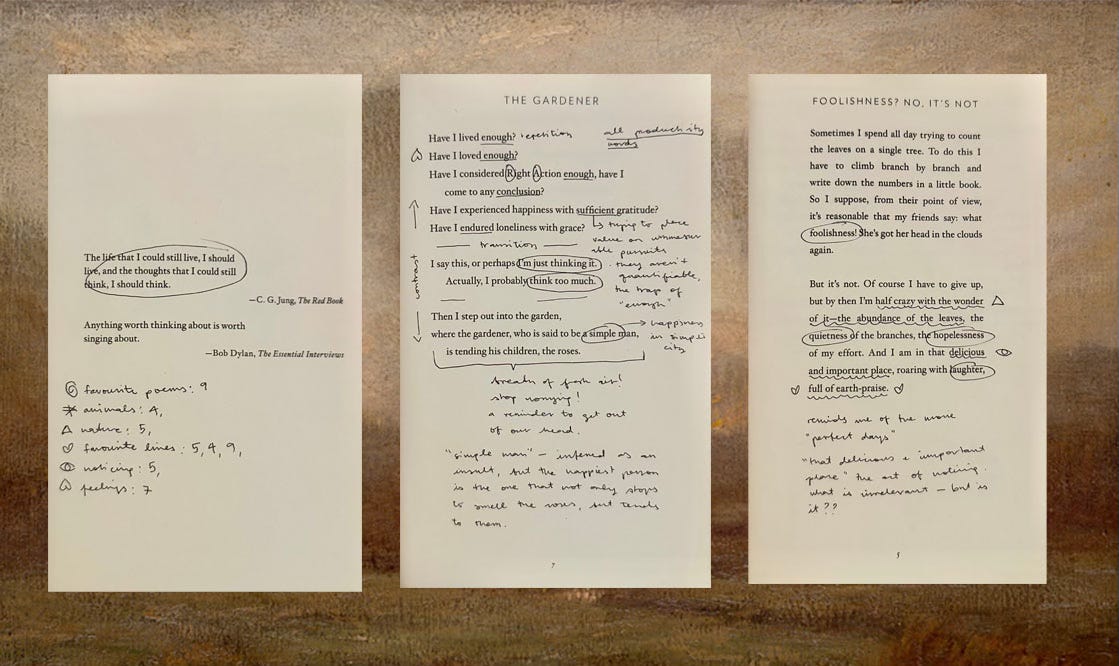
“The idea must drive the words. When the words drive the idea, it’s all floss and gloss, elaboration, air bubbles, dross, pomp, frump, strumpeting.
– Mary Oliver, Upstream: Selected Essays
This process, and reading poetry, was very on topic this month, as I wrote about the art of close reading. Most would be familiar with close readings in relation to poetry, as it is perhaps the most accessible way to close read. As I wrote in Reading Beyond Reviewing:
“A close reading changes the position of a reader from one of passivity (simply enjoying a book) to proactivity (engaging with a book). It is both a process whilst we are actively reading a book, and an act of transmutation afterwards.”
Expanding upon idea is the keystone of close readings, and when Oliver says that “the idea must drive the words,” this shows that meaning can be farmed from poetry. Unlike mathematics, there is not one definite answer, but infinite amounts of interpretations.
“Don’t close the poem as you opened it,”
she says. The person I was before annotating each poem, and the person I became after successively completing all 36 poems, are different. I did not close this book the same person as when I opened it.
In my review below I have included a link to her recital of A Thousand Mornings in 2012 at The 92nd Street Y, I highly recommend you check it out!
Books I Read This Month
Down Below by Leonora Carrington
The Stone Door by Leonora Carrington
Alchemy Of A Blackbird by Claire McMillan
All The Horses of Iceland by Sarah Tolmie
The Wax Child by Olga Ravn
Taiwan Travelogue by Yan Shuang-Zi
Women Without Men by Shahrnush Parsipur
The Perfect Circle by Claudia Petrucci
A Thousand Mornings by Mary Oliver
Sato The Rabbit by Yuki Ainoya
My Reading Thoughts & Reviews
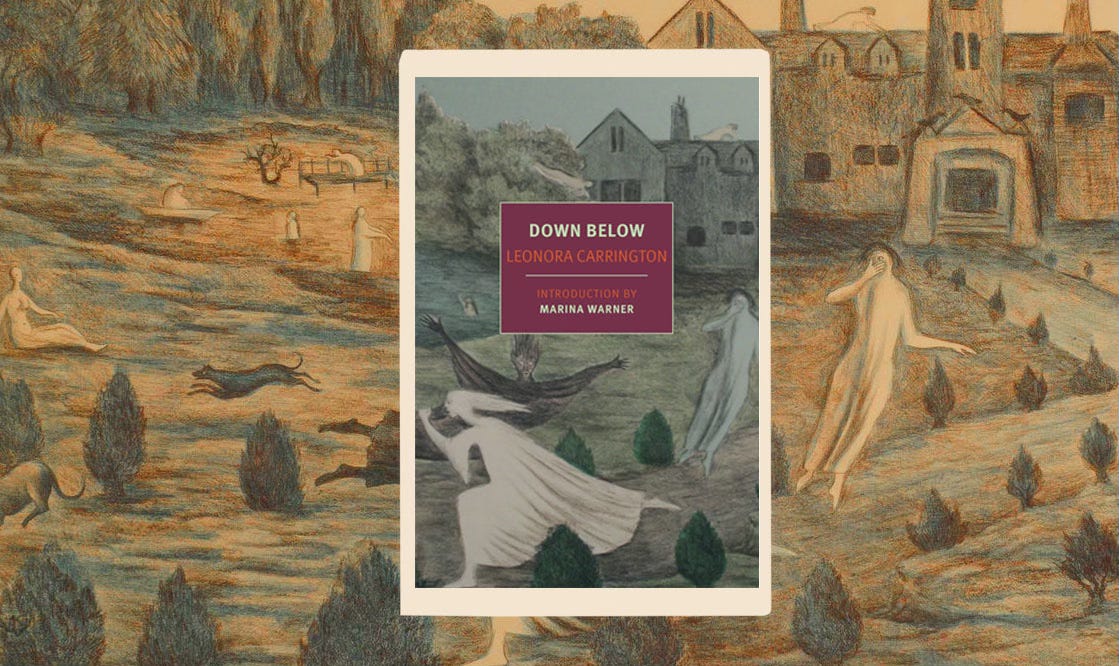
Down Below by Leonora Carrington
“We have to hang on. Even if the angel cries, ‘Let me go, let me go.’ We don’t listen. No. We have to hang on.”
– Leonora Carrington in conversation with Marina Warner
Leonora Carrington’s description of her favourite story in the Bible, where Jacob wrestles with an angel until dawn denote struggle, an image of wings desperately wanting to take flight but being held down by the sheer grip of Jacob. ‘Let me go, let me go,’ is a repeated plea, a motion of trying to break away and pulling back, hanging on amidst an ‘angel[‘s] cries’ a recoiling. In a colloquial sense, Carrington superimposes herself and the reader (“we”) in the narrative to describe struggle, perseverance, of seeking flight amidst the weight of suffering.
Down Below, Carrington’s memoir, also acknowledges this struggle through the titular and narrative process that suggest the portion of her life between fleeing Europe and settling down in Mexico City, that dubious middle area between escape and destination, was as much a mental katabasis as it was a physical one.
This memoir is written in the form of a diary, for how else can readers truly understand writing as an act of remembrance, preservation and salvation if not from the source directly? Memoir becomes a secondary genre, still trumped by surrealism and in the blurry line between fiction and truth. Described as a “lucid retrieval and hallucinatory madness in a record that is the persevering work at the same time as the haphazard record of a patient,” Down Below is Leonora Carrington’s personal written account of her escape from her confinement in a mental institution in Spain.
This memoir is a container for multiple descents: into insanity, imprisonment, derangement and torment, but also, ultimately, freedom and survival. It also signifies a divide into a “plurality of self” – who are we, or what is left of us, after trauma?
Down Below sets readers up to continue with Carrington’s written oeuvre. A contextual primer in the form of a memoir that rejects the memoir as we have come to understand it.
As I said earlier, she reminds us that at times, the most surreal and shocking experiences actually come from truth, from our inner insanities, from the inexplainable and traumatic things that happen to us. How else can we transmute such horror, except in writing?
Reading experience in three words: Harrowing, katabasis, female madness
For you if: You enjoy Leonora Carrington’s artwork and want to know the context behind her paintings, experiences, and begin delving into her writing.
Rating: ✷ ✷ ✷ ✷ ✷ (5 stars)
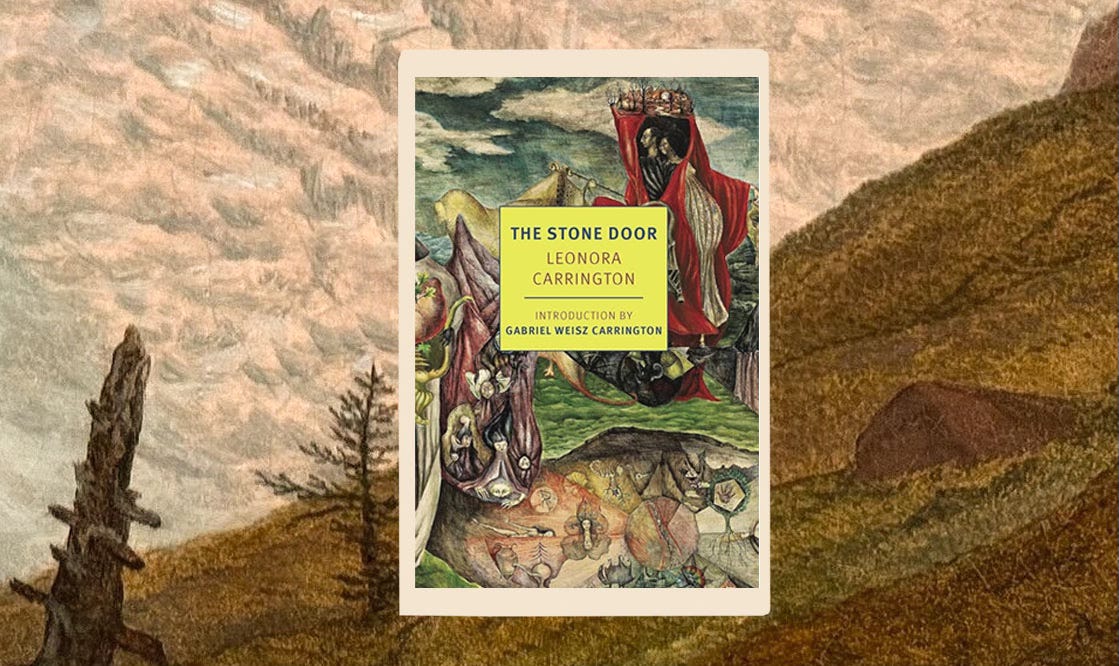
The Stone Door by Leonora Carrington
For fans of Carrington, The Stone Door is the final boss of her writings. It is a difficult, but rewarding read that combines intricate esoterica, symbols and alchemy we are accustomed to in regards to Carrington’s works, and lengthens them across a novella. What bolstered my reading experience and deepened my recognition, understanding, and forgiveness of difficulty was reading Down Below as a precursor. As stated before, Down Below is a fitting ‘contextual primer,’ in which helps the reader stay afloat amidst this surrealist book.
The Stone Door was “a noisy puzzle whose solution is in another puzzle,” wherein the more I analysed, the more I realised how vital an understanding of Carrington’s context was. This book was as surreal as it was hyperspecific; Carrington wrote the fiction she wanted to, not the fiction she desired others to understand. Which, as both a reader and writer that was challenged in this read, I can actually really respect. Her internal canon is one of ancient civilisations, magic, voyages between life, death and dream, and natural material.
I wrote an extensive amount of notes and annotations when reading this because of the sheer amount of pieces in the puzzle, but the core narrative of The Stone Door, actually follows a simple trajectory: the convergence of the two main characters, Zacharias, and an unnamed woman as they cross physical and metaphysical lands to reunite, inferred by Carrington as a surrealist representation of her escape from the mental asylum and eventual marriage to her second husband in Mexico City, Chiki Weisz.
The book is a winding navigation an occult, surreal and saturated overworld between Hungary and Mesopotamia that is full of both symbolic, natural and geographical obstacles that converge at the titular stone door. The book explores polarity and comparison, with allusions to the first civilisation and ancient cultures, Greek mythology, and astrology. Symbolised in the two main characters is the meeting of masculine and feminine energy, the land of the dead and of the living, Aries and Libra, rivers and mountains, dreams and waking, time and space, logical and irrational, primitive and embryonic, underworld and overworld.
Akin to Down Below, The Stone Door serves as a fictional and alchemical katabasis; one character ventures through dreams and the land of the dead, whilst the other ages in the overworld and assumes his journey much later in life. This poses the question, which way is a katabasis, when neither of the characters are going up or down, but seeking to join in the middle? Ultimately, The Stone Door is a vast landscape of eventual unity.
This was a sublime read that I am excited to analyse further in a (what will most likely very long) essay.
“It is more fruitful to approach her work as a mythical imaginary construct all her own… a unique symbology.”
– Gabriel Weisz Carrington
Reading experience in three words: Symbolic, esoteric, (oddly) romantic?
You should read this if: You would like to delve even deeper into Leonora Carrington’s works and life, want a challenging read to pick apart, and enjoy esoteric, religious and historical symbolism.
Rating: ✷ ✷ ✷ ✷ ✷ (5 stars)
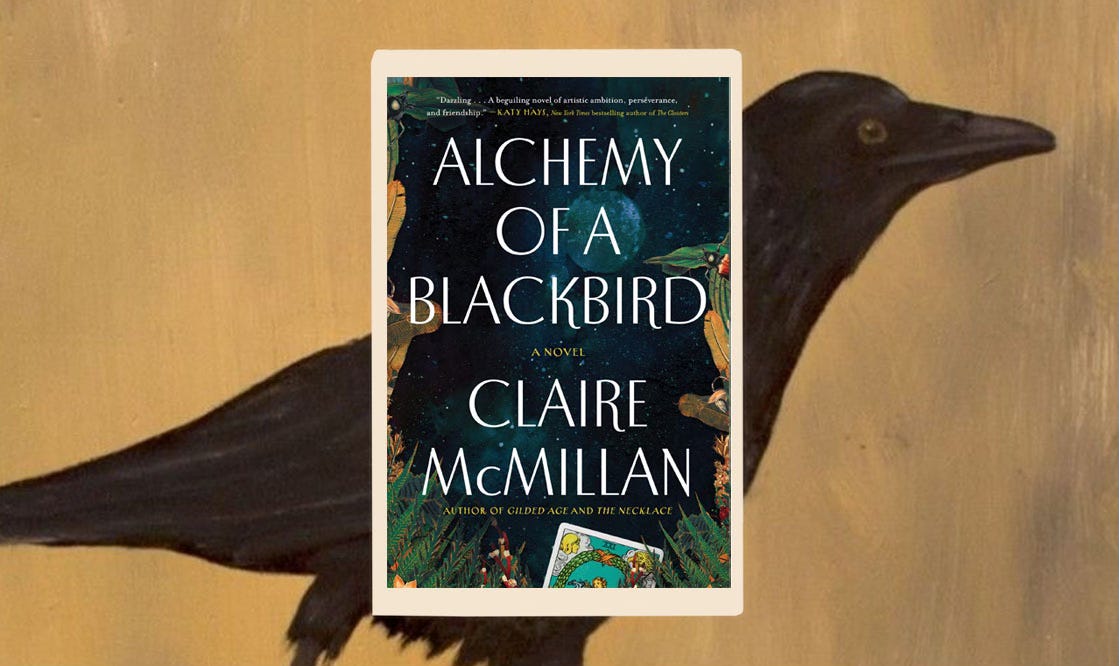
Alchemy Of A Black Bird by Claire McMillan
Sorry, I’m still not finished writing (raving) about Leonora Carrington!
In Alchemy of a Blackbird, the friendship between Remedios Varo and Leonora Carrington following their reunion after fleeing Europe during WW2 takes centre stage. Claire McMillan writes historical fiction like no other, motivated by the whimsy and magical inspirations that the two women lived by with a fitting homage where their friendship is a catalyst for discussion about women breaking away from the surrealist movement. This transition is portrayed through Remedios Varo as she escapes France, finds her own personal voice through studying tarot, and becomes inspired to pursue painting what she wants to paint instead of selling fakes or working under commission.
But beyond making a point about femme surrealism, Alchemy of a Blackbird paints a portrait of artists supporting each other through companionship, mystical wisdom and encouragement. The deck referenced is the Rider Waite set designed by Pamela Colman Smith (who makes a cameo in one of the chapters!) and I loved reading about the two women doing tarot readings for eachother.
For beginners of tarot, this is a fun introduction to archetypes of the major arcana. McMillan’s inclusion of a description of the major arcana in-between chapters is vital to this story, as both women were heavily guided by the cards for artistic inspiration. Carrington actually went on to create her own major arcana deck, and Varo used a lot of tarot-adjacent imagery in her work. Tarot exists as a framework for the journey through life, and in Alchemy of a Blackbird, is utilised as a driving force that symbolises the trajectory of Varo painting commercially and being held down by her male contemporaries, to ultimately being equipped with companionship, alchemy and magic to reach new heights in her artwork and begin creating the “mystical work” she had always dreamed of.
Magic and art are not supposed to be exclusive like the surrealist movement’s segregation of women, it is supposed to be communal; this book shows there really is enough inspiration to go around for everyone.
“… From the river of moth dust we float on at night
Hand in invisible hand saying

Go and be

Build your impossible fort full of secret magics
Designed to let others in”

– Epigraph in Alchemy of a Blackbird by Janaka Stucky
Reading experience in three words: Female companionship, tarot study, historical fiction
You should read this if: You enjoyed my Femme Surrealism and the Mystery of Creation essay! Jokes aside, you should read this if the height of female friendship sounds like making art and doing tarot readings together. (Literally me and my friends, it’s an added bonus that I love these two women’s art so much!) Those that like tarot, or are curious about archetypes, will especially enjoy this.
Rating: ✷ ✷ ✷ ✷ (4 stars)
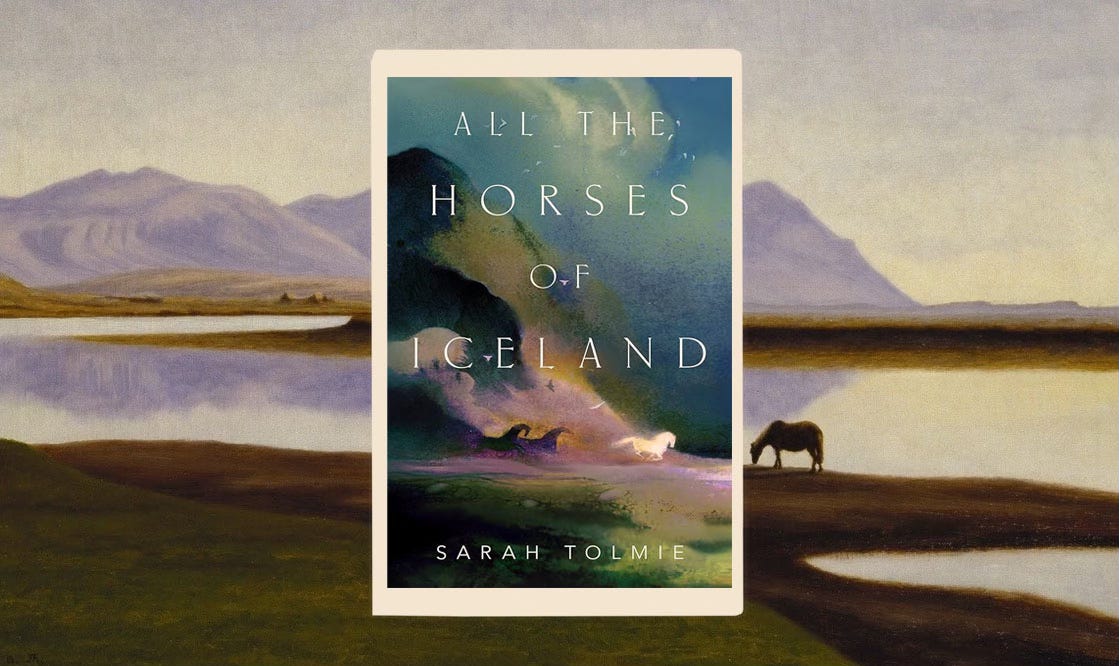
All The Horses of Iceland by Sarah Tolmie
Another unique historical fiction for March was All The Horses of Iceland by Sarah Tolmie because of how this book layered composition, genre and tone. In her own words regarding the publishing journey, Tolmie is a “non-genre-conforming writer.”
My interest in this novella is two-fold as it is written as both a saga and a frame story. Sarah Tolmie layers these compositional elements with the fable of how horses came to Iceland, set in the ninth century. A frame story provides important context and key information for how a narrative should be read, essentially being a “story within a story,” and a “saga” is a form of medieval literature that translates to “what is said” in Old Norse. These stories “blend historical events of exaggeration and myth, focusing on the experiences of early Norse settlers in Iceland, genealogies, and various themes such as love, adventure, and conflict.”
A separation from travel as a narrative construct. The in-between of places and movement of characters is not the primary focal point. My curiosity about this aspect of the book led me to a fantastic and eye opening interview of Tolmie by Bryn Hammond:
“The book is explicitly in saga style. This means some telescoping of action, not the kind of detailed description of travel you get in travelogues or in today’s historical fiction. Travel in itself is not of interest in sagas: it’s a means to an end, and that end is making money. So it’s trade protocols, laws, ceremonies, personalities, all those things that facilitate strangers getting to know one another and working out their relations that they tend to concentrate on (those sagas about “wide-travellers” like Eyvind at least).”
Accompanying the horses in their journey back to Iceland are magicians, ghosts, apparitions, and hopefully, “non-genre-comforming-readers.” Unfortunately, All The Horses of Iceland is not my flavour of genre-nonconforming, but I can most certainly appreciate Tolmie’s rich research efforts and medievalist knowledge.
Reading experience in three words: Spectral horses, myth vs history, this song:
You should read this if: You enjoy medieval fiction and are interested in Nordic history and mythology, saga-style works and books that challenge genre expectations. (Or you are a fan of the Elder Scrolls V: Skyrim role-playing game!)
Rating: ✷ ✷ ✷ (3.25 stars)
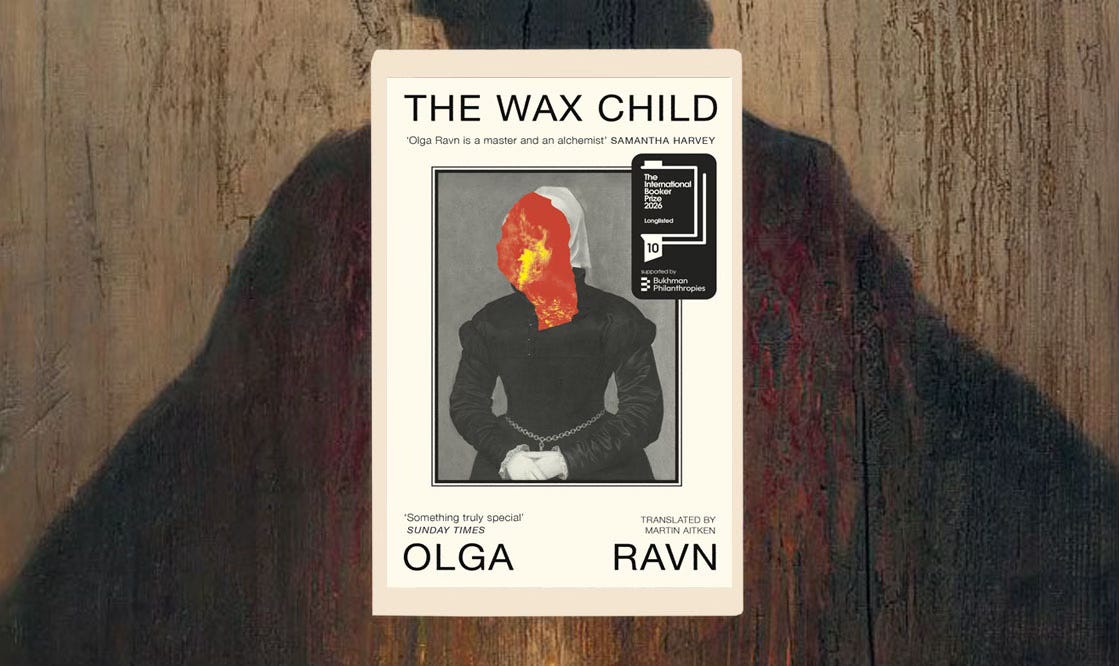
The Wax Child by Olga Ravn
Halloween came early, and even though March in Perth was scorching, The Wax Child by Olga Ravn was a chilling page turner. Gimmicky book review speak aside, whilst I am not normally a fan of horror as a genre, this book was a welcome expansion to my repertoire.
The curiosity and unnerving aspect of this book mimicked my experience reading Perfume by Patrick Suskind.
“I am a child shaped in beeswax. I am made like a doll the size of a human forearm. They have given me hair and fingernail pairings from the person who is to suffer. I was borne by my mistress for forty weeks under her right arm as if I was a proper child, and my wax was softened by her warmth. After this time, she took me to a pastor; it was night, the church was dark and still, and he christened me, the wax child. I was an instrument [...] My wax mouth cannot be opened.”
In the first paragraph, Ravn writes of a narrator that cannot open their mouth. A wax child that speaks to soil, a conduit that tells the befallen tale of its creator Christenze Krukow, a real Danish noblewoman who was accused of witchcraft three times.
Witch trials are breeding grounds for superstition: blame, solidarity, truth, scrutiny, suspicion. This child inhabits all with an unnerving omniscience: “And I was in the king’s ear, and I was in the king’s mouth, and I was in the king’s loose tooth and in the quicksilver of his liver, and did hear.”
For single and widowed women, North Jutland is a patriarchal society that is unafraid, and perhaps even bloodthirsty, to accuse women of witchcraft.
The narrator of this book becomes a representation of “he said, she said,” and fragility of solidarity, witnessing its creator seek community, only to be betrayed by it. Because of its abstract and obscure nature, readers never truly become privy to what the women were actually up to. What do we believe from whispers in the dark? When a man’s accusation of witchcraft is pitted against a woman’s plea of innocence, which party comes out on top? Was it witchcraft, or women attempting to break away from the patriarchy?
“They consulted their books of demonology, and there read: The woman is more easily tempted by Satan, for she is weaker than the man in body and soul … When a woman thinks alone, she thinks evil …”
I think you already know the answer. Olga Ravn writes witch trials, channeled through the wax child, with the voice of a higher power witnessing visceral atrocities against women like no other. The demise of Christenze, and the other women, is a haunting recollection of a 17th century reality. The wax doll’s occultness creates a separation between truth and fiction, but I think about the eyes that actually witnessed women at the stake.
Reading experience in three words: Visceral, abstract, curdling
You should read this if: You enjoyed The Crucible or reading about witch trials, enjoy unreliable or dubious narrators.
Rating: ✷ ✷ ✷ ✷ (4 stars)
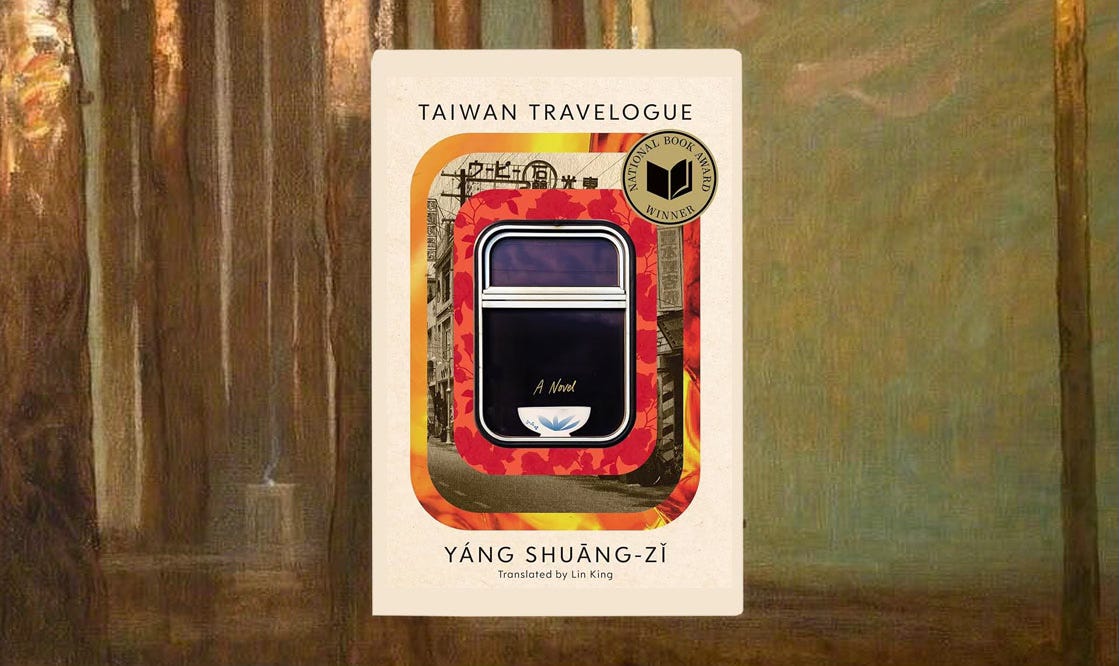
Taiwan Travelogue by Yáng Shuāng-Zǐ
The books I don’t end up finishing still have important stories to tell. Whilst Taiwan Travelogue failed to capture my attention due to its repetitiveness, it is a feat of translation as stated earlier, and I believe fittingly on the International Booker Prize 2026 longlist and the should be commended as the first Taiwanese novel to make the list.
Taiwan Travelogue is a “bittersweet story of love between two women, nested in an artful exploration of language, history and power.”
I won’t give this book a rating, as I did not read as far as to gauge if the dynamic of the friendship between the two women changed. Whilst I understand this book questions and challenges colonialism through the lens of interpersonal relationships, I found the characters to lack any interesting or unique aspects and instead were containers for colonisers and the colonised. The characters served their purpose in being representative of these opposing forces with the idea of being brought together through companionship and sharing food (each chapter is modelled after a dish in Taiwanese cuisine), but beyond that purpose, they felt empty.
My interest in the characters, their friendship, and what author Shuāng-Zǐ wanted to comment about colonialism was unfortunately lost in translation.
Reading experience in three words: Deconstructing colonialism, female friendship, food envy
You should read this if: You enjoy female friendship, food being used to dismantle colonialism and enjoy slower, slice of life style reads.
Rating: N/A (DNF at 20%)
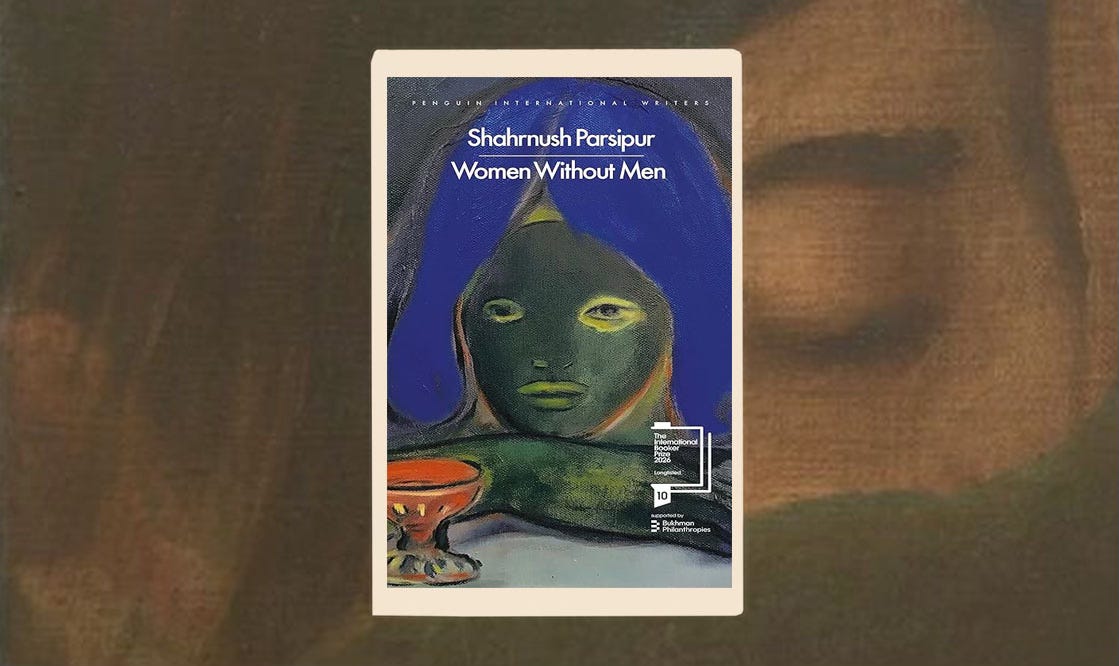
Women Without Men by Shahrnush Parsipur
An incredibly relevant and important book to read in 2026. Also included in the 2026 International Booker Prize, Women Without Men is an act of defiance against censorship. Written by Shahrnush Parsipur, this book was originally published in Farsi in 1989. Parsipur, a writer and producer of Iranian National Television and Radio, was imprisoned twice by the Islamist government: the first without formal charges for five years, and the second shortly after Women Without Men was published due to her frank account of women’s sexuality in Iran.
In this book, five Iranian women with distinct life experiences and circumstances are placed within coups and revolution, before converging together at a garden and “shedding their old lives like snakeskin.”
The “tale of modern Iran” employs magic realism to describe a circumstance where these women end up living together under a roof with no men. Parsipur writes about how women internalise patriarchal systems with a series of vignettes of each character.
This book lost points from me because of how explanatory it was, to the point of being too frank. The magic realism, alluding to Iranian mythology, was something I wish I could have appreciated more during my read of Women Without Men.
Reading experience in three words: Magic realism, politically relevant, female freedom
You should read this if: An author’s determination and the importance of talking about women within patriarchal systems inform your reading over the cohesion of narrative aspects and you’re interested in storytelling that not only calls out violence against women, but frankly shows how they could respond to the political and societal situations around them.
Rating: ✷ ✷ ✷ (3 stars)
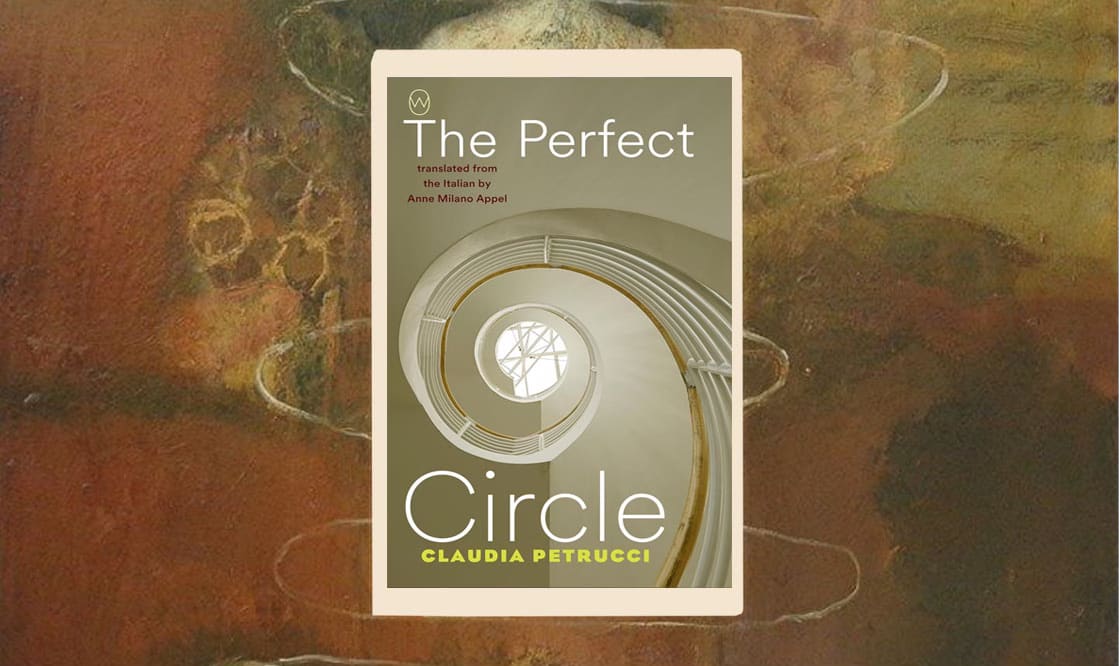
The Perfect Circle by Claudia Petrucci (ARC)
The Perfect Circle by Italian author Claudia Petrucci reads like an endless downwards spiral that makes us question: “how did it come to this?”
Whilst reading this novel which is set in Italy, I was reminiscing on lunching in Roma this time last year, trying to stare through the buildings from my spot on a piazza. Nosing a glass of riesling and nibbling absentmindedly on some cheese, I couldn’t stop wondering what was behind the shuttered windows left ajar to let in the height of the midday sun; watching the shadows grow on the symmetrical archways, cut up by iron bars; sitting on the stoop of grand wooden doors that looked as heavy and ancient as marble. That is the appeal of Rome: crooked cobblestones and curiosity. At home, cheese boards don’t quite feel like this. Here, in the afternoon sun, reading Irene’s story begin in Rome felt like my own round circle moment, perfected by memories of the promise of a riposo.
But this book was not a respite. I read it in the very early hours of the morning before another scorching hot day in Perth, where the heat keeps you indoors and unable to nap unless the aircon is assaulting you in the face. A mixture of dystopia, drama, intrigue, mystery was achieved through eerie and spacial writing that granted the reader the detachment of being a bystander alongside the intensity of being a witness, like watching a fire break out and feeling the heat on your face. The artful prose of Petrucci’s writing created a story that shocked me into contemplating a near-future version of Milan shrouded in fog, devoid of sunlight because of the festering effects of climate change. Of an alternate (but perhaps very real) reality where the next time I visited my family in Rome, I would be able to see behind those closed doors in exchange of never seeing the sun again.
In The Perfect Circle, readers are not given any answers as to how the world has come to be like this, but told a story of how regret, betrayal, greed and selfishness linger in physical spaces; the climate crisis’ impact on Italy is superimposed to a smaller scale in the round house on Via Saterna, Milan that sports a central skylight designed to shine three floors down. But Milan is shrouded in a chthonic, orange fog, and instead, the now useless skylight is the centre of a deeper narrative about time, death and repetition
What of a time when you could see the sun through the skylight? Unfortunately, you don’t know what you have until it’s gone. Until there is no sun, no home, no point of buying houses in darkness. Two narratives about two women separated by time, but connected by the house, alternate and circle each other throughout the novel. Eventually, like a spiral, the two stories converge in the middle.
Irene, a real estate agent based in Rome, returns to Milan when she is commissioned to sell a house on Via Saterna, a Palladian square housing a perfect circle at its centre. To avoid the scrutiny of her architect father, whom questions the morality of selling cultural patrimony to foreign bidders, Irene busies herself by avoiding her not-boyfriend in Rome, contemplating motherhood in this world, and scouring the house from top to bottom to achieve the impossible feat of selling it.
My curiosity sitting on the piazza is satisfied here, where Irene’s discoveries are told in chronological order, and the unfolding tale of Lidia, the house’s previous occupant, is told in reverse. The inverted narrative reveals what is behind the closed doors of the piazza: how and by whom the house on Via Saterna was built, and the mystery behind its odd layout. If the skylight wasn’t rendered useless by a sunless sky, it would have shined on the spot where Lidia fell to her death.
The entire narrative and composition of Petrucci’s writing is concentric. I was thoroughly impressed with how every single theme was added to this elusive whirlpool of mystery. The book begins with Irene’s return to Milan and Lidia’s death, and it transpires with the skylight as the radius closes in, further and further, like fog, fire and water; like a planet heating up; like the blaring quiet of an abandoned house. Except, in a crisis like this, abandoning Earth is not an option. So what of Via Saterna?
“The future is frightening without a home.”
I am thoroughly obsessed with this book, which will be published this week on April 7. I was also so pleased to find out that the author is based in Perth, and am hoping to connect with her so that I can continue writing about this book!
Thank you to the publisher, World Editions, for providing me with an advanced reader copy!
Reading experience in three words: Dystopian, round-circle-moment, legacy
You should read this if: You enjoy Italian drama, architecture and wonder what a world without the sun is like.
Rating: ✷ ✷ ✷ ✷ ½ (4.5 stars)
A Thousand Mornings by Mary Oliver
“The life I could still live, I should live, and the thoughts that I could still think, I should think.”
– The Red Book, Carl Jung
Mary Oliver’s poetry is perhaps the closest thing to divinity. The best way I can review this collection of poems is by describing the aftermath: I analysed and annotated all 36 poems and I look at every bird, every leaf, every ripple of the lake with Oliver’s words happening right before my eyes. I take stock of the water levels, I point out how high the river grass is growing to my partner, how many signets and ducklings survived the summer, how the jacarandas will remain green until October, where they will (briefly) turn purple.
Some of my favourite poems included:
After I Fall Down The Stairs At The Golden Temple
Poem of the One World
The First Time Percy Came Back
The Moth, The Mountains, The Rivers
Hum, Hum
The Way of the World
Tides
The Morning Paper
On Traveling to Beautiful Places
“Attention is the beginning of devotion.”
– Upstream by Mary Oliver
I have just gotten a copy of Felicity, Blue Horses and A Poetry Handbook, so this review is very short because I’ll be writing about Oliver and poetry in April!
Reading experience in three words: Awe, grief, nature
You should read this if: You want to cry and laugh and lie on the grass watching the sky all day
Rating: ✷ ✷ ✷ ✷ ✷ (5 stars)
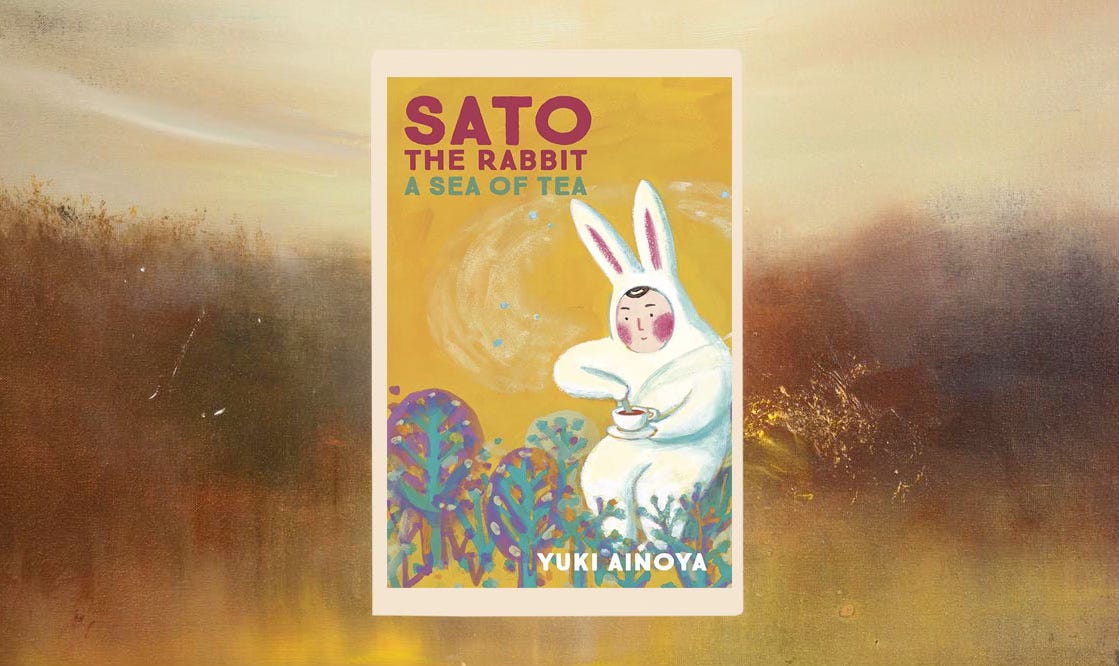
Sato The Rabbit by Yuki Ainoya tr.
Yes, I read a kid’s picture book. Yes, it counts. Yes, I loved it. No, I am not going to elaborate. Instead, you should totally read this article by Lucy Fuggle.
Reading experience in three words: Comforting, cute, wholesome
You should read if: You do or don’t have children. Nurture your inner child, exhale, and remind yourself to be grateful for the little things in life. Put that extra sugar in your tea!!!!
Rating: ✷ ✷ ✷ ✷ ✷ (5 stars)
Afterword
I can’t believe there are 2400 people interested in what I read every month. I can’t wait to share this month’s writing with you all! This reading list actually knocked me out; remind me to write the reviews as I read the books, not all at the end.
As always, thank you for reading
Jada
✷
@fujijada
jadadeluca.com
deluca.jada(at)gmail(dot)com

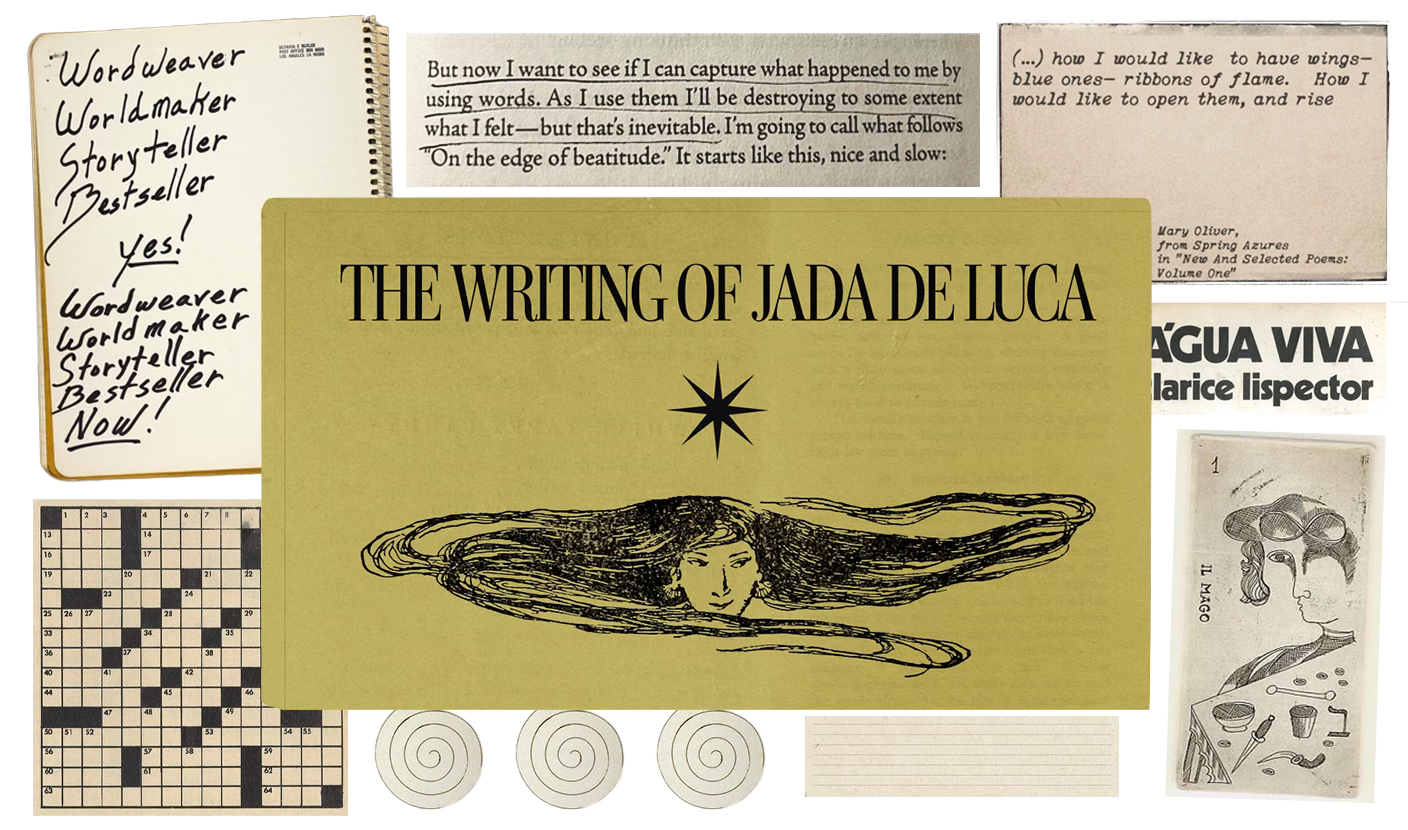
Italian-Samoan writer Jada De Luca is a visual narrator, storyteller and devout journaler. She writes about leading a reading and writing life, inspired by Mary Oliver’s poem Sometimes:
Instructions for living a life:
Pay attention.
Be astonished.
Tell about it.
Telling stories through both written and visual narration (she is also a collage artist) is her way of paying attention to the magical, surreal, and intensely personal landscapes that the arts offer. Her newsletter is a source of her entire writing career; her oeuvre; a commonplace journal of essays about literature, language, writing, travel and art.
Jada’s favourite novel is Água Viva by Clarice Lispector, her favourite tarot card is The Magician, and she likes her tea with an extra sugar.
Thanks for the Alchemy of a Blackbird recommendation! I love the idea of exploring Carrington and Varo as characters. Just starting Women Without Men, even though it didn’t make the International Booker shortlist!
You've piqued my interest in 'The Perfect Circle'!