
April Reading List
Not finishing a single book, the impact of reading on the nervous system, reading through pictures and a focus on medieval fantasy

Foreword
Apologies for the last two emails in your inbox! This reading list is the beginning of resuming to my normal publishing schedule (every Sunday)– I accidentally sent out incomplete articles a couple of times, oops! This burnout is really getting to me!
When April comes around, I always experience major shifts as a Taurus rising. Practically every year, nothing goes to plan, but also a lot of things also come to fruition. Usually, by the time May comes and the autumn weather seeps in, I manage to find my footing.
This year is no different. April was not a reading or writing month– I didn’t finish a single book and I didn’t publish any writing on Substack because this transitory period called for my attention elsewhere.
But I still found time to read in the pockets and containers of moments where it didn’t feel like the world was burning, which means I still have thoughts and things to discuss in this reading list.
We will be taking a different route, where I am excited to discuss the running thoughts on what I’m reading at the moment.
Happy reading,
Jada
Everything I’ve read so far in 2026:


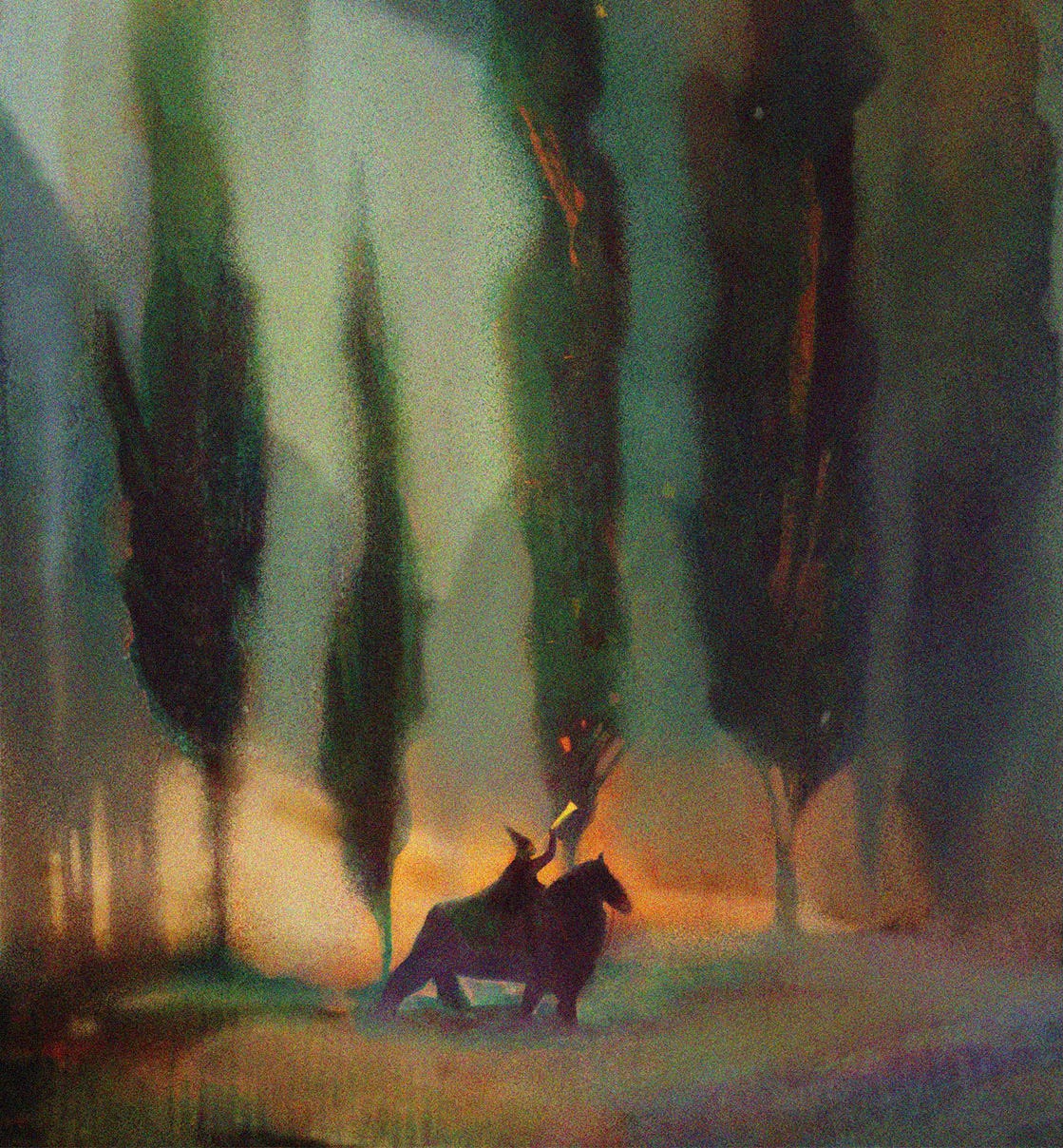
My April 2026 Reading Forecast
Reading is a river, not a well
‘To be read’ lists and fulfilling numeric reading goals are an aspect of reading culture that feels never ending– why are we in such a rush to finish books? These quantitative aspirations see reading as a well to be filled, emptied, filled. It’s exhausting.
Reading is not a linear activity, it is an eternal companion; a bookmark or a dog-eared page is an open invitation, not a deadline. Instead of seeing it as a container to be filled, I like to envision reading as an act of fluidity, an ephemeral and transient medium that moves in unprecedented directions. I’m tempted to regurgitate the words ‘ebb’ and ‘flow’ here as the means of a better explanation, but let me instead expand on this analogy in a different way:
The physical act of reading is directional– left to right, right to left, top to bottom– but it is also a metaphysical one. Apart from the structure behind letters forming words, words forming sentences, sentences forming paragraphs, the transmutative act of reading lies in interpretation, going beyond the rigid framework of pouring and emptying– “reading between the lines”. I like to think of it more as a river; at times still but never truly stagnant; an eternal undercurrent moving faster and slower; water as a continuously streaming river that rejects the limits of a metaphorical, productive container.
In the fourth century, Chinese poet Su Hui wrote The Star Gauge (璇璣圖, Xuánjī Tú). This poem supersedes direction and arrangement, showing how expansive as opposed to restrictive structure can be. Within a 29x29 character grid, each line can be read forwards, backwards, horizontally, vertically or diagonally, totalling almost 3’000 different readings. When I think of reading as a medium instead of a singular act, the vast prowess and potential of the Star Gauge also comes to mind.
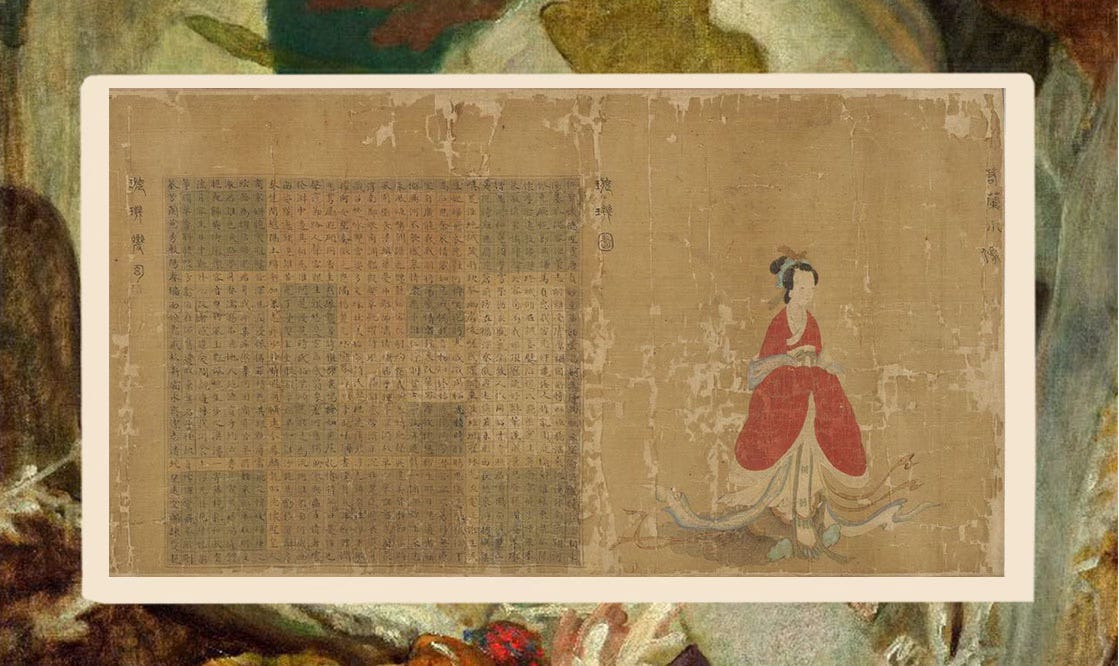
A star gauge is a spherical instrument used to calculate the motion of planets and stars. In the same way, how can we attempt to measure reading? We can’t! That’s why reading is a river, not a well; it takes on many directions, interpretations, iterations and transformations. Reading is something that can’t be restricted to ticking off a to do list, and in the example of the Star Gauge, it becomes so much more than that.
This month, reading as voraciously as I had previously alongside my responsibilities was an impossible juggling act, and so I just let it be. I had faith I could return to my books whenever I saw fit. There is always the potential to be lead in new and exciting directions when you take the time to stop by the river, fill your waterskin and check your map.
Parasympathetic reading and medieval fantasy
My nervous system was shot this month. I attempted multiple times to pick up the books I was reading, but when having my annual April/May existential crisis, words felt like they’d make my head explode.
Studies show that reading regulates the nervous system, but considering how stressful April was, I struggled to create an environment or headspace that was conducive of any relaxation. I have come to understand a personal symptom of burnout for myself is when my capacity to read plummets.
A massive part of my personal reading habits include annotations and analysis. When the body is in fight or flight mode, this is not happening. Luckily, I was drawn to an alternative: reading manga.
What I did manage to finish this month was all 14 volumes of Dungeon Meshi (ダンジョン飯) or Delicious in Dungeon and 16 volumes of Witch Hat Atelier. These are two medieval, high fantasy comics.
Where annotation was too overwhelming when in a sympathetic (fight or flight) state, Japanese comics created room for my parasympathetic (rest and digest) nervous system to connect to visual language. instead of complex literary materials, manga was a lighter medium that eased my nervous system. This impact was due to how the visual language of manga is connected to sensitivity and creativity.
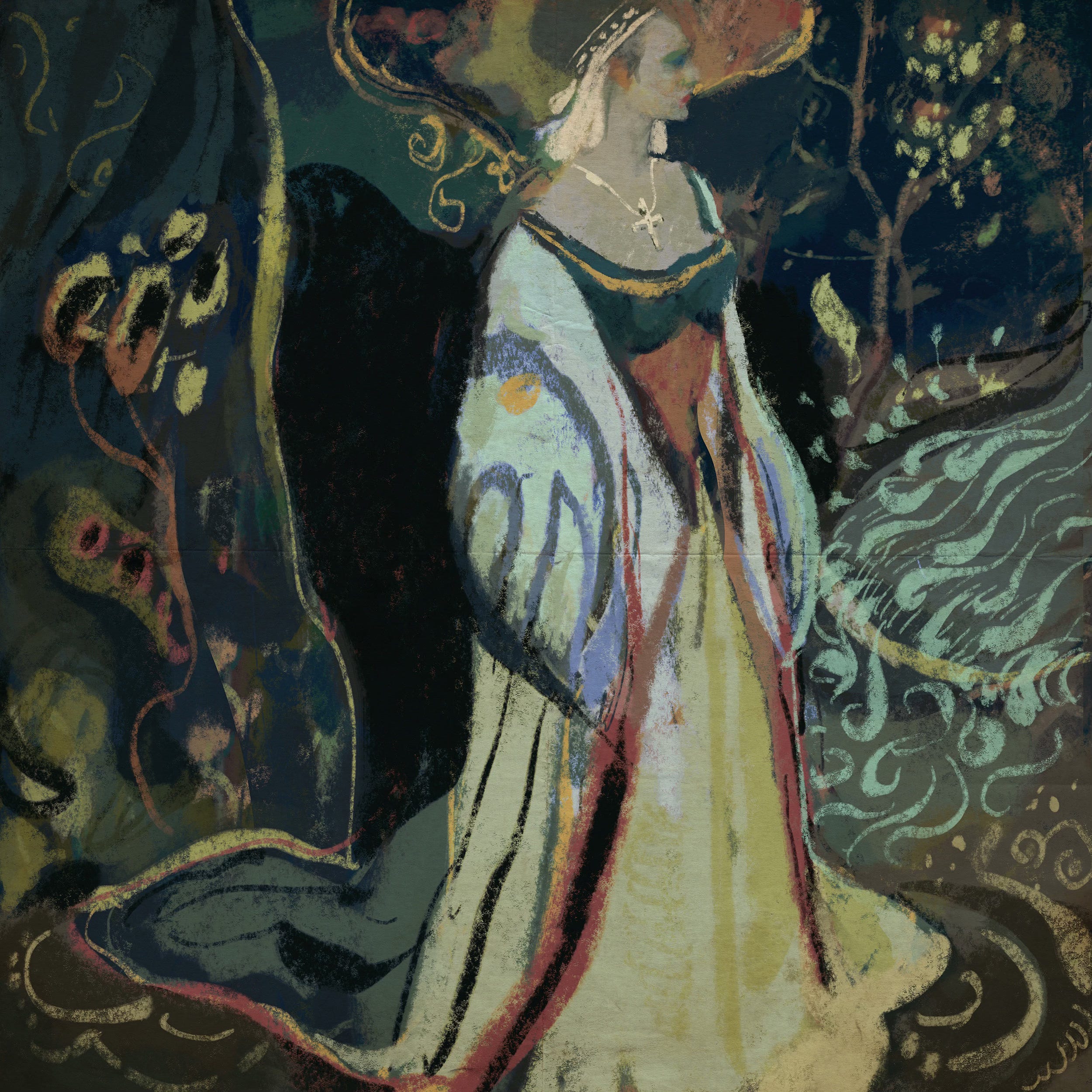
I have written about balancing being both a visual artist and writer, and manga is another medium that mimics the ‘equilibrium’ that I was seeking. This month, I read 30 volumes across two different fantasy series. Dungeon Meshi and Witch Hat Atelier were fantastical, symbolic and magical stories with equally as magnificent artwork to match. Both of these series contribute unique elements to fantasy that becomes even more accessible through art. Where medieval fantasy as a sub-genre of fantasy is characterised by magic, knights and quasi-feudal societies, these series are also stories about autonomy and moral ambiguity. It was refreshing to access these themes alongside incredible art.
For the first three months of this year, my reading focused on literary fluency, but in April, my lack of reading words and instead reading pictures allowed me to focus on visual literacy– a lower stakes approach to storytelling.
(Still) reading about alchemy
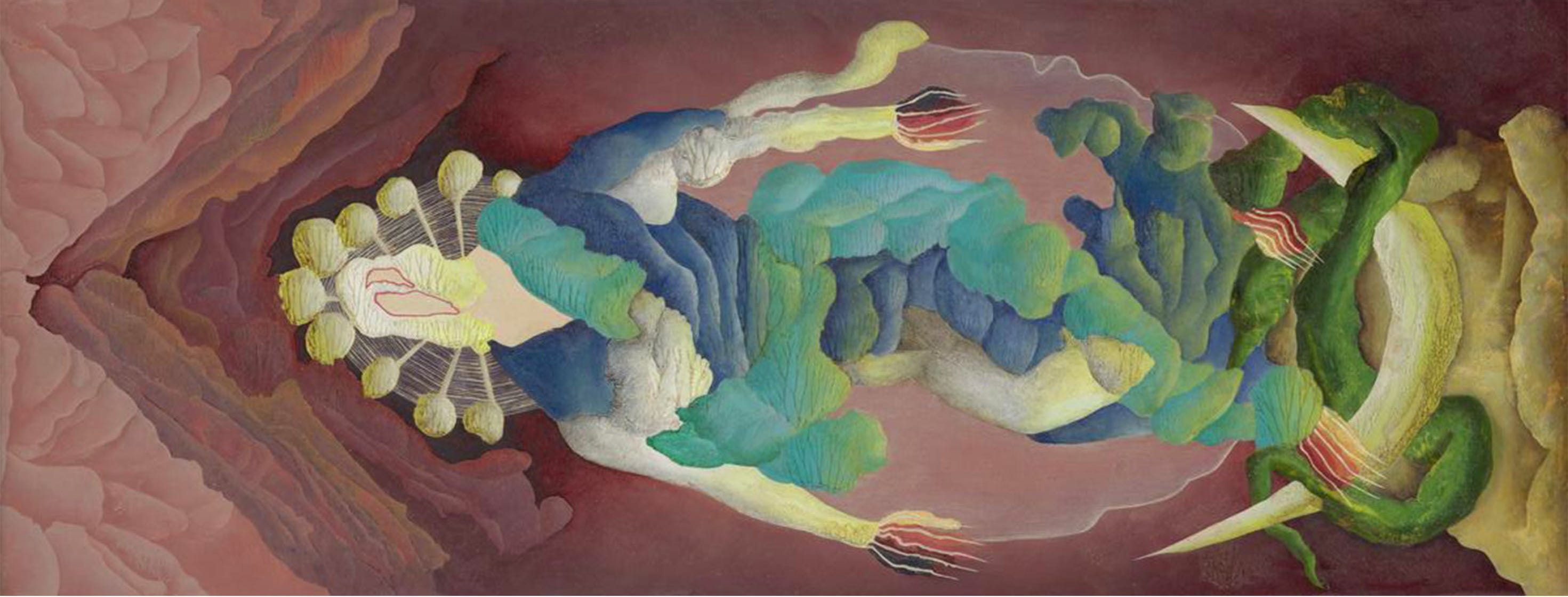
Despite taking a sabbatical from reading, I was still inextricably pulled in the direction of alchemy. At this stage, picking up novels by authors who are also painters and occultists is not a coincidence anymore, and I was recommended Leonora Carrington by a bookseller, I knew to allow myself to be lead down whatever direction this conversation would lead me.
“I think you’d really like Leonora Carrington!” she said.
“I do, I’ve read almost all of her work.”
“Have you heard of Ithell Colquhoun?”
She initially recommended Colquhoun’s travelogue The Crying of the Wind: Ireland when I mentioned I enjoyed reading about landscapes, but Goose of Hermogenes was calling to me. I didn’t even read the blurb. The rain had just started to fall, and only when I got in the car to log it on Goodreads did I realise that it had been on my TBR since September of last year.
Goose of Hermogenes is a fictional and surrealist account of the stages of the alchemical Magnum Opus. It seems it is fate that I will always be pulled in the direction of alchemy.
Books I Read This Month
Books on my nightstand that I haven’t read enough to form an opinion of:
Understanding Aleister Crowley’s Thoth Tarot by Lon Milo DuQuette
Uncle Petros and Goldbach’s Conjecture by Apostolos Doxiadis
Under the Jaguar Sun by Italo Calvino
Apple in the Dark by Clarice Lispector
Remarkable Creatures by Tracy Chevalier
The Compass Rose by Ursula K. Le Guin
Books still in progress:
Project Hail Mary by Andy Weir
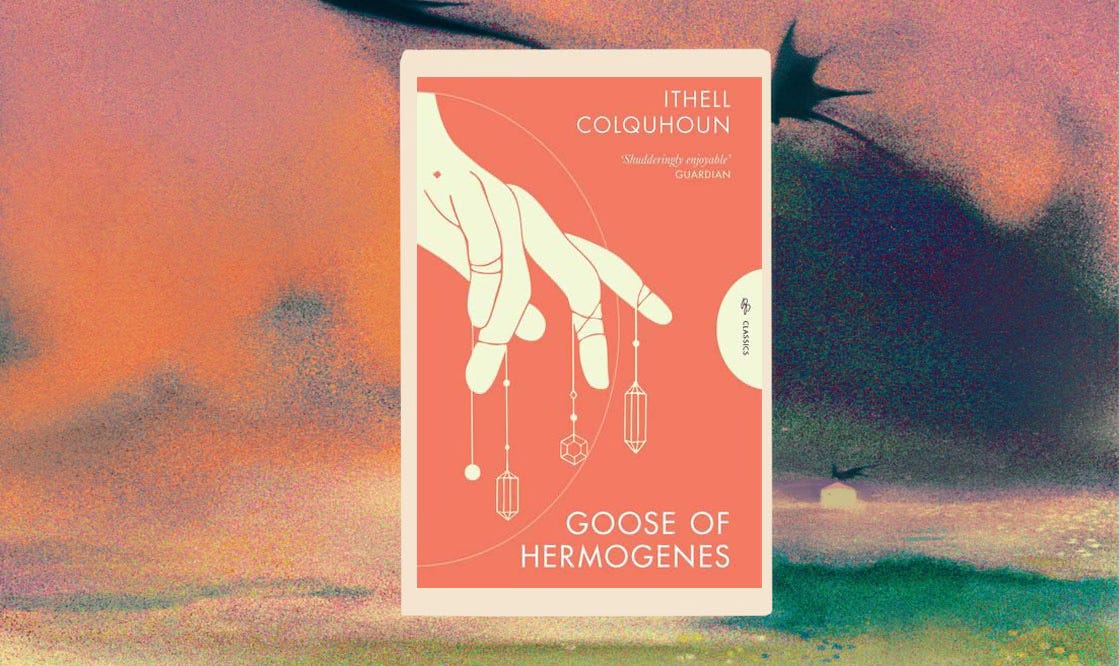
Goose of Hermogenes by Ithell Colquhoun
Upstream by Mary Oliver
Completed/up to date:
Delicious in Dungeon by Ryoko Kui
Witch Hat Atelier by Kamome Shirahama
My Reading Thoughts & Reviews
Project Hail Mary by Andy Weir
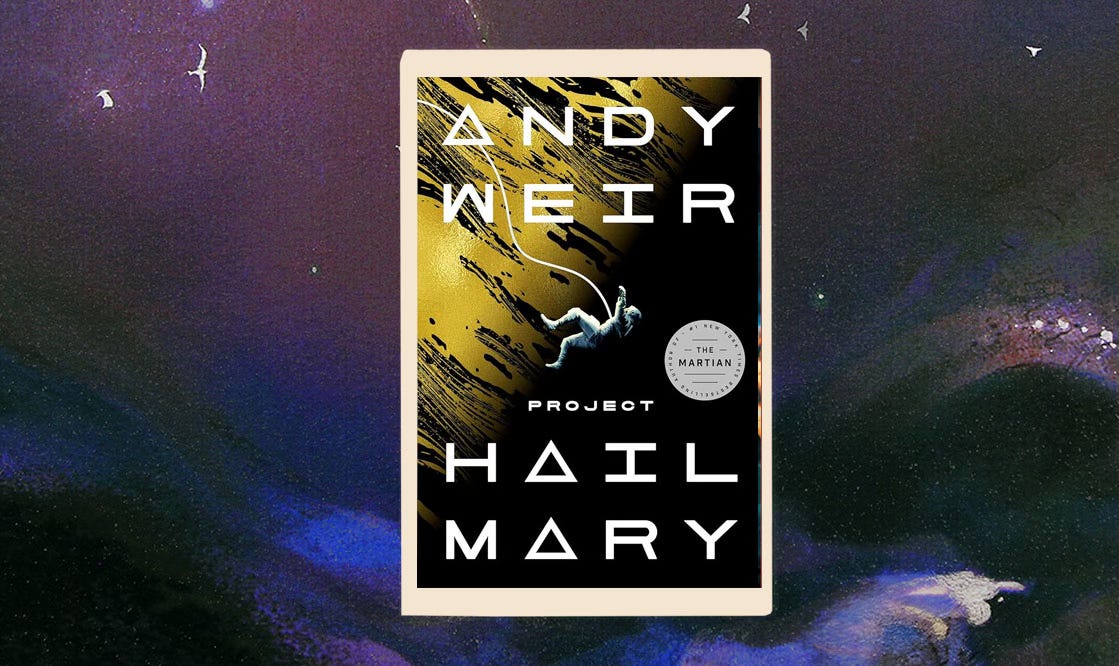
For our book club, my partner and I picked up Project Hail Mary after we watched the movie for date night. In his words, he enjoys watching movies with me because he “witnesses the entire spectrum of human emotion.” Project Hail Mary made me laugh and cry in equal measure. The book is no different, with an added layer of personality due to the first person point of view structure.
From the same author that wrote The Martian, Project Hail Mary follows Ryland Grace who wakes from a coma on a one-way interstellar mission. How did he go from being a science teacher to an astronaut? The sun in our solar system is dimming due to “astrophage”, an alien microorganism that is infecting nearly every solar system. Tau Ceti is the only exception, and the Hail Mary ship that Grace wakes up alone on, is heading there to find some answers that could save humanity.
This is a story about communication, hope and humanity, and whilst the science and math tidbits lose me a little, it makes up for it with page-turning storytelling. It was most certainly a book made to be a movie.
And yes, I have very intense maternal feelings for a rock.
“♪ ♫ ♪!!!” he says. I’m pretty sure that was a squeal of glee.
Current reading progress: 55%
Reading experience so far: Amaze, amaze, amaze!
Goose of Hermogenes by Ithell Colquhoun
Esoteric journeys undertaken by female characters are my favourite tales, and Goose of Hermogenes ticks many boxes in my personal canon: it is a surrealist, symbolic and alchemic feat. My interest in alchemy lies in its representation of spiritual journeys and transformations, and this 1961 novel is structured around the 12 stages of alchemy that create the Magnum Opus. Goose of Hermogenes is a term from medieval alchemy for the Philosopher’s Stone, or the ultimate elixir that produces immortality. The association lies with the goose that laid the golden egg, symbolic of the culmination of spiritual and material perfection.
Within the context of Ithell Colquhoun’s classic fantasy novel, this structure serves as a metaphor of the journey of self discovery. Trapped on an enchanted island by her uncle, a young woman passes through the 12 stages of alchemical transformation to escape, denoting both a physical and psychological journey.
The fantastical and surreal nature of this book is placated within the first couple of chapters; so far I have encountered monks with wings and hybrid bird women, and compared to works by Leonora Carrington, I have found Colquhoun’s writing much more digestible. I suspect the more I read, the more multilayered this tale will become.
Current reading progress: 31%
Reading experience so far: Visionary, dreamlike, feminist fairy tale
Witch Hat Atelier by Kamome Shirahama
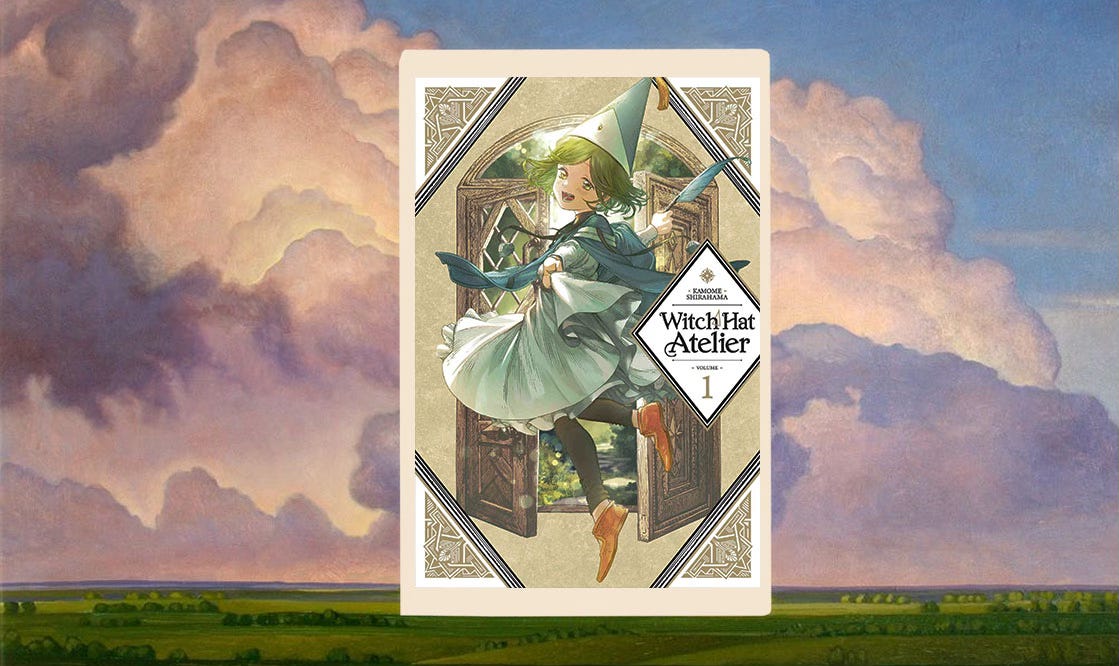
Witch Hat Atelier follows Coco, a young girl that has been obsessed with magic ever since she was a little girl. After purchasing a magic book with her pocket money at a festival from an unknown vendor, Coco’s curiosity has grown ever since throughout her childhood, which has turned into an intense fascination with the arcane arts. Unfortunately for Coco, magic is kept under lock and key. For her entire life she has looked to the magic book with longing and separation, for only those born witches can cast magic. That is, until she happens to witness a witch casting magic, and realises that this whole time, the book she has cherished and all of the symbols inside can be drawn!
Whilst this series is still on going, I have been avidly reading chapters because of my interest in how this coming-of-age story explores creative responsibility, with a unique take on the term “knowledge is power.” Magic is seen as artistic creation, and Coco’s role as the main character challenges tradition and dogma, whilst also questioning the ethical implications of magic in the face of economic and political reasoning.
I am loving following along Coco’s journey as a witch’s apprentice, but also exploring the moral and ethical themes behind magic. Shirahama excels in writing a fantastic cast of characters, a well thought out magic system, and strong worldbuilding.
Reading experience in three words: Endearing, magical and hopeful
For you if: You want to fill the magic school gap from boycotting Harry Potter, enjoy metaphors about creativity and are in need of a coming of age story
Rating: ✷ ✷ ✷ ✷ ✷ (5 stars)
Delicious in Dungeon by Ryoko Kui
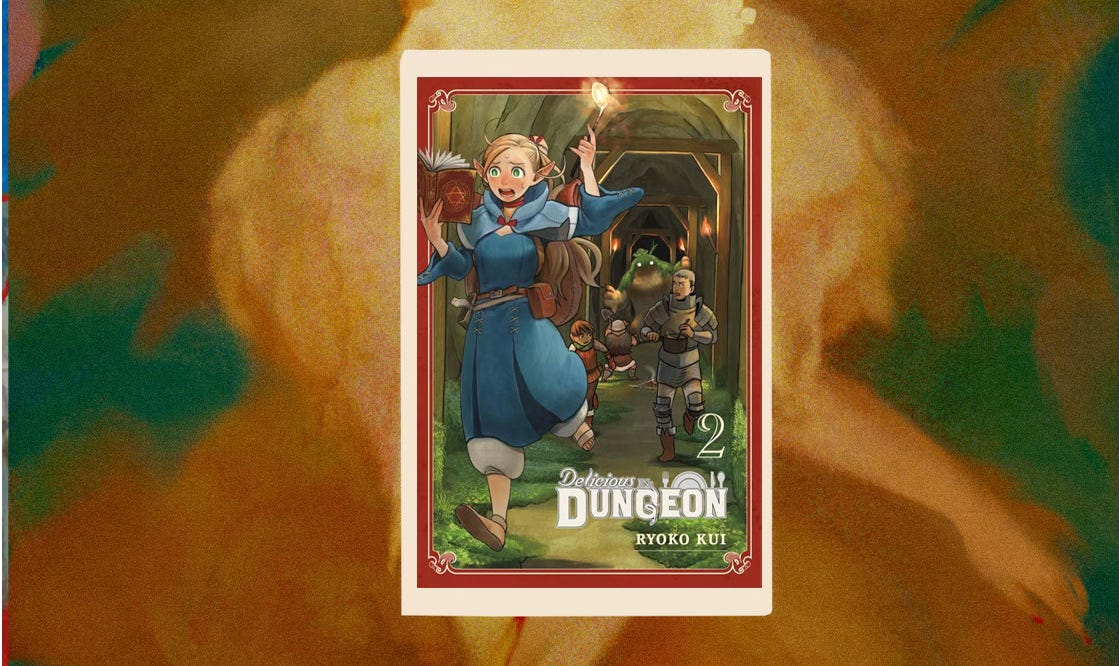
Delicious in Dungeon is one of the best fantasy stories I have ever read, and in my opinion on par with my obsession with Lord of the Rings. After failing to defeat a dragon that consumes a member of their party, a group of adventurers venture back into the dungeon to save them. Lacking funds and supplies, they survive navigating deeper into the dungeon by cooking and eating the monsters that dwell within, hoping to reach the dragon before the fallen party member is digested.
This series offers a unique twist to the fantasy genre– where it starts comedic and adventurous about the premise of surviving in a dungeon, the deeper their descent and the longer I read, the more I realised that the story evolves into more sinister themes about the moral ambiguities behind immortality and magic. Despite this, there were so many moments where I was clutching my stomach from laughter.
The story does not “reinvent the wheel” per se. Kui propels her story from common tropes and races within the fantasy genre such as orcs, humans, dwarves, dragons, griffins, chimeras, monsters and dungeons.
Reading experience in three words: Hilarious, offbeat and unique
For you if: You enjoy books like Dungeon Crawler Carl (minus the misogyny and racism) or play Dungeons and Dragons!
Rating: ✷ ✷ ✷ ✷ ✷ (5 stars)
Afterword
Not a day went by when I wasn’t thinking about the newsletter! Thank you for your patience whilst I took an unexpected break in April and accidentally sent out so many unfinished essays by accident.
But! I have been slowly chipping away at my essay about A Thousand Mornings by Mary Oliver and other writing that I am hoping to resume publishing as normal. I have wanted to continue my writing about mental health, which became more important than the newsletter in April (as I navigated my depression and PTSD.)
I have continually said to my loved ones that (alongside treatment) reading and writing is the way through.
Coming to your inboxes soon! In the meantime, be gentle with yourself, and thank you for reading,
Jada
✷
@fujijada
jadadeluca.com
deluca.jada(at)gmail(dot)com

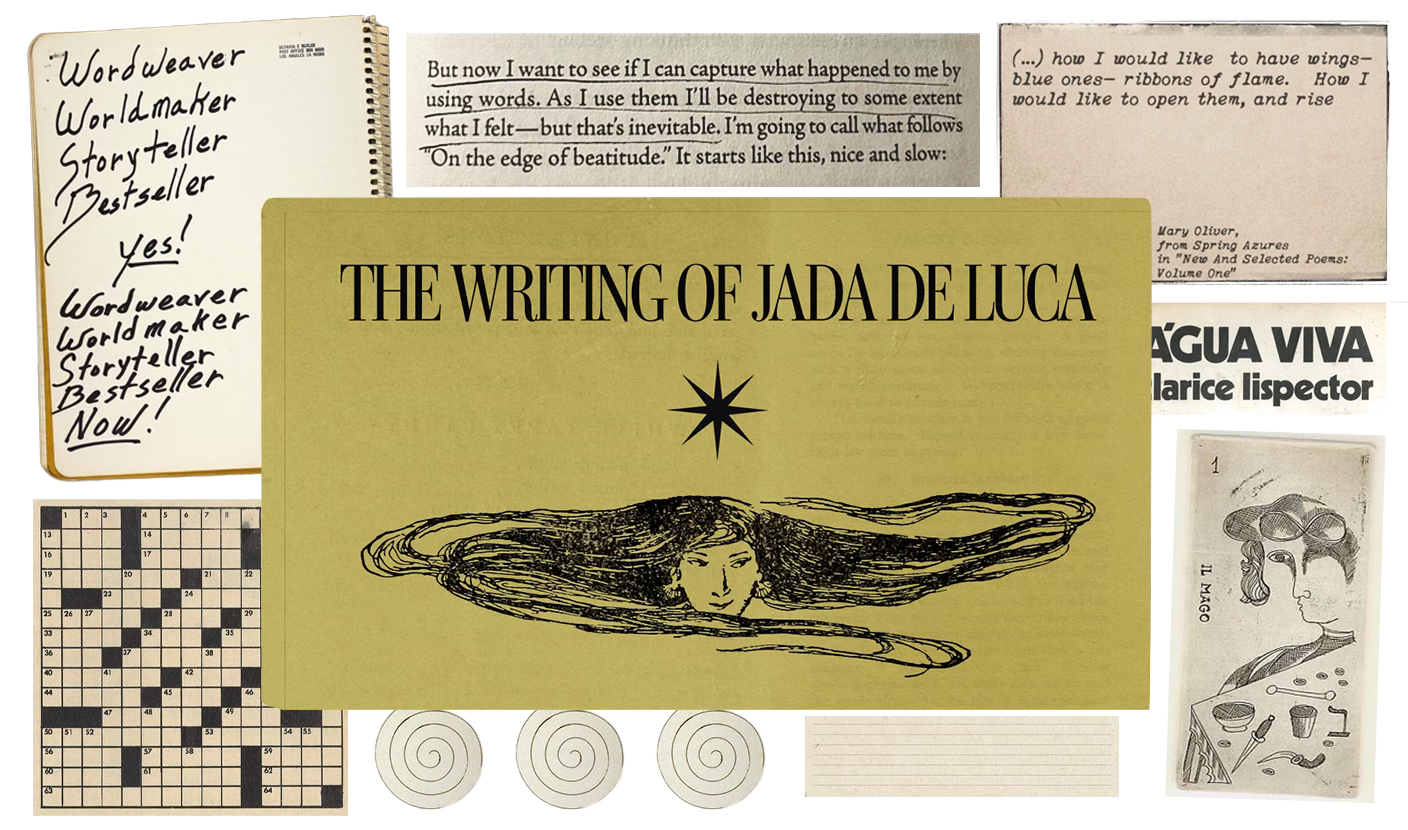
Italian-Samoan writer Jada De Luca is a visual narrator, storyteller and devout journaler. She writes about leading a reading and writing life, inspired by Mary Oliver’s poem Sometimes:
Instructions for living a life:
Pay attention.
Be astonished.
Tell about it.
Telling stories through both written and visual narration (she is also a collage artist) is her way of paying attention to the magical, surreal, and intensely personal landscapes that the arts offer. Her newsletter is a source of her entire writing career; her oeuvre; a commonplace journal of essays about literature, language, writing, travel and art.
Jada’s favourite novel is Água Viva by Clarice Lispector, her favourite tarot card is The Magician, and she likes her tea with an extra sugar
Trying to convince my daughter to read The Hobbit, but she is resisting! Maybe I’ll try Witch Hat with her!
Hiii Jada <3 I totally understand being too overwhelmed to read. I often found myself unable to focus on certain books because of that, and I resorted to graphic novels or comics (mostly webtoons) to get myself going and get that ease feeling from visual satisfaction. Have you ever read webtoons?
I'm currently reading Yesteryear and Night Train to Lisbon, both of which are quite good so far! I do want to read more non-fiction, because there are so many interesting topics and people, but sometimes I find it hard to engage with it. Do you have any tips for that? Hugsss! x